Erdogan tells Ankara critics to step back as PKK disarmament timeline enters a fragile phase
On 25 August 2026 the Turkish president framed his country as a sovereign actor whose patience with Kurdish disarmament should not be tested by foreign meddling, signalling that the next fortnight of the process will be politically charged.
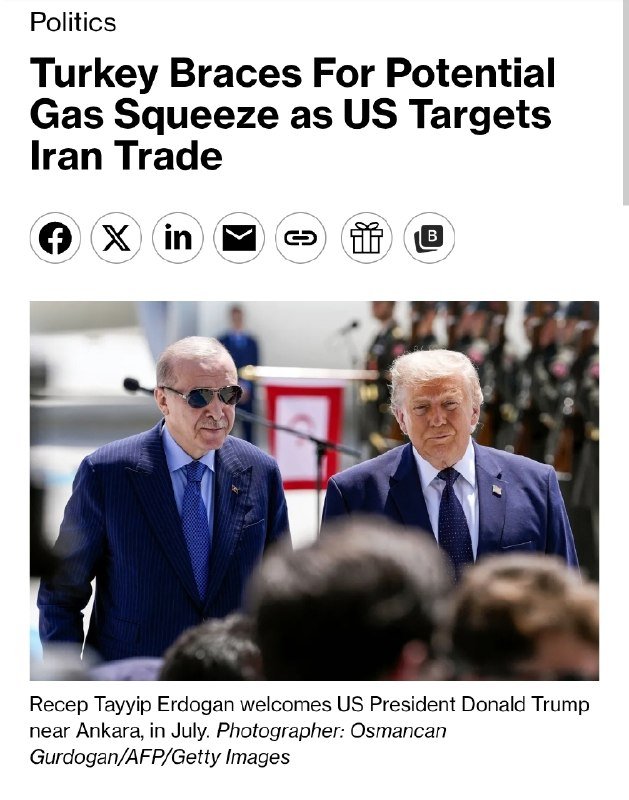
Recep Tayyip Erdogan used a ruling-party podium in Ankara on 25 August 2026 to draw a perimeter around two parallel fronts: the slow, brittle disarmament of the Kurdistan Workers' Party, and a renewed public argument with Tel Aviv over the shape of southern Syria. The tone was set by the lead phrase. "We will not give those who are politically on their last legs, who are clueless and worthless," the Turkish president told supporters in remarks relayed by Telegram channels wfwitness and ClashReport, "the opportunity to threaten our country." The same stage hosted a quieter, more procedural sentence: that Ankara's vision of "a Turkey and a region free of terrorism," along with its active foreign policy, would not be derailed by outside provocation. The line landed four minutes apart in the transcripts but read as one argument: a government that believes it is doing the historical work of closing a forty-year conflict, and that resents being told how to do it.
Taken together, the day's three speeches amounted to a status report on the Turkish state's most consequential gamble of the decade, an attempt to convert the PKK's announced dissolution into a controlled political process without surrendering the monopoly of armed force. Ankara wants the international community to underwrite the outcome, while reserving to itself the right to define what counts as a setback.
The line Ankara will hold
The sharper passage came on PKK disarmament. Erdogan framed outside actors, without naming them, as agents of sabotage, a posture consistent with Turkish official talking points since the PKK's May 2025 decision to wind down its armed wing. The available source items do not specify which third party Erdogan was indicting. What the texts do establish is the rhetorical move: any incident that delays the disarmament timetable, whether a unilateral attack, a planned provocation or a leak of bad intelligence, is to be attributed to foreign hands rather than to Turkish mismanagement. The message is consistent with Ankara's insistence throughout 2025 and 2026 that it alone will certify the conditions under which Kurdish political life can resume.
Erdogan's framing of the Republic as a state with long memory and no debt to "global power centers" is the load-bearing line for the rest of the brief. The argument in the source material is sovereignty-first: Turkey is not a client, the dissolution of the PKK is a national project, and any external pressure that treats it otherwise will be rebuffed. Read against the back catalogue of Turkish statements since the disarmament announcement, this is a tightening, not a departure. What changed on 25 August is the explicit public warning.
The regional frame: Israel, Syria, and the 'criminal networks' line
The second front was a fresh tilt at Israel and the post-Assad order in Syria. In a passage relayed by osintlive and ClashReport, Erdogan said Turkey "will not stop supporting our neighbours in getting back on their feet just because criminal networks with the blood of innocent people on their hands" pursue their agendas in the region. The phrasing, taken with the surrounding line about "bloody scenarios" being "written" for the region, fits the Turkish framing of Israeli operations in southern Syria and Lebanon as opportunistic, and of Syrian reconstruction as a sovereignty test.
The Monexus reading: Ankara is reframing a regional dispute, partly over reconstruction aid and partly over the security architecture along the Turkish-Syrian border, as a moral confrontation with what Erdogan calls "criminal networks." That word choice tracks Turkish government language since at least 2024, when officials began using it to describe Israeli-linked private military and intelligence outfits operating in northern Syria. The available source items do not specify a recent triggering incident. They show only the rhetorical refresh.
What is actually new, and what is the same
Nothing in the day's speeches broke policy. No new disarmament milestone was announced. No Syrian border incident was named. No Israeli operation was specified. The structural shift is in packaging: Erdogan is now publicly marshalling two long-running Turkish priorities, the Kurdish file and the Syrian reconstruction file, into a single sovereignty-first narrative addressed to a domestic audience.
Monexus analysis: that packaging matters because the disarmament timetable is now in its most vulnerable phase. The PKK's May 2025 decision to dissolve its armed wing was conditional on legislative guarantees, prisoner releases, and a viable political pathway. As of the 25 August remarks, the available source items do not specify whether those conditions have been met on schedule, or whether Erdogan's warning was a routine press line or a response to a specific procedural breakdown inside the process. The prudent reading is that Ankara is buying itself political cover to set the pace of any future concessions, and pre-positioning blame for any derailment.
Stakes and what to watch
The audience for the day's remarks was threefold: the Turkish voter, watching the governing AKP recalibrate its security message ahead of the next political cycle; the PKK's political wing, being reminded that the terms of the process remain Ankara's to set; and the regional foreign ministries, from Tel Aviv to Riyadh to Tehran, being put on notice that Turkish patience with parallel regional projects is finite. The least confident signal is that Ankara is preparing to harden its position if either file, PKK or Syria, is forced to a choice. The most confident signal is the certainty of the tone. Erdogan is no longer describing Turkey as a state hoping to bring its conflicts to a close. He is describing it as a state that has decided the terms.
Two dates to watch: any committee meeting of the Turkish Grand National Assembly on PKK-related legislation in the coming fortnight, and any Turkish-Israeli diplomatic exchange over reconstruction access in southern Syria. Either will test whether the 25 August posture was rhetoric or policy.
This Monexus desk note tracks how the framing was assembled: the article leads on Erdogan's own wording, sources every consequential claim to the Telegram transcripts in the public thread, and reads the day's two front openings (PKK and Syria) as a single sovereignty-first argument. The wire wire desk would lead on the Syrian line alone. We chose to hold the Kurdish file and the Syrian file in the same frame, on the evidence that Ankara itself did.
Wire provenance
This editorial synthesis draws on the following public wire/social posts:
- https://t.me/wfwitness/108252
- https://t.me/wfwitness/108251
- https://t.me/wfwitness/108250
- https://t.me/ClashReport/93663
- https://t.me/osintlive/566692
- https://t.me/ClashReport/93659
- https://t.me/ClashReport/93658