Washington moves to revoke up to 200,000 asylum-linked visas in single biggest such sweep on record
The State Department is preparing to revoke B1 and B2 visas issued over the past decade for as many as 200,000 foreigners who have applied for asylum. A separate H-1B fee proposal landed the same morning.
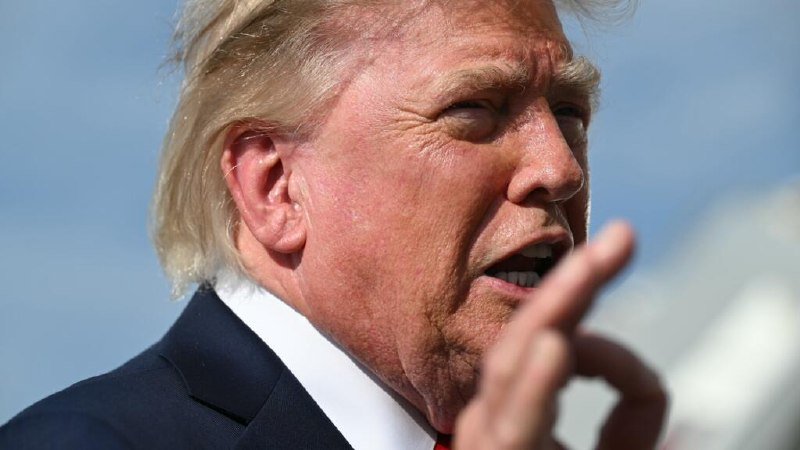
At 03:20 UTC on 25 August 2026, Reuters reported that the Trump administration is preparing to revoke the visas of foreigners inside the United States who are pursuing or have applied for asylum. Hours later, at 04:56 UTC, NPR put the scope at up to 200,000 people, a figure that would make this the largest mass visa revocation in US history. The Guardian, filing at 01:45 UTC, identified the cohort as holders of B1 and B2 business and tourist visas issued between 2016 and 2026 who have sought asylum or are now seeking it.
The State Department action targets not failed applicants but the visa status of people who, after entering on short-term visas, asked for a different legal classification once inside the country. Read narrowly, that is a procedural sweep against a specific class of stay. Read broadly, it is the first mass use of revocation power against a cohort defined by an act of legal petitioning rather than by criminality or overstay, and that is where the policy's bite will be felt.
What the State Department is doing
The framing in the wire copy is uniform: revocation, not denial. According to The Guardian, the State Department will pull B1 and B2 visas issued between 2016 and 2026 whose holders have sought, or are now seeking, asylum. NPR puts the ceiling at up to 200,000. Reuters confirms the policy direction.
The distinction matters. Visa revocation under immigration statutes does not require the same procedural showing as removal proceedings. The legal predicate is administrative: the original visa was issued on terms that no longer fit the holder's actual circumstances. The State Department is using that administrative lever to reach a population that would, in normal course, be processed through the asylum system and the immigration courts, where backlogs already run into years. Revocation converts a slow judicial question into a fast executive one.
The available source items do not specify which nationalities are most affected, nor which asylum offices hold the largest share of the cohort. NPR's reporting identifies the visa classes (B1, B2) and the ceiling (200,000); the State Department's case-by-case criteria are not described in the items reviewed.
The H-1B fee that arrived the same morning
The visa action lands inside a wider week of immigration tightening. At 03:36 UTC, Scroll.in reported that the Trump administration is moving to impose a fee of more than $100,000 on H-1B visas, the skilled-worker category that US tech employers use to bring in foreign engineers, scientists, and physicians. The cited item does not specify the precise figure, the legal mechanism (rule or proclamation), or whether the fee applies per petition, per worker, per year, or as a one-time charge.
The pairing is deliberate in design even if not in announcement. Asylum seekers face revocation of the short-term visas they arrived on. Skilled workers face a proposed fee that, by Scroll.in's "more than $100,000" framing, sits well above standard H-1B filing costs. The combined effect, read together, is to push the legal-immigration system in two directions at once: humanitarian channels closed at one end, employment channels repriced at the other.
Monexus analysis: the practical reach of the H-1B proposal cannot be assessed from the cited Scroll.in item alone. Federal rule-making of this kind is typically subject to litigation, and a measure announced as a fee can be blocked, restructured, or rescinded before it ever prices into employer behaviour. The cited item does not specify whether the proposal is in effect, enjoined, or pre-publication.
The energy backdrop
A separate thread in the same window adds context to the political moment. At 04:44 UTC, an X account citing US Energy Department data reported that US crude oil reserves have fallen to 41 days of forward cover. The same post characterised the level as the lowest in half a century. That framing is not corroborated by the broader wire reporting available to Monexus at publication; the cited X post alone carries the half-century characterisation.
The asylum backlog is the structural backdrop on the immigration side. Monexus analysis: immigration courts, working through cases filed years earlier under prior administrations, carry a published backlog measured in the hundreds of thousands. A revocation program does not shrink that backlog on its own; it does change who inside it can stay while their case is heard. If the policy is implemented as described in the wire copy, the operational effect is that asylum applicants who arrived on B1 or B2 visas lose their lawful status before a merits decision.
Stakes and what to watch
Monexus analysis: the move reallocates power inside the immigration system away from the Department of Justice's Executive Office for Immigration Review, which runs the courts, and back to the State Department, which issues and can revoke visas. That is not a small bureaucratic shift. Adjudication moves from a forum built for individual cases to an administrative tool built for categories.
For employers, the H-1B fee proposal is the more immediately priced risk, conditional on whether and when it takes effect. The available source items do not specify the fee's structure or implementation status, and that uncertainty is itself the story for any firm with H-1B petitions in the pipeline. The policy text has not been quoted in the items reviewed, and the cited item does not say whether the fee is current, proposed, or subject to a court order.
For asylum seekers, the immediate consequence of revocation as described is the loss of any legal basis to remain in the United States once the visa is pulled, regardless of how their claim would have fared on the merits. The cohort described in the wire copy, up to 200,000 people, is large enough to push removals processing into the operational critical path of Immigration and Customs Enforcement.
Three dates to watch. First, the State Department's formal notice, expected to follow the wire reports within days if the policy proceeds. Second, any litigation: prior large-scale immigration actions have drawn rapid court challenges, and the legal theory here, that revocation can reach a class defined by petitioning rather than by conduct, is untested at this scale. Third, the H-1B rule's publication in the Federal Register, which will fix the fee's structure, precise figure and effective date. The asylum and skilled-worker tracks are being moved in the same news cycle, but the rule-making clock for each runs separately.
What remains uncertain is whether the 200,000 figure is a ceiling or a target, whether the cohort is restricted to active applicants or extended to people whose asylum cases have already been denied, how the State Department intends to notify the cohort across multiple continents, whether the H-1B fee described by Scroll.in is now in force, and whether the half-century framing applied to US crude reserves in the cited X post can be corroborated beyond that single post. The cited reports do not specify on any of these points.
This article was prepared by Monexus from wire reporting by Reuters, NPR and The Guardian, plus Scroll.in coverage of the parallel H-1B action. The two immigration tracks were reported separately by those outlets and are linked here because they moved together. The cited X post's characterisation of crude-reserve levels is presented as that post's claim and is not independently corroborated in the items reviewed.
Wire provenance
This editorial synthesis draws on the following public wire/social posts:
- https://www.npr.org/2026/08/25/nx-s1-5944058/us-largest-mass-visa-revocation-200-000-foreigners
- https://www.theguardian.com/us-news/2026/aug/24/trump-administration-revoke-asylum-visas
- https://reut.rs/4xpjl1g
- https://x.com/Reuters/status/2092089625875493337
- https://scroll.in/latest/1095237/us-trump-administration-moves-to-impose-over-100000-fee-on-h-1b-visas
- https://t.me/scroll_in/147161
- https://x.com/SprinterPress/status/2092110969564545162
- https://www.npr.org/2026/08/25/nx-s1-5944058/us-largest-mass-visa-revocation-200-000-foreigners
- https://www.theguardian.com/us-news/2026/aug/24/trump-administration-revoke-asylum-visas
- https://reut.rs/4xpjl1g
- https://x.com/Reuters/status/2092089625875493337
- https://scroll.in/latest/1095237/us-trump-administration-moves-to-impose-over-100000-fee-on-h-1b-visas
- https://t.me/scroll_in/147161
- https://x.com/SprinterPress/status/2092110969564545162