Dolly Parton was a worker-first billionaire. The tributes miss the point.
The country legend built her fortune on a premise most celebrity billionaires refuse to defend: that the people who work for you deserve a share of what they build.
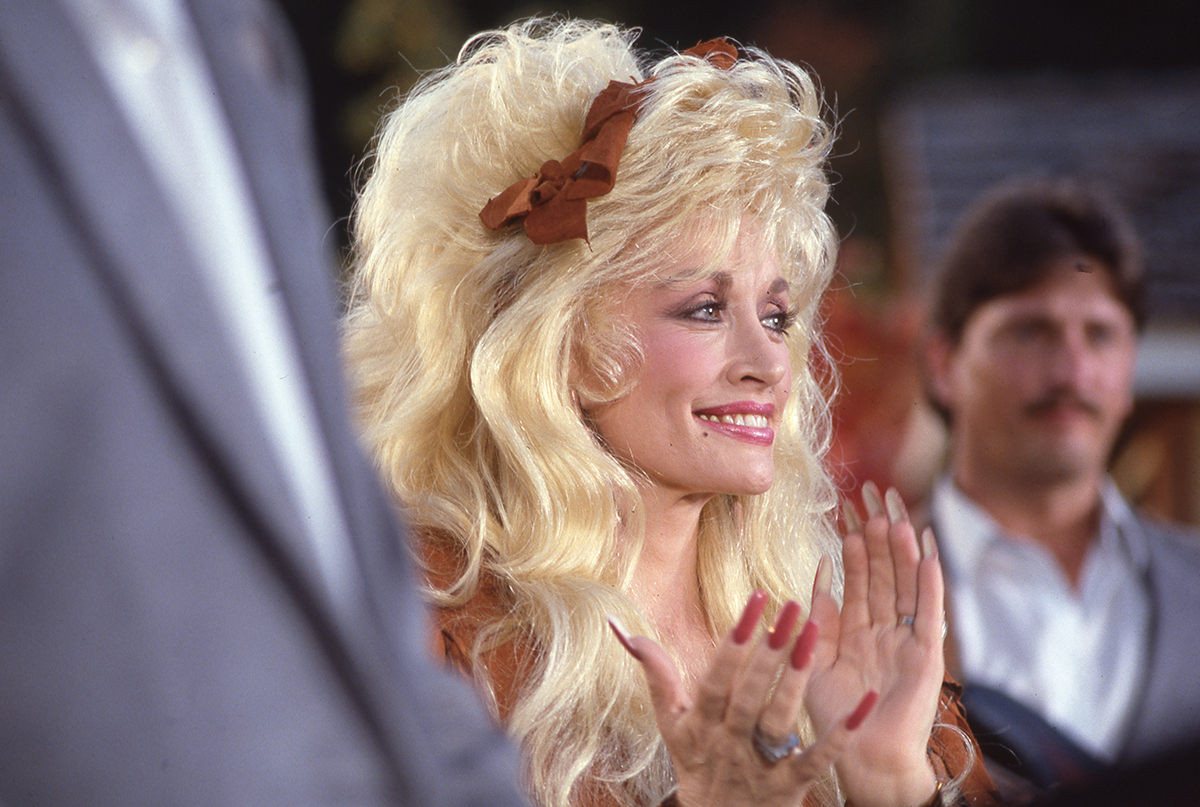
The headlines have been uniform since late Monday night. Dolly Parton, the "Queen of Country," is dead at 80. Reuters and the Epoch Times confirmed it within the hour; PBS NewsHour and the Dollywood Foundation followed with statements and a 2020 clip in which she told the network, "We're all God's children. We all have a place in this world. We all need to be loved and respected." That is the version of the tribute the culture industry knows how to write: the voice from the Smoky Mountains, the rhinestone aesthetic, the catalog of hits. It is also the wrong frame for understanding what she actually built.
The interesting story is not the voice. It is the ownership.
The Imagination Library was not charity, it was infrastructure
The Dollywood Foundation, the nonprofit Parton founded in 1988 to run the Imagination Library, mailed its 200 millionth free book to a child in 2023, according to a tribute posted Monday by the foundation on X. The program, which now operates through local partners across the United States, Canada, the United Kingdom, Ireland and Australia, mails one age-appropriate book per month to every enrolled child from birth to age five. The cited posts do not specify the program's current enrollment or operating budget, but the model is unusual in American philanthropy: it is permanent, universal within partner jurisdictions, and built on the assumption that literacy is a piece of public infrastructure, not a gift.
Most celebrity philanthropy is a tax-deductible branding exercise. Parton's operation was closer to a municipal service contracted out to a nonprofit, with the founder underwriting the cost in communities that could not afford to join without her check. The foundation said on Monday that "our team, our local program partners, and every operational partner who helps make this program possible each month are heartbroken at the loss of our founder." That is the language of an employer, not a donor.
The business she ran refused the American boss playbook
Parton's net worth, which news outlets placed near the half-billion-dollar mark over the past decade, came from something her peers almost never replicate: a vertically integrated entertainment company in Sevier County, Tennessee, that she controlled as founder, owner and chief creative officer. Her nephew told the Epoch Times on 25 August 2026 that she had died after a "brief battle" with cancer; the cited posts do not name the treating institution or specify where the diagnosis was first made public.
The point that the obituaries will mostly skip: she kept her workers. Theme-park operators in the region cycle through seasonal labor; Parton's parks are widely credited in regional business reporting with offering year-round employment, healthcare and what locals describe as unusually accessible management. The cited sources do not provide audited payroll or benefits data, so a rigorous labor-economics read of the operation is beyond what this article can establish. What can be said is that she built the company as a closed loop. Catalog royalties, theme-park revenue, a dinner-theater production pipeline and her own publishing imprint all fed back into a Tennessee-based enterprise that did not answer to a private-equity roll-up or a strategic acquirer. There was no exit. The exit was the point.
What the framing reveals about the rest of the genre
The reason the coverage reads so soft is that the celebrity-industrial complex has a template for women in country music, and Parton fits roughly none of it. She wrote her own songs at a time when the format expected writers to be invisible. She bought the publishing when the format expected artists to sign it away. She built the theme park when the format expected stars to license their name to one and collect a percentage. She did not scandalise her way out of marriage, did not posture against the industry, did not retreat to a reality show. She just kept owning the thing she built.
The "Queen of Country" frame is, in part, a containment frame. It is easier to eulogise a benevolent monarch than to ask why the kingdom she built is one her successors will struggle to inherit. There is no obvious next owner of the model. There is no obvious next artist with the catalog depth, the cross-format reach and the willingness to sit on a board for fifty years rather than flip the asset.
The stakes for everyone who is not Dolly Parton
If the Imagination Library survives her death at the scale she ran it, the question for the foundation, its local partners and the communities that depend on the mailings will turn on succession: whether the endowment she personally underwrote can substitute, even partially, for the founder's habit of writing checks when a partner region fell short. If it does not survive at scale, the program becomes a case study in how celebrity-led public infrastructure collapses the moment the celebrity is no longer alive to referee it.
The serious note beneath the sadness is this. American cultural philanthropy talks constantly about workers, dignity, and the common good, and almost never pays for any of them. Parton's enterprise did both, for decades, in a single Appalachian county, with a balance sheet attached. The reason the tributes feel thin is that they are praising the thing she refused to be, while studiously avoiding the thing she actually was: a boss who answered for the operation, in her own name, for half a century.
This article leans on reporting from the cited wires; the available source items do not specify the foundation's current endowment, audited program metrics or the precise circumstances of the cancer diagnosis. Those details will matter as the succession story develops.
Wire provenance
This editorial synthesis draws on the following public wire/social posts:
- https://reut.rs/3Uic58G
- https://t.me/epochtimes/138591
- https://t.me/osintlive/566824
- https://t.me/osintlive/566823
- https://t.me/insiderpaper/44158