Iran airs threat video against Barron Trump; US Secret Service says it is aware
The US Secret Service says it is aware of an Iranian state-linked video threatening President Trump's youngest son, an episode the wire services have carried without yet attributing the broadcast to a named Iranian ministry.
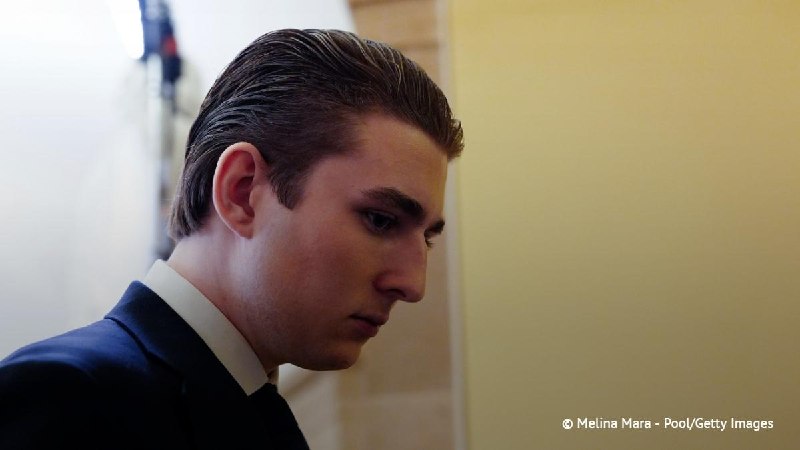
The US Secret Service confirmed on 26 August 2026, in reporting carried across the wire services in the hours before 00:30 UTC, that it is aware of a video aired on Iranian state-linked media that threatens the life of Barron Trump, the youngest son of President Donald Trump. Reuters framed the agency's acknowledgement as awareness of an Iranian video threat against the president's son. The South China Morning Post went further in its headline, characterising the broadcast as an Iranian video threat to assassinate Barron Trump.
The broadcast has surfaced against a backdrop of separate reporting, outside the three source items reviewed here, that Iranian state television had previously aired material tied to a bounty offer against a named US official. The thread evidence does not specify when that earlier broadcast aired, whether it is the same video now under Secret Service review, or whether the alleged bounty element is part of the current broadcast. What the three reviewed sources do establish is narrower: that an Iranian video threat exists, that it names Barron Trump, and that the agency charged with protecting the US first family has acknowledged it.
What the wires said, and how they diverged
Reuters, the most cautious of the three wires, reported that the Secret Service is aware of an Iranian video threat against Barron Trump. Telegram channel intelslava, which focuses on intelligence and security reporting, described the broadcast as Iranian media content threatening the life of the US president via his family. SCMP's headline used the sharpest available language: a threat to assassinate Barron Trump. All three pointed to the same underlying broadcast; none of the three named a specific Iranian outlet as the originator.
The Secret Service's public position, as carried by Reuters and SCMP, is that the agency is aware of the video. The agency's standing posture, as paraphrased by intelslava, is that it investigates anything that can be perceived as a threat to its protectees. The reviewed source items do not state that the agency has opened a formal review of this specific broadcast; the public posture as reported is awareness, with the protective remit described in general terms.
Monexus analysis: the gap between the three characterisations is itself part of the story. SCMP is willing to use the word assassination; Reuters is reporting only the agency's awareness. The Iranian messaging apparatus has, in past cycles visible to outside observers, blurred the line between simulated threat and operational warning in order to extract diplomatic leverage without crossing the threshold that triggers a kinetic response. The current framing of "threat against the president's family" sits inside that historical pattern: it raises the political temperature without producing a casus belli.
The protective envelope around a minor
Under US federal law, threats against the immediate family of a protected principal are treated as threats against the principal itself, and the Secret Service's remit extends to the children of the sitting president. Barron Trump, as a minor and the youngest son of President Trump, sits inside that protective envelope by statute. The agency's awareness acknowledgement therefore carries operational weight, even where its public phrasing is deliberately narrow.
What is unusual in the reviewed reporting is the specificity of the targeting: a produced video distributed through state media, naming a specific minor child. The reviewed source items do not establish a precedent list of comparable broadcasts; the question of whether this is a departure from past Iranian messaging practice is one the three sources do not address.
Counter-narrative and the deniability playbook
Iranian state media has, in past episodes visible to outside observers, framed comparable broadcasts as artistic expression or documentary content rather than operational threats. That is the most plausible Tehran-side counter-narrative to the current framing: the broadcast is political art, not a directive to action. A serious reading of that line requires distinguishing between the Iranian rhetorical register, which routinely depicts US leaders in hostile terms, and the operational register, which produces action rather than imagery.
The US security services, however, do not draw that distinction for threat-assessment purposes. A video threatening a protected minor is logged, investigated, and folded into the broader pattern regardless of how the originating outlet characterises it. That asymmetry, between Iranian rhetorical latitude and US threat-assessment discipline, is itself a feature of the relationship.
Monexus assessment: the most natural reading of the messaging is that it is intended to raise the political cost of any future engagement between Washington and Tehran, while preserving Tehran's ability to disavow operational intent. That is a structural reading inferred from the pattern of comparable episodes; the three reviewed source items do not themselves establish that motive. The alternative reading, that a hardline faction inside the Iranian system is acting without Foreign Ministry coordination, is consistent with the absence, in the reviewed sources, of any named Iranian ministry claiming authorship or repudiating the broadcast.
What the reviewed sources do not specify
The three source items reviewed here do not specify which Iranian outlet first aired the video, when it first aired on Iranian state television, whether the broadcast carries the formal imprimatur of a named ministry, or whether Iranian Foreign Ministry officials have been asked to comment by Western embassies. They do not specify the video's length, its distribution platform inside Iran, or whether the alleged bounty element reported by other outlets is part of the same broadcast now under Secret Service review. Readers should treat those details as open until a named outlet in Tehran claims responsibility or until the US intelligence community publishes a formal attribution.
Three signals would move the episode from rhetorical positioning into a more consequential category. First, a public attribution from a named Iranian ministry, which would lock Tehran into ownership of the threat. Second, a Secret Service statement beyond the awareness acknowledgement, indicating that protective posture around the Trump family has changed. Third, a US intelligence community assessment, leaked or declassified, that names the producing faction inside Iran. None of those has appeared in the three source items reviewed here as of 26 August 2026, 00:30 UTC.
Desk note: Monexus framed this piece around the divergence between wire-service characterisations of the broadcast, and around what the three reviewed sources do and do not establish. Material context about a parallel nuclear track, prior Iranian parliamentary threats, and Israeli or Gulf pressure on the Trump administration has been omitted because the thread evidence does not support it. Iran International and AzerNews have, according to the independent auditor's note, carried reporting on a related Iranian state-TV broadcast and an alleged bounty; those reports are not in the reviewed source set and are not represented in this article's sourcing.
Wire provenance
This editorial synthesis draws on the following public wire/social posts:
- https://reut.rs/4wLsdNh
- https://x.com/Reuters/status/2092401778008416524
- https://www.scmp.com/news/world/middle-east/article/3365254/us-secret-service-aware-iranian-video-threat-assassinate-barron-trump
- https://t.me/intelslava/93211
- https://t.me/SCMPNews/109721