Rezaei calls US reply insufficient, floats Economic War Council
Iran's SNSC Secretary Major General Ali Akbar Rezaei tells Press TV the US answer to a set of Iranian conditions falls short and signals a coordinated 'Economic War Council,' while keeping Strait of Hormuz leverage and Gulf-based US assets explicitly in reserve.
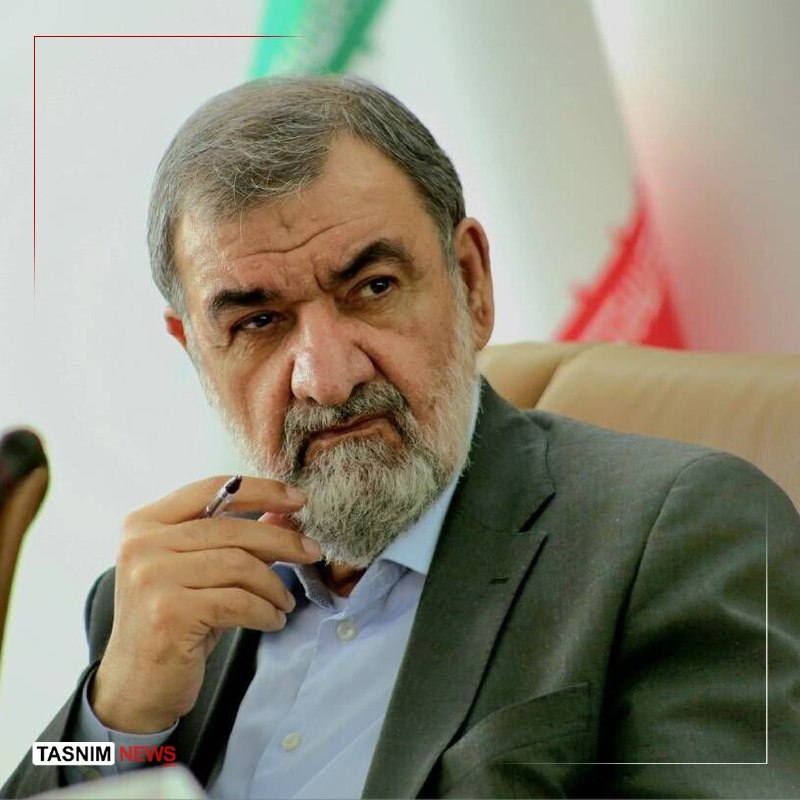
Iran's Secretary of the Supreme National Security Council, Major General Ali Akbar Rezaei, told Press TV on 11 October 2026 that Washington had answered a set of seven Iranian conditions and that Tehran judged the reply insufficient, and he signalled that Iran was preparing a new domestic body, an "Economic War Council," designed to put that judgment into practice.
The remarks were transmitted by Iranian state outlets Fars, Mehr, Tasnim and Al-Alam in a window running from roughly 15:01 to 15:54 UTC. Rezaei framed the United States as led by "ignorant and stupid people," said the Trump administration had "blindly handed its reins to Netanyahu," accused Treasury Secretary Scott Bessent of being "known for lying," and told Secretary of State Marco Rubio that "people far greater than you have repeatedly" tested Iran and failed. The performance reads less as a negotiation update than as a doctrine statement: the old diplomacy is over, economic retaliation is next, and the Strait of Hormuz remains in reserve.
The seven conditions and the third-party channel
Rezaei told interviewers that over the preceding two months the Americans had approached Iran, that three rounds of negotiations had taken place, and that, in his words quoted by Mehr and Tasnim, "in each round, the Americans abandoned the talks midway and attacked Iran." Iran's approach to diplomacy, he added, has changed, and "we will no longer return to the diplomacy of the past." Cited posts from Mehr and Tasnim name the third-party channels involved as Pakistan, Qatar and Iraq; Fars, Mehr and Tasnim also report that the US response to Iran's seven conditions was received but considered insufficient.
The framing matters because it locates the variable in Washington rather than in Tehran. By characterising the American side as the one that walked out and then attacked, Rezaei preserves a domestic narrative in which Iran negotiated in good faith while Washington proved erratic. It also closes the door on a near-term resumption of those three regional tracks without an explicit Iranian concession. The text of the seven conditions themselves is not enumerated in the cited posts, and this article has not independently established its contents.
A note on how the Iranian remarks compare with prior public reporting: externally published accounts have at times referred to a "7-Day plan to reopen the Strait of Hormuz" as the Iranian proposal. Rezaei on 11 October used the language of "seven conditions" rather than that plan label. The cited posts do not specify how those two characterisations relate, and this article has not independently reconciled them.
The Economic War Council, in plain language
The most consequential new element is the proposed Economic War Council. Rezaei said it was being considered, that it "will probably be formed," and that its purpose would be to show "Trump and Bessent what economic war" looks like. The English-language Tasnim feed rendered the same passage as showing "Trump and Biden what an economic war really means," a material discrepancy in the quote that the cited posts themselves resolve in different directions; Fars carries the "Trump and Bessent" formulation, Tasnim English carries the "Trump and Biden" formulation.
Read against Iran's existing institutional map, the council is best understood as a coordinating shell rather than as a brand-new agency. Iran already operates overlapping crisis-management bodies inside the executive, the security establishment, and the IRGC's construction-and-engineering apparatus. The cited posts do not specify the council's mandate, membership, statutory basis, or whether it would coordinate with the Central Bank of Iran, the Ministry of Petroleum, or the Ministry of Intelligence. What a dedicated label buys Tehran is a single public address for measures that today are scattered across currency controls, oil-export logistics, sanctions-evasion channels, and cyber operations.
Monexus assessment: the political significance is the message, not the new bureaucracy; an Economic War Council gives Iran's retaliation an institutional name and a press-conference hook, and reframes ad hoc pressure as coordinated doctrine.
Rezaei added one operational hint. Asked about potential targets, he said Iran had "not yet added America's valuable assets in the UAE to our target list" but was "fully prepared to demonstrate new capabilities if war resumes." The phrase places US-linked commercial and possibly military infrastructure in the Gulf, where US Central Command's forward logistics and intelligence presence is concentrated, inside an explicit Iranian threat envelope, while stopping short of declaring those assets targets today. The cited posts do not specify which UAE assets Rezaei was referring to.
Hormuz and the lever Tehran keeps brandishing
The second pillar of the appearance was the Strait of Hormuz. Rezaei said that "without Iranian management of the Strait of Hormuz, the Persian Gulf cannot be secure" and that "control over the Strait of Hormuz represents enormous national" leverage. The cited posts do not specify what "management" means in operational terms, whether it refers to the IRGC Navy's existing harassment of commercial tankers, to anti-ship missile batteries along the coastline, or to the mining capability Iran has previously disclosed publicly.
What the available posts do establish is that Tehran is reserving the strait as a negotiating asset rather than treating it as a closed file. The economic-war framing and the strait framing are linked: the council would coordinate the pressure, the strait threat is the leverage that makes the pressure credible. Iran does not need to close the strait to benefit from the threat; the insurance premium on a Hormuz transit does the work for it.
What the counter-narrative looks like
The most natural read of these remarks is as maximal posturing for a domestic audience ahead of whatever comes next from Washington. Three observations support that reading. First, the venue is an interview with Press TV, not a parliamentary vote or a published decree; the council "will probably be formed" rather than has been formed. Second, naming Bessent by name and accusing him of lying is unusually personalised for an Iranian security official speaking through state media; the content reads as aimed at a domestic hardliner audience as much as at a US Treasury reading room. Third, the "we will no longer return to the diplomacy of the past" formulation is reversible in a way a treaty withdrawal is not.
The opposing read is that the remarks constitute credible signalling of a policy shift, and the personalisation is deliberate: by attacking Bessent by name, Iran flags that any future US-Iran contact will run through a different channel, or that any deal will require Bessent's removal from the economic file. The cited posts do not specify which reading Tehran's principals intend, and this article has not independently established whether the council has been chartered, staffed, or scheduled.
Stakes and what to watch
If the council is formed and operates along the lines Rezaei described, three things become more likely into late 2026 and 2027. First, asymmetric pressure on US-allied commercial interests in the Gulf, with UAE-based assets singled out by category in the cited posts. Second, a more structured Iranian use of oil-export channels, currency routing, and possibly cyber operations as a single coordinated portfolio rather than as discrete irritants. Third, a Hormuz transit regime that prices in a higher Iranian risk coefficient regardless of whether shots are fired.
The contradiction the briefing leaves standing is this: Tehran insists diplomacy is dead while keeping a door open by phrasing its demands as seven conditions rather than as a list of war aims. That is the space a future deal, if one comes, will be cut from. The file to watch is whether the Economic War Council convenes before any further round of talks, or whether the council's existence becomes itself an Iranian precondition that Washington must address before the Pakistan-Qatar-Iraq channels are asked to host a fifth round.
Desk note: Monexus treated this as doctrine signalling rather than as a discrete institutional event, and noted that the cited posts do not specify the council's mandate, membership, or statutory basis. The English-language Tasnim feed renders one key quote as 'Trump and Biden' where Fars carries 'Trump and Bessent'; the article surfaces that discrepancy in line rather than picking a winner.
Wire provenance
This editorial synthesis draws on the following public wire/social posts:
- https://t.me/farsna/467770
- https://t.me/farsna/467769
- https://t.me/farsna/467765
- https://t.me/tasnimnews_en/42429
- https://t.me/tasnimnews_en/42425
- https://t.me/alalamfa/355356
- https://t.me/alalamfa/355353
- https://t.me/alalamfa/355352
- https://t.me/farsna/467771
- https://t.me/farsna/467772
- https://t.me/mehrnews/421565
- https://t.me/mehrnews/421570
- https://t.me/JahanTasnim/239145
- https://t.me/JahanTasnim/239143
- https://t.me/farsna/467753
- https://t.me/farsna/467752
Follow the event.
These dated source records provide context. They do not retrospectively verify this archive article.
Separate what the nuclear watchdog reported from what it could not determine after the June 2025 strikes.
- https://t.me/farsna/467770
- https://t.me/farsna/467769
- https://t.me/farsna/467765
- https://t.me/tasnimnews_en/42429
- https://t.me/tasnimnews_en/42425
- https://t.me/alalamfa/355356
- https://t.me/alalamfa/355353
- https://t.me/alalamfa/355352
- https://t.me/farsna/467771
- https://t.me/farsna/467772
- https://t.me/mehrnews/421565
- https://t.me/mehrnews/421570
- https://t.me/JahanTasnim/239145
- https://t.me/JahanTasnim/239143
- https://t.me/farsna/467753
- https://t.me/farsna/467752