Iran strikes Kurdish positions in Erbil with Fateh-110s and drones
Multiple Iranian Fateh-110 missiles and one-way attack drones hit positions around Soran in Erbil governorate on the evening of 26 August 2026, according to four Telegram channels that logged the strike between 20:35 and 21:14 UTC.
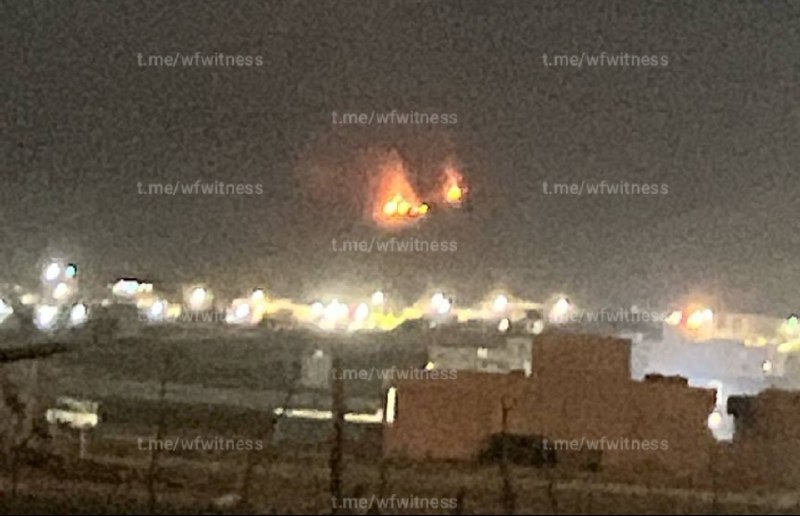
Explosions were heard in Soran district, east of Erbil in the Kurdistan Region of Iraq, beginning at 20:35 UTC on 26 August 2026, when a local witness channel on Telegram posted an alert. Twenty minutes later, the same channel uploaded on-the-ground footage of the plume. By 20:55 UTC a third channel had logged the strike as a drone attack on Soran, and between 21:11 and 21:14 UTC two further channels specified the weapons as multiple Fateh-110 missiles and one-way attack drones and the targets as Kurdish positions inside Iraqi Kurdistan.
The four Telegram reports, taken together, are narrow but consistent. They establish that a strike hit Soran on the evening of 26 August 2026, that the weapons used included Fateh-110 missiles and one-way drones, and that Kurdish positions were the named target. They do not establish casualty figures, the identity of the specific Kurdish faction struck, or which Iranian authority directed the operation. The available source items do not specify whether Iranian state media confirmed, denied, or stayed silent on the strike; this article has not independently established Tehran's public posture within the window of reporting.
What the four sources actually show
The reporting cascade is unusually clean. wfwitness broke the news at 20:35 UTC with a plain alert: an explosion was heard in Soran, east of Erbil in the Kurdistan Region of Iraq. A second wfwitness post at 20:43 UTC carried footage from the scene. At 20:55 UTC, intelslava characterised the event as a drone attack on Soran in Erbil governorate. rnintel followed at 21:11 UTC with a one-way drone strike framing, and GeoPWatch closed the window at 21:14 UTC with the most specific read: multiple Fateh-110 missiles and one-way drones against Kurdish positions in Erbil, Kurdistan province of Iraq.
Three details are worth holding onto. First, the geographic specificity is unusually tight for this kind of Telegram traffic: all four channels named Soran and placed it east of Erbil, with GeoPWatch additionally specifying Kurdistan province of Iraq. Second, the weapon characterisation arrives only in the last two posts, which is the normal pattern when initial witnesses describe sound and plume and only later reporting layers add the military specification. Third, no source in this set names an Iranian organ, a Kurdish faction, or a casualty count. The available items specify the strike; they do not specify the rest of the picture.
Reading the targeting logic
Monexus analysis: the choice of Soran as the named locality is itself the most informative detail in the source set. Soran sits in the mountainous terrain east of Erbil that has hosted Iranian Kurdish opposition groups for decades. The pattern, across multiple reporting cycles this year, has been strikes against these groups' positions in Iraqi Kurdistan followed by Iraqi diplomatic protests and Iranian silence or denial. The four sources in this thread do not, on their own, prove continuity with that broader pattern, and any read of it as a routine pressure pulse is editorial inference, not a sourced fact.
The combination of Fateh-110s with one-way drones is consistent with a two-stage model in which ballistic munitions crater fixed positions and loitering platforms hunt whatever remains mobile. That is a reasonable inference from open-source reporting on Iranian strike doctrine in Iraqi Kurdistan over recent years, but the available source items do not establish it for this specific strike, and the article does not treat the inference as fact.
What remains unverified
Three things would move this from a sourced incident report to a fuller story. First, an Iranian state-media read of the strike, whether claim, denial, or silence. The available source items do not specify any such statement. Second, an Iraqi foreign ministry response; the four Telegram channels carry no Iraqi official reaction within the window covered. Third, a casualty figure or a specific Kurdish faction identified by name as the target; GeoPWatch refers to "Kurdish positions" without naming KDPI, PJAK, Komala, or any other group. Each of these gaps is small in isolation, but together they mean the strategic framing of the strike cannot rest on this thread alone.
The most cautious summary is also the most accurate one. On 26 August 2026, between 20:35 and 21:14 UTC, four Telegram channels documented an Iranian strike on Kurdish positions in Soran district, east of Erbil, using Fateh-110 missiles and one-way drones. Everything beyond that line is either editorial inference or pending independent corroboration.
This article is based on four real-time Telegram reports logged between 20:35 and 21:14 UTC on 26 August 2026. It does not establish Tehran's public posture on the strike, the specific Kurdish faction hit, or casualty figures, none of which appear in the available source items. Where subsequent reporting clarifies those points, this article will be updated.
Wire provenance
This editorial synthesis draws on the following public wire/social posts:
- https://t.me/wfwitness/108388
- https://t.me/wfwitness/108392
- https://t.me/intelslava/93266
- https://t.me/rnintel/65776
- https://t.me/GeoPWatch/38893