Tehran and Muscat move toward a Hormuz revenue-sharing deal as Trump insists the strait is open
Iran and Oman are reported to be finalising a revenue-sharing framework for the Strait of Hormuz, while Donald Trump says the waterway is functioning and that a lot of oil is moving.
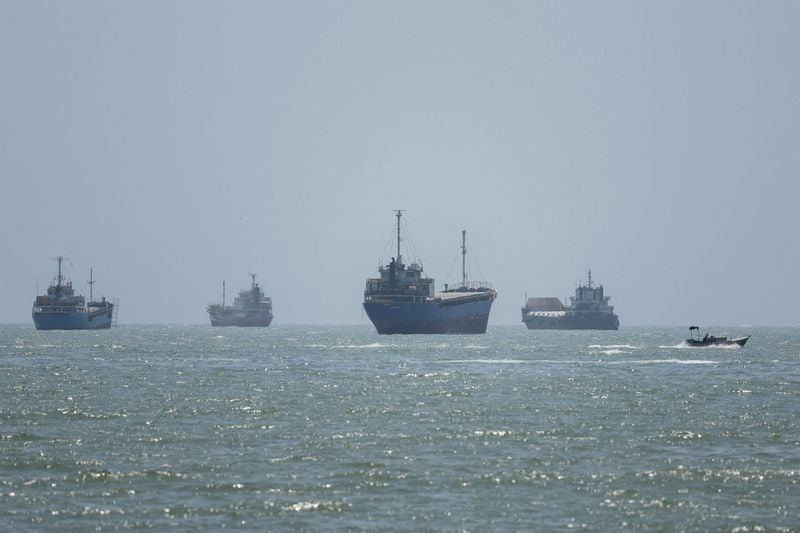
A thread item from Clash Report on 26 August 2026, time-stamped 16:10 UTC on the channel, relays Donald Trump's framing that the Strait of Hormuz is open and that traffic through the corridor is continuing. That post sits at the end of a same-day messaging chain in which earlier Telegram relays from Disclose.tv, DDGeopolitics and OSINTLIVE carried paraphrase of Trump saying the strait was "functioning," that "prices are coming down," and that "a lot of ships" were passing through. The thread evidence available to this publication does not specify publication timestamps beyond what the channels themselves carry, and it does not include the full text of the Investing.com, CNBC, Middle East Eye or Reuters pieces whose URLs are listed in the source ledger below. The version of the story those wire URLs sit behind cannot therefore be quoted from the available evidence, only referenced as named inputs in the same conflict.
What the supplied evidence does establish is narrower. The IRGC's "agreements reached" framing of the Iran-Oman revenue file is the dominant thread account, attached to the Investing.com URL by its headline. That headline reads "Iran and Oman reach agreements on share of Hormuz and revenues, Revolutionary Guards say." Trump's afternoon and late-afternoon messaging, carried by four separate Telegram channels between roughly mid-afternoon and 16:10 UTC, is consistent on one point: the President is publicly insisting that the strait is open, prices are easing, and a lot of oil is moving. Those two registers, an Iranian announcement of a deal and a US assertion that there is no crisis, are the substance of the thread. Monexus analysis: the gap between them is the negotiation. Neither side's framing is presented in the supplied thread evidence as an independent verification of the other's claim.
Two readings of the same waterway
The headline language of the Investing.com item frames the Iran-Oman file as effectively concluded: the IRGC is reported as saying agreements have been reached on the strait and on its revenues. The Telegraph relays from Disclose.tv, DDGeopolitics, OSINTLIVE and Clash Report represent a second register entirely, in which Trump insists the waterway is functioning, that prices are falling, and that transit volumes are normal. The supplied thread evidence contains no third wire characterising these accounts as competing or complementary; this publication therefore treats the two registers as the only ones the available material supports.
Monexus analysis: each register serves the audience it is aimed at. The IRGC statement performs closure for a domestic Iranian audience that has been told the country's leverage over the corridor is being monetised. The Trump messaging performs reassurance for an American audience that has been told the pressure campaign is working without a shot fired. The thread evidence does not let this publication rank the two. What it does support is the observation that both sides are speaking publicly on the same day about the same waterway, in tones that point in opposite directions.
The Polymarket URL in the source ledger identifies a market on the related question of whether Iran will formally charge Hormuz transit fees by the end of 2026. The supplied thread evidence does not specify a current price or implied probability on that market. Its existence is nevertheless relevant: a tradable contract on the same policy question that the Iran-Oman negotiations are putting at the centre of the story suggests that prediction markets have already identified the revenue mechanism as the discrete event to price.
The corridor itself
The Strait of Hormuz links the Persian Gulf to the Gulf of Oman and the Arabian Sea. The supplied thread evidence does not specify navigation-channel widths, tonnage figures, or the legal regime governing transit passage. The geographic statement is the minimum the thread supports; the operational details of who is moving how much crude through which lane are not specified in the available sources and cannot be verified from them.
What can be said is that the file the thread evidence describes is the same file the headline of the Investing.com item names: a revenue-and-administration negotiation between Iran and Oman over the strait. The IRGC is the Iranian actor on the record in the supplied material. Oman is the counterparty named in the headline. The United States appears in the Telegram relays only as the origin of the counter-narrative that the strait is open and prices are easing.
The counterpoint is straightforward. Trump could mean that the strait has not been physically closed, that shipping is continuing under existing arrangements, or that the White House wants to discourage the impression that Tehran has gained effective control. None of those readings is established by the supplied thread material. The reports therefore support a claim about competing public narratives; they do not support a finding about navigation conditions, fee structures, or traffic volumes.
Monexus analysis: what a revenue deal would actually do
Monexus analysis: read against the IRGC-headlined Investing.com input as the spine of the story, a Hormuz revenue-sharing arrangement with Oman would do three things at once, and the order matters. First, it would formalise a bilateral arrangement over the sharing of the strait's revenues. Second, it would create a commercial vehicle that any future Iranian government could present as the country's economic sovereignty dividend. Third, it would give Tehran a potential lever over crude shipments moving through the corridor, regardless of who sits in the White House. Each of those consequences is an analytical reading of the headline-level claim; the supplied thread evidence supports the existence of the negotiation but does not, on its own, confirm any of the three downstream effects.
Read that way, the deal is not only a confidence-building measure. It is an attempt to institutionalise Iranian leverage at exactly the moment the United States is publicly trying to compress it. Trump's insistence that the strait is open, and that prices are falling, is, in this framing, an attempt to deny Tehran the recognition that Iran controls a real economic asset. Monexus analysis treats that interpretation as one reading of the Trump messaging; it does not treat it as the only reading.
The Polymarket URL in the source ledger identifies a contract on the question of formal Hormuz transit fees by year-end 2026. The supplied thread evidence does not specify a current price or implied probability, so no percentage is treated as confirmed. The contract's existence is nevertheless relevant because it sits on the same policy risk that the Iran-Oman negotiations, as headline-described, are putting at the centre of the story.
Stakes and a date to watch
For oil importers in Asia and Europe, the stakes are immediate in principle and unspecified in the available evidence. A credible prospect of formal transit fees could complicate the cost calculus on crude shipments moving east of Hormuz, but the supplied sources do not specify a current fee, a shipping differential, or a measurable change in traffic. The available evidence supports a risk framing, not a quantified estimate of higher prices.
For the United States, the political risk is that a successful Iran-Oman revenue framework would be read in Tehran as proof that economic pressure can be outlasted by patient negotiation. For Oman, the upside is a seat at the table of any future regional security architecture that includes the strait. The loser, in this framing, would be any arrangement that turns transit through a global energy corridor into a source of recurring bilateral leverage. Each of those three claims is an analytical reading; the supplied thread evidence supports the existence of the negotiation but not the political downstream.
The next concrete date to watch sits inside the Middle East Eye live coverage URL in the source ledger. The supplied thread evidence does not specify whether the Iran-Oman revenue framework is folded into that document or kept as a separate track; that question is the one to ask of the wire coverage as it lands. What can be said from the thread evidence available now is that the 26 August messaging, from the IRGC headline and from the four Telegram relays of Trump's afternoon and late-afternoon remarks, is consistent with competing public accounts of a live file whose commercial terms remain publicly contested.
How Monexus framed this vs the wire: the supplied thread evidence does not contain the body text of the Investing.com, CNBC, Middle East Eye or Reuters pieces; those URLs are recorded in the source ledger as named inputs to the same conflict, not as verified quotations. Monexus treats the IRGC's "agreements reached" framing and Trump's "straits open" framing as the only two registers the supplied material supports, and reads the gap between them as the substance of the negotiation rather than as a wire discrepancy to be smoothed over.
Wire provenance
This editorial synthesis draws on the following public wire/social posts:
- https://t.me/ClashReport/93780
- https://t.me/disclosetv/21779
- https://t.me/DDGeopolitics/191908
- https://t.me/osintlive/566960
- https://www.investing.com/news/commodities-news/iran-and-oman-reach-agreements-on-share-of-hormuz-and-revenues-revolutionary-guards-say-4877105
- https://www.cnbc.com/2026/08/26/us-iran-war-trump-hormuz.html
- https://x.com/unusual_whales/status/2092613786654154994
- https://poly.market/u5XCryh
- https://x.com/Reuters/status/2092615572865376480
- https://www.middleeasteye.net/live/live-us-and-iran-confirm-peace-accord-signing-set-friday-geneva
- https://t.me/ClashReport/93780
- https://t.me/disclosetv/21779
- https://t.me/DDGeopolitics/191908
- https://t.me/osintlive/566960
- https://www.investing.com/news/commodities-news/iran-and-oman-reach-agreements-on-share-of-hormuz-and-revenues-revolutionary-guards-say-4877105
- https://www.cnbc.com/2026/08/26/us-iran-war-trump-hormuz.html
- https://x.com/unusual_whales/status/2092613786654154994
- https://poly.market/u5XCryh
- https://x.com/Reuters/status/2092615572865376480
- https://www.middleeasteye.net/live/live-us-and-iran-confirm-peace-accord-signing-set-friday-geneva