Trump signals no rush on Iran as Hormuz walkback and IRGC conditional collide
On 26 August 2026 Donald Trump told reporters he is "not in a hurry" to resume talks with Tehran and described economic warfare and military strikes as "both effective," per Al Jazeera relays cited by Telegram channels, while a senior Iranian source walked back to Reuters an earlier IRGC claim of an Iran-Oman Hormuz arrangement.
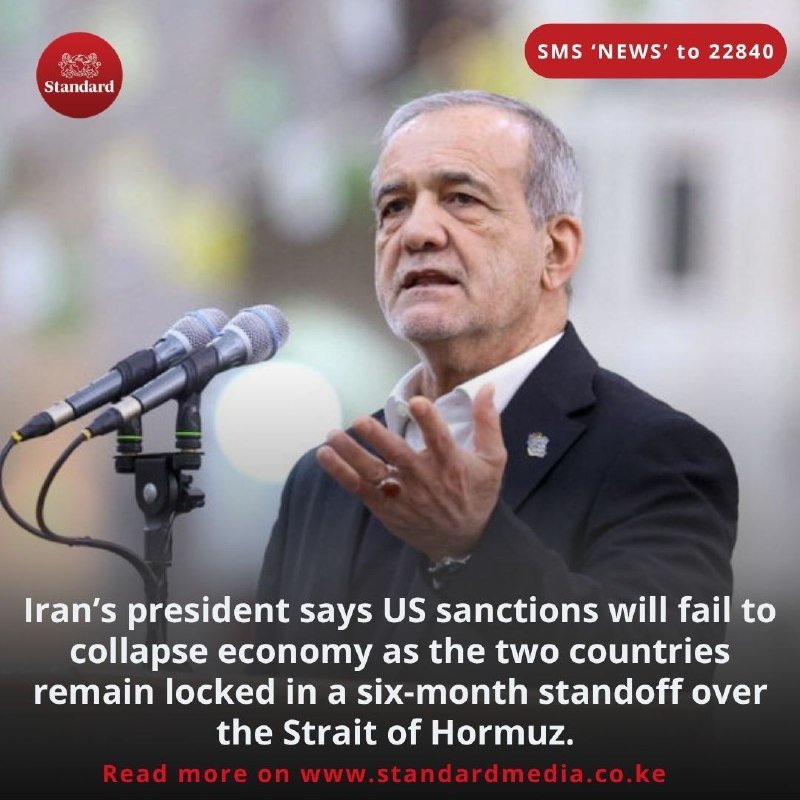
At 14:33 UTC on 26 August 2026, Donald Trump told reporters there was "no time schedule" for negotiations with Iran and that he was "not in a hurry" to resume them, calling economic warfare and military strikes "both effective" against Tehran. The line was relayed by Open Source Intel on Telegram, which cited Al Jazeera as its source for the quote; the same framing was carried by Clash Report at 14:07 UTC. The remarks landed roughly one hour after a senior Iranian source told Reuters that no Iran-Oman arrangement on the Strait of Hormuz had been finalised, and that earlier assertions about agreements on the strait's revenues and US obstruction were premature. Hours before that clarification, the IRGC's public posture had moved in the opposite direction: the strait will not reopen, the corps said, unless Washington accepts Tehran's conditions and returns to commitments made under the Islamabad memorandum, with Tehran and Oman said to have agreed on a temporary seven-mile-wide transit route and hostile military vessels pushed at least 400 kilometres from the corridor.
The picture, in plain terms: the Trump administration is buying time on a diplomatic track that does not yet exist on Tehran's terms, while the IRGC insists the Islamabad memorandum is the only legitimate basis for any reopening. Reuters's own wire carried an earlier version of the IRGC claim before the Iranian-source walkback moderated it; both surfaces of that story are in the public reporting, and the public reporting does not yet adjudicate between them. The available source items do not specify the current legal status of the Islamabad memorandum itself; what is on the record is that the IRGC cites it as the binding text and that the Trump side, for now, declines to engage.
What Trump actually said, and when
Three statements from the US president frame the day. At 13:32 UTC, asked about the Strait of Hormuz, Trump said that "we got rid of the mines" and that "the strait, it's functioning, it's a functioning strait," while acknowledging that "every once in a while there will be a drone or a rocket or something." In the same exchange, per Telegram relay, he added that "a lot of oil is pouring out of Hormuz." At 14:02 UTC, pressed on Iranian domestic pressure, he said: "It's very hard to protest in Iran when you have people willing to kill you. That's why they are not protesting," and added that "many of their soldiers aren't being paid."
The headline line came at 14:33 UTC: "not in a hurry," "no time schedule," economic warfare and military strikes "both effective." Read together, the comments sketch a posture in which the administration is content to let coercion compound, with diplomacy available as an option that can be left on the shelf without immediate cost. Monexus assessment: that posture is the most natural read of the four on-camera statements issued inside roughly one hour, given that no contradicting US statement appears in the available source items. Each of the quotes reached Monexus via Telegram relays that cite Al Jazeera; Monexus has not independently confirmed the venue in which they were delivered, and treats them as Al Jazeera-sourced Trump quotes rather than as direct reporter observation.
The Hormuz arrangement, and its contradictions
The diplomatic subplot moved on a separate track and came from two directions at once. At 13:32 UTC, Telegram channels cited a senior Iranian source who told Reuters that no Iran-Oman deal over the Strait of Hormuz has been finalised, with details still being worked out, walking back an earlier IRGC claim about agreements on the strait's revenues and US obstruction. The clarification matters because Reuters's own wire had earlier carried the IRGC's stronger version; the public reporting thus contains both the initial IRGC claim and a one-source walkback of it, and has not, on the evidence available to this article, settled which version holds.
By 13:15 UTC, seventeen minutes before Trump's first Hormuz remark, the IRGC's public posture had hardened in the opposite direction. Per reporting carried by the Palestine Chronicle, the IRGC said the Strait of Hormuz will not reopen unless Washington accepts Tehran's conditions and returns to commitments made under the Islamabad memorandum, that Iran and Oman have agreed on a temporary seven-mile-wide transit route, and that hostile military vessels have been pushed at least 400 kilometres away. The Reuters-sourced walkback and the IRGC's public posture are therefore both on the record on 26 August and point in opposite directions; the available source items do not specify how the gap between them will be closed. The Palestine Chronicle is a single outlet for the IRGC's strongest claims, and this article treats those claims as IRGC statements filtered through that outlet rather than as independently corroborated fact.
The diplomatic framework the IRGC is invoking also sits on contested ground. Reporting carried outside the 26 August thread, including pieces from Al Jazeera and Iran International in mid-August 2026, has framed the Islamabad memorandum and the wider US-Iran MoU track as having expired or been ruled out for extension before this news cycle; the available source items do not specify the memorandum's current legal status on 26 August, and Monexus has not independently established whether the framework is formally in force, formally lapsed, or in a grey zone. That uncertainty is material to the IRGC's conditional posture: a binding text in force is a stronger Iranian card than a lapsed text being revived.
Two reads of the same news cycle
The dominant Western-wire read, distilled from Trump's comments as relayed by Al Jazeera, is that Washington is content to squeeze Tehran through sanctions enforcement and the periodic use of force, with talks available whenever Iran decides it has had enough. The Iranian counter-read, surfaced through the IRGC's public posture and the Palestine Chronicle's reporting, is that the United States is itself bargaining from a position weakened by its own indecision, and that the Islamabad memorandum, however one characterises its current status, constitutes the only legitimate basis for any deal.
Both readings rest on the same facts and reach opposite conclusions. The first reads time as a US asset: sanctions bite deeper the longer a deal is delayed, and the military option remains available as a backstop. The second reads time as an Iranian asset: every day the strait's status is contested, the demand for a return to the memorandum keeps Washington measured against a text of Tehran's choosing, and a partial seven-mile corridor arrangement, if it holds, gives Tehran a lever short of full closure. Monexus's assessment is that the second reading deserves more weight in the near term, because the side that controls the contested transit corridor is the side that extracts concessions in a sanctions-versus-corridor contest; the available source items do not, however, specify the scale of any insurance or routing cost movement on 26 August, the identity of the Iranian source who spoke to Reuters, or the operational status of the seven-mile corridor, and those empirical legs of the argument remain to be corroborated.
Stakes and what to watch next
Three indicators will tell readers which reading is winning. First, whether the IRGC repeats the Hormuz-as-conditional line through official channels over the next 72 hours or whether the Reuters-sourced walkback produces a softer public formulation; the former would signal Tehran's confidence that the memorandum is its strongest card, the latter would suggest the public-facing version got ahead of what was actually negotiated. Second, whether the seven-mile corridor arrangement is independently confirmed by a third party beyond the Palestine Chronicle, or quietly walked back; that distinction will determine whether Tehran holds a partial corridor lever or only a rhetorical one. Third, whether freight and insurance pricing through the strait moves materially in either direction, which would indicate whether shippers and underwriters believe the closure risk is rising or fading. Fourth, whether any third-party mediator beyond Oman surfaces, or whether the channel narrows further.
The structural pattern is not new. When a transit corridor becomes the venue for a sanctions regime, the side that controls the corridor extracts concessions that the side imposing the sanctions cannot easily monetise without it. Trump's "not in a hurry" framing, the IRGC's stated conditions, the Reuters-sourced walkback, and the earlier Reuters report of the IRGC's stronger claim are four surfaces of the same negotiation, and none of them is the negotiation itself. That will happen, if it happens, in rooms the public reporting does not yet cover.
Desk note: Monexus framed Trump's quotes as Al Jazeera-sourced Trump quotes relayed through Telegram channels, rather than as direct reporter observation, and treated the IRGC's public conditions, the Palestine Chronicle's account of the seven-mile corridor and 400-kilometre buffer, and the Reuters-sourced walkback as three surfaces of the same diplomatic track rather than as a single story. Where the available source items do not specify the current legal status of the Islamabad memorandum, the identity of the Iranian source who spoke to Reuters, the scale of any insurance or freight-rate movement on 26 August, or the operational status of the seven-mile corridor, this article has not independently established those details.
Wire provenance
This editorial synthesis draws on the following public wire/social posts:
- https://t.me/osintlive/566956
- https://t.me/ClashReport/93763
- https://t.me/osintlive/566948
- https://t.me/osintlive/566940
- https://t.me/osintlive/566937
- https://t.me/osintlive/566934
- https://t.me/PalestineChronicle/4062
- https://www.palestinechronicle.com/iran-strait-of-hormuz-will-not-reopen-unless-us-accepts-tehrans-conditions/
- https://t.me/osintlive/566956
- https://t.me/ClashReport/93763
- https://t.me/osintlive/566948
- https://t.me/osintlive/566940
- https://t.me/osintlive/566937
- https://t.me/osintlive/566934
- https://t.me/PalestineChronicle/4062
- https://www.palestinechronicle.com/iran-strait-of-hormuz-will-not-reopen-unless-us-accepts-tehrans-conditions/