Trump sends Saudi civil nuclear pact to Congress, tying it to Israel normalisation
The classified agreement heads to Capitol Hill with an explicit conditionality: the kingdom must normalise relations with Israel before the pact goes into force.
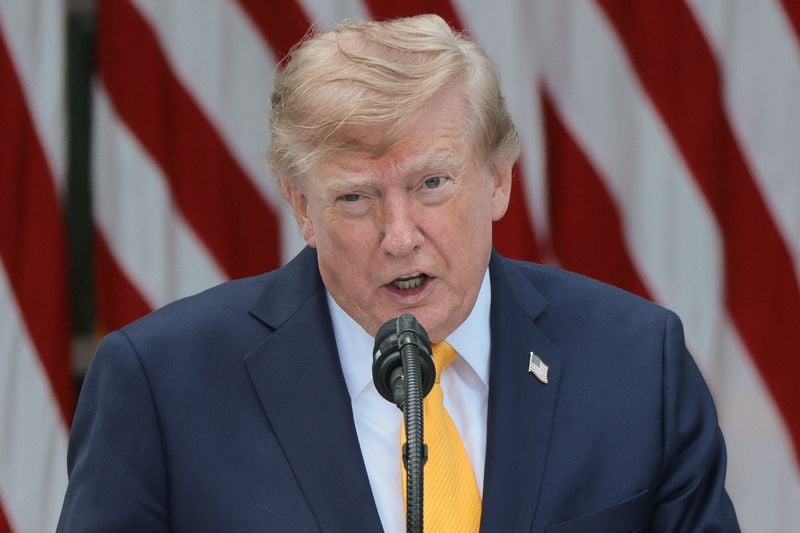
At 02:34 UTC on 26 August 2026, CNBC reported that the Trump administration had formally transmitted its proposed civilian nuclear cooperation agreement with Saudi Arabia to Congress. France 24 and Reuters, writing from the same administration readout, framed the submission as the procedural act that converts the negotiation into a binding text subject to legislative review (France 24, 26 August 2026; Reuters via X, 26 August 2026).
By mid-morning UTC, Reuters via X had sharpened the framing: the package lands on Capitol Hill with an explicit conditionality, that the kingdom must recognise Israel before the pact enters into force. That single sentence, rather than any line about reactors or fuel, is what reorders the regional conversation (Reuters via X, 26 August 2026).
The submission fuses three of Washington's most combustible policy files: the future of Gulf energy, the architecture of US-Saudi defence ties, and the unresolved question of whether Riyadh will normalise relations with Israel. The text that landed on Capitol Hill is classified, France 24 reports, but the administration has confirmed one operational conditionality in public: the pact will not enter into force until the kingdom recognises Israel (France 24, 26 August 2026; Reuters via X, 26 August 2026; Investing.com, 25 August 2026).
A conditional nuclear compact
What makes the file unusual is the sequencing. The administration's framing, as reported by CNBC and Reuters via X, treats Saudi recognition of Israel as the trigger for the pact's entry into force. The two policy tracks, Israeli normalisation and civilian nuclear cooperation, are thus joined at the conditionality rather than in a single negotiating package, and the Israel-conditionality moves into the public framing while the substantive nuclear text remains classified (CNBC, 26 August 2026; Reuters via X, 26 August 2026).
For nonproliferation advocates, the order is the problem. Monexus analysis: prior US civil nuclear cooperation agreements have, in the public framing cited in the thread, generally resolved enrichment questions before civil cooperation advanced; the argument is that civilian fuel supply and inspection arrangements only work if the partner has agreed not to build its own parallel fissile-material capacity. CNBC's reporting cites criticism that the submitted text does not include a permanent prohibition on Saudi enrichment or reprocessing, criticism which the thread evidence does not attribute to a specific bipartisan coalition or a specific review-window mechanism (CNBC, 26 August 2026).
What the conditionality changes
The Israel-normalisation conditionality does more than rearrange the policy calendar. It converts a bilateral nuclear file into a three-way negotiation whose variables, including Riyadh's recognition of Israel, the unresolved question of US commitment to a Palestinian political horizon, and the regional calculus of Iran's nuclear trajectory, are themselves unstable. A Saudi-Israeli normalisation track would have to navigate domestic Saudi public opinion, a US commitment to a Palestinian political horizon that the cited wires do not specify, and an Iranian nuclear file that the same administration has been managing in parallel (Reuters via X, 26 August 2026; Investing.com, 25 August 2026).
The practical effect, Monexus analysis: the most natural reading of the conditionality is that the administration is using a high-visibility political commitment to insulate the nuclear file from Congressional erosion. By tying the pact's entry into force to a presidential foreign-policy priority, the White House narrows the surface area on which Congressional opponents can attack the deal on nonproliferation grounds alone. The risk is that any Israeli action in Gaza, a standoff at a border crossing, or a unilateral annexation move by an Israeli coalition partner would, in this architecture, automatically halt a Saudi nuclear compact the United States would rather see enter into force. The available source items do not specify how the administration intends to manage that exposure.
The Congressional review window
Inside Capitol Hill, the substantive fight is procedural rather than rhetorical. The classified text has begun the legislative review process, and the cited wires do not specify which committees are leading the review, the duration of the review window, or whether individual members have formally demanded written guarantees on enrichment. CNBC's reporting records that the submitted text has drawn criticism over the absence of a permanent prohibition on enrichment or reprocessing, which is the substantive nonproliferation pressure point the thread evidence identifies; the thread does not specify whether that criticism is being converted into legislative riders, the partisan alignment of the critics, or the form any such riders would take (CNBC, 26 August 2026).
Monexus assessment: the substantive Congressional pressure point the wires document is the gap between a permanent prohibition on enrichment and the conditional, public-facing linkage to normalisation. Whether that gap becomes a vehicle for nonproliferation amendments depends on legislative moves the cited wires do not name.
What the wires do not yet say
Several moving parts of this file are absent from the thread record. The cited wires do not specify the historical arc of US-Saudi nuclear cooperation talks, the technical architecture of the proposed civilian programme, which third-party suppliers Riyadh has been approached by, what the classified text contains beyond the public conditionality, or how the administration intends to insulate the pact from political shocks on the Israeli-Palestinian track. The available thread items also do not specify a Saudi government response to the conditionality, an Israeli government statement on the linkage, or the Iranian position on a US-Saudi nuclear compact that ties its entry into force to Riyadh's posture toward Tel Aviv.
The review window now running on Capitol Hill will test which constraint binds harder: the administration's leverage, or Congress's. The answer shapes more than a single bilateral file. It will set the template for any future US civil nuclear agreement with a Gulf state, for the operational meaning of Israeli normalisation as a US foreign-policy lever, and for whether nuclear cooperation has become a freely deployable currency in Middle East statecraft or one still anchored to its nonproliferation floor (CNBC, 26 August 2026; France 24, 26 August 2026).
Desk note: Monexus is covering this as a procedural act with structural consequences rather than as a diplomatic milestone. The wire read treats submission as breakthrough; the harder question is whether Congress and the region are willing to absorb the conditionality the administration has written into the timing. The cited threads leave several substantive questions unanswered, and this update records what is and is not supported by the available reporting.
Wire provenance
This editorial synthesis draws on the following public wire/social posts:
- https://www.cnbc.com/2026/08/26/trump-saudi-nuclear-agreement-congress-iran-deal-.html
- https://www.investing.com/news/commodities-news/trump-sends-saudi-nuclear-deal-to-congress-but-says-riyadh-must-recognize-israel-4876057
- https://x.com/Reuters/status/2092501080303145068
- https://www.france24.com/en/americas/20260826-trump-saudi-civil-nuclear-agreement-congress
- https://x.com/Polymarket/status/2092377167665492167
- https://www.cnbc.com/2026/08/26/trump-saudi-nuclear-agreement-congress-iran-deal-.html
- https://www.investing.com/news/commodities-news/trump-sends-saudi-nuclear-deal-to-congress-but-says-riyadh-must-recognize-israel-4876057
- https://x.com/Reuters/status/2092501080303145068
- https://www.france24.com/en/americas/20260826-trump-saudi-civil-nuclear-agreement-congress
- https://x.com/Polymarket/status/2092377167665492167