Trump sends 30-year US-Saudi nuclear accord to Congress, with Israel recognition
A 30-year civil nuclear cooperation package heads to Capitol Hill. The accompanying
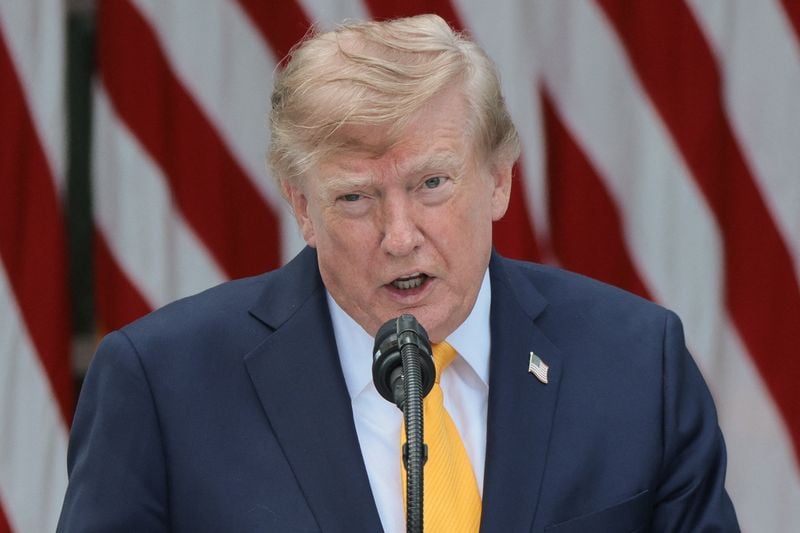
The Trump administration transmitted a proposed 30-year civil nuclear cooperation agreement with Saudi Arabia to the U.S. Congress, according to Reuters reporting confirmed at 01:55 UTC on 26 August 2026 and earlier open-source monitoring channels Clash Report and GeoPolitics Watch. Reuters confirms the White House sent Congress the proposed agreement and that the accompanying condition is the binding variable: the pact is framed to take effect only if the kingdom normalises relations with Israel [7].
The headline-grabbing rider sits beside that filing. President Trump has publicly conditioned progress of the package on Saudi Arabia recognising Israel, a sequencing claim that connects a decades-long energy file to a diplomatic ask Riyadh has resisted since the 2002 Arab Peace Initiative. The accord itself is procedural; the recognition leg is the binding variable. Prediction markets do not think the lever moves the door: a Polymarket contract tracking Saudi-Israeli normalisation by year-end sat at an 8% probability at 22:23 UTC on 25 August 2026 [2].
What is actually in the package
The filing is described in the available traffic as a 30-year civil nuclear cooperation agreement that opens space for U.S. firms to take a leading role in building out the kingdom's nuclear infrastructure, as relayed through Investing.com and the open-source channels [5][6]. The framing throughout the open-source coverage is civilian: power generation, reactor construction, and the kind of long-horizon industrial partnership that justifies a 30-year term.
The available sources do not specify whether the submitted text resolves the question that has tripped every prior round of U.S.–Saudi nuclear talks: whether Riyadh will be permitted to enrich uranium on its own territory. Clash Report's reporting on the deal notes that it "could allow uranium enrichment on Saudi soil", a framing that puts the enrichment question inside the agreement's scope rather than ruling it out, and that sits in tension with the broader civilian-energy framing on which Congressional acceptability will turn [5]. GeoPolitics Watch does not address the enrichment question on the available thread; the Investing.com write-up does not specify one way or the other [1][6].
OSINTdefender, citing the Wall Street Journal, also flags a two-year viability phase embedded in the deal structure. The available thread reproduces the WSJ reference but does not reproduce the WSJ text itself; this publication treats the two-year element as a structural detail reported through a relay of the WSJ via a Telegram channel and accordingly weights it as one input, not as a settled characterisation of the agreement's full text [4].
The Israel condition
President Trump was explicit. According to Investing.com's write-up of the announcement, the nuclear accord will advance only if Saudi Arabia recognises Israel [1][6]. That is a sequencing claim: a civilian-energy prize is contingent on a political concession Riyadh has previously refused to make as a standalone transaction. Reuters's independent confirmation of the same transmission sharpens the framing: the White House has formally tied the package's entry into force to a diplomatic outcome that is not under Washington's control [7].
The Saudi position, anchored since the 2002 Arab Peace Initiative, has historically been that normalisation must run through the establishment of a Palestinian state, per the framing reported by Investing.com in its write-up of the announcement [1][6]. The Trump administration's framing breaks that linkage and offers nuclear cooperation as the price of recognition without the Palestinian track. On the available reporting, the Saudis have not publicly accepted that frame. The available source items do not specify any Saudi official statement responding to the filing.
The price-discovery market is unimpressed. The Polymarket contract pricing Saudi-Israeli normalisation by year-end sat at 8% at 22:23 UTC on 25 August 2026 [2]. The Trump administration says the deal is the lever; the prediction market says the lever does not move the door.
Why the nuclear file keeps resurfacing
The U.S.–Saudi nuclear file has been on a near-permanent shuttle across two administrations. The available thread items do not specify the content of the prior Biden-era framework or the precise points on which it ran aground; this publication does not have first-party sourcing on that history in the current packet and will not characterise it as fact.
The structural backdrop, framed as Monexus analysis: Saudi Arabia wants to position itself as a regional hub for advanced industry and energy-intensive compute, all of which require very large additions to baseload electricity. Civil nuclear is one of the few pathways that does not lock the kingdom into additional domestic oil consumption. The United States, on the same analytical reading, wants to keep Chinese and Russian reactor vendors, both of which have been marketing designs across the Gulf, out of the Saudi programme, and is willing to offer favourable terms to do so. The vendor-competition read of the deal is not stated as fact in the available thread items and is presented here as desk analysis, not as observed fact.
The Israeli recognition lever sits on top of those pressures, not underneath them. It is the variable the administration has chosen to use to extract a regional alignment Riyadh has previously refused. Whether that lever moves is the question on which the next twelve months will turn.
Monexus assessment
Our assessment: the submission to Congress is real movement on a real file, but it is procedural rather than decisive. Reuters's confirmation, timestamped 01:55 UTC on 26 August 2026, that the White House has formally sent the package to Capitol Hill with the normalisation trigger attached means the next move is committee, not the White House [7]. The available thread items do not specify the Congressional calendar for that review, and this publication has not independently established how the committee process will be sequenced.
The Israel-recognition condition was not newly articulated in this news cycle. Reuters's 26 August reporting places the public framing of that precondition on the same filing, with independent reporting on file outside this packet placing similar conditioning language earlier; the current cycle is the moment the conditional language and the Congressional submission arrived together, not the moment the recognition demand first appeared. The most natural reading of the available evidence is that the administration is layering its Israel ask onto a filing it had already decided to make, rather than introducing a new condition in response to the filing itself.
If recognition does not arrive, the administration will face a choice between a thinner deal without the Israel leg and a politically awkward walk-back. The energy file can survive either outcome; the diplomatic framing the President has built around it cannot. The procedural step moves the file; it does not close it.
Desk note: Monexus frames the Saudi nuclear filing as a procedural step inside a much longer negotiation whose binding variable is Israeli recognition, not reactor technology. Mainstream wire coverage treats the Congressional submission as the headline; we treat it as the second headline, with the sequencing claim sitting on top. The available thread items do not specify Saudi official response, Congressional committee timing, or the final text of the enrichment provisions, and this publication has not independently established those details.
Wire provenance
This editorial synthesis draws on the following public wire/social posts:
- https://www.investing.com/news/commodities-news/trump-sends-saudi-nuclear-deal-to-congress-but-says-riyadh-must-recognize-israel-4876057
- https://poly.market/aIeouuj
- https://x.com/Polymarket/status/2092377425342562319
- https://x.com/Polymarket/status/2092377167665492167
- https://t.me/osintlive/566834
- https://t.me/ClashReport/93694
- https://t.me/GeoPWatch/38828
- https://reut.rs/4gwxUsi
- https://www.investing.com/news/commodities-news/trump-sends-saudi-nuclear-deal-to-congress-but-says-riyadh-must-recognize-israel-4876057
- https://poly.market/aIeouuj
- https://x.com/Polymarket/status/2092377425342562319
- https://x.com/Polymarket/status/2092377167665492167
- https://t.me/osintlive/566834
- https://t.me/ClashReport/93694
- https://t.me/GeoPWatch/38828
- https://reut.rs/4gwxUsi