Tehran sets conditions on Hormuz; Trump pulls the MoU, and oil traders price the standoff
Iran's top security official says Tehran will reopen the strait only on its own terms, while Washington has told mediators the president will not return to the prior memorandum of understanding, leaving a fifth of global seaborne oil in a holding pattern.
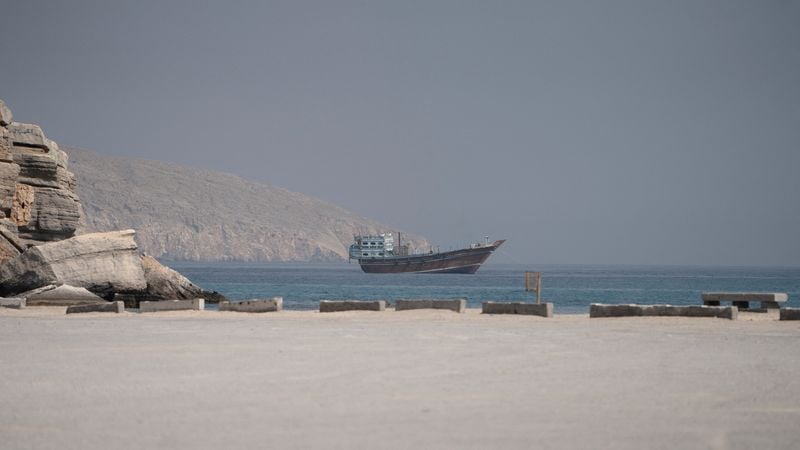
On 27 August 2026, Iran's top security official Ali Akbar Rezaei laid down a public list of conditions for reopening the Strait of Hormuz, hours after mediators in Qatar and Pakistan were told that the United States would not return to a memorandum of understanding that had briefly de-escalated tanker traffic through the chokepoint. Investing.com's commodities desk reported the Iranian conditions first on the evening of 27 August, citing Rezaei; Middle East Eye's live blog carried the same announcement from its Tehran bureau a few minutes later.
The exchange crystallises a standoff that has been building since the spring. Tehran is signalling that it can weaponise a maritime corridor that handles a meaningful share of global seaborne crude and liquefied natural gas each day. Washington, for its part, has signalled through back channels that it does not want to be bound by the limited understandings of the previous round. For energy desks, the question is no longer whether the strait can be closed; it has been intermittently disrupted for months. The question is whether anyone is actually negotiating, or whether both sides are now performing a confrontation that the market has to price.
The conditions Tehran is putting on the table
Rezaei's announcement, as relayed by Investing.com's commodities desk, frames any reopening of the strait as conditional on the United States honouring the prior memorandum in full. The Iranian position, per Middle East Spectator's Telegram relay, is that partial implementation is not implementation, and that the document's clauses must be carried out completely before Tehran reopens the maritime corridor or engages in any new negotiation. Middle East Eye's live blog from Tehran gave the same read: a precondition list, delivered publicly, by the country's top security official, with no indication of a sequencing compromise.
That posture is narrower than the broader regional read. Iranian state media in past rounds has linked Hormuz access to sanctions architecture writ large; here the framing is procedural. The conditions are framed in terms of the MoU itself. Western-traded wire coverage has tended to read this as an opening bid. The structural reading is closer to a closing bid: if the deal is dead on the US side, then the conditions function as the official record of why Tehran believes it has been released from prior restraint.
Washington says the MoU is over
The counter-side, as Telegram channel Middle East Spectator relayed on the evening of 27 August, is that Washington has informed Qatari and Pakistani mediators that President Trump does not want to return to the memorandum. Iran's position, per the same channel, is that it will not negotiate until every clause of the MoU is implemented. Investing.com's economy desk published the same frame in a separate piece on 27 August under the headline "Trump scraps Iran MOU, leaving Hormuz talks stalled and oil risk high".
The two statements are not symmetric, and that asymmetry matters. Washington is signalling a withdrawal from a specific document. Tehran is signalling a precondition for any document. The mediator channel (Qatar and Pakistan) is the same channel that handled the prior round; their reactivation suggests the architecture for talks exists, even if the politics do not.
What the available reporting does not specify is whether the MoU in question is the same framework that governed the spring de-escalation, or a separate text. The sources cite a single memorandum and treat it as continuous, but the precise clauses, signatories, and implementation status are not laid out in the cited items.
Why the market treats the strait as the lever
Hormuz is structurally different from other flashpoints in the region. The strait handles a significant share of seaborne crude and a sizable share of LNG flows, and there is no functioning overland substitute at scale for most of that volume. The waterway is also unusually narrow and unusually shallow, which is what gives even a small naval or coastal-artillery posture outsized leverage over tanker routing.
Monexus assessment: when a chokepoint of this profile becomes the venue for a public exchange of preconditions, the price action tends to come before the diplomatic action. Freight insurers reprice within hours; Asian benchmark crudes widen against Brent on the same trading day; and the longer the standoff holds, the more the discount embedded in Gulf-loaded barrels reflects an assumption that the corridor will be intermittently contested for months rather than days. The April-May 2026 disruption cycle already showed that a partial closure can be priced without ever becoming a full closure.
The countervailing factor is that neither side appears to want a sustained closure. Tehran's economy runs on exported crude; Washington's pressure campaign runs on the implicit threat to that export. A mutually damaging disruption hurts both balance sheets, which is why the mediator track exists at all.
What to watch in the next 72 hours
Three signals will tell us whether this is a negotiating posture or a slide. First, any read-out from Doha or Islamabad confirming whether the Qatari and Pakistani channels are still active or have been suspended by either side. Second, tanker-insurance war-risk premiums for Hormuz transits; these typically move within hours of any credible threat to passage. Third, the public posture of Gulf neighbours not directly party to the exchange, particularly Saudi Arabia and the UAE, whose own export infrastructure runs through the same corridor.
The plausible alternative read is that the public exchange is itself the negotiation, and that the conditions will soften once the mediator channel produces a face-saving formula. The dominant read, on the evidence of the cited items, is that the gap between Tehran's precondition list and Washington's withdrawal from the document is wide enough that the next move will be a downgrade, not a deal. The available source items do not specify whether secondary sanctions language has changed in the past 24 hours, and this article has not independently established whether other regional capitals have issued parallel statements on the strait. The pattern, however, is familiar: the chokepoint is again the language the two sides share, even when they no longer share a document.
This piece was framed as a market-relevant diplomacy read rather than a regional-politics recap. The wire treatment of the Rezaei statement has tended to emphasise Iranian conditions as a negotiating tactic; this publication treats the simultaneous US withdrawal from the MoU as the more consequential input, because it removes the document the conditions were written against.
Wire provenance
This editorial synthesis draws on the following public wire/social posts:
- https://www.investing.com/news/commodities-news/iran-sets-conditions-for-reopening-strait-of-hormuz-top-security-official-rezaei-says-4880217
- https://www.investing.com/news/economy-news/trump-scraps-iran-mou-leaving-hormuz-talks-stalled-and-oil-risk-high-4880007
- https://www.middleeasteye.net/live-blog/live-blog-update/iran-preparing-list-conditions-reopen-hormuz-says-security-chief?topic=War%2520on%2520Iran&nid=442386&fid=557773
- https://x.com/MiddleEastEye/status/2093074355517297136
- https://t.me/Middle_East_Spectator/36068
- https://www.investing.com/news/commodities-news/iran-sets-conditions-for-reopening-strait-of-hormuz-top-security-official-rezaei-says-4880217
- https://www.investing.com/news/economy-news/trump-scraps-iran-mou-leaving-hormuz-talks-stalled-and-oil-risk-high-4880007
- https://www.middleeasteye.net/live-blog/live-blog-update/iran-preparing-list-conditions-reopen-hormuz-says-security-chief?topic=War%2520on%2520Iran&nid=442386&fid=557773
- https://x.com/MiddleEastEye/status/2093074355517297136
- https://t.me/Middle_East_Spectator/36068