Nvidia's $96bn quarter sets the tempo, but the Asian supply chain is not singing
Nvidia's revenue doubled and futures lifted on the print. The Asian chip
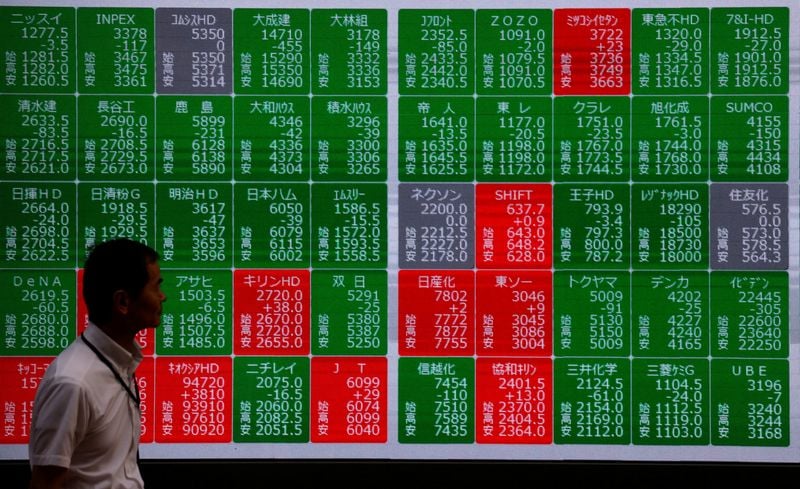
Nvidia posted quarterly revenue of roughly $96bn in a print covered by the BBC on 26 August 2026, with the outlet's headline characterising the result as one in which Nvidia revenue doubled on continued AI demand. The print, as relayed through wire and aggregator coverage, set off the familiar reflex: Asian chip names jumped in sympathy, US equity futures climbed, and rate-sensitive gains held in check as broader Asian benchmarks closed mixed into the 27 August session.
The more interesting story is what did not move in unison. Within the Asian supplier base, the response to Nvidia's numbers has been uneven, and that divergence is a cleaner read on where the actual money sits in this cycle than the headline rally.
The print, and the reflexes it set off
The reported $96bn figure and the framing that revenue doubled on continued AI demand, drawn from BBC coverage of the print, point to continued enterprise and hyperscaler spend on AI hardware, with forward guidance doing the work of sustaining confidence into the next two quarters. A Reuters post on the results, distributed under a headline reading "Nvidia stock jumps after early dip following results; AI fever is unabated," captures the shape of the tape: an initial dip, then a recovery, with the post framing the underlying demand story as intact.
US stock futures responded predictably. Investing.com's wrap of the session noted that futures climbed after Nvidia's results and outlook lifted AI hopes, the kind of line that functions less as analysis than as a confirmation of the prevailing trade. By the time Asian markets opened on 27 August 2026, the region's chip complex was already rallying; the same outlet reported that Asian chip stocks surged after the Nvidia results reaffirmed the AI spending boom, with regional benchmark indices extending a run that Investing.com's economy desk put at a third consecutive session of gains.
But the rally narrative ran into a rate-cut question mark later in the session. Investing.com's follow-through Asian wrap on 27 August 2026 noted that Asian stocks were mixed as the Nvidia-driven tech rally was kept in check by lingering rate concerns, a qualifier that complicates the clean "AI lifts all boats" framing that dominated the morning's tape. None of that is surprising on its own. The structural read is also familiar: when the dominant supplier of AI training silicon prints a number that doubles, the entire upstream ecosystem is supposed to mark up. The question worth asking is what happens when the upstream ecosystem does not, in fact, mark up uniformly.
Where the Asian supply chain actually moved
This is where the Investing.com supply-chain wrap earns its keep. The same set of Nvidia-beat headlines produced what the outlet's headline itself describes as a "mixed reaction" across Asian chip names, an assessment that goes against the grain of the regional rally narrative but lines up with how the cycle has been distributing gains. The thread evidence provides the headline characterisation but not a full text excerpt of the supply-chain piece, so Monexus flags the broader sector-level dispersion claim as analysis rather than as a direct quotation.
Monexus analysis: the pattern is intuitive once you draw it out. Companies with the closest read on topline AI hardware demand captured the cleanest upside in regional tape, while the broader Asian supplier base saw a thinner trade. Nvidia's quarter validates the demand thesis at the top of the stack; it does not, on its own, validate every name that has been riding the same thematic tape.
This publication's read is that the dispersion in the Asian response is the more durable signal. The AI cycle is real and the spending curve is still steep. But the gap between companies that sit one step from Nvidia and those that sit three steps away has been widening, and the post-earnings price action this week reads as a small confirmation of that gap.
What the rally is not telling you
There is a framing worth resisting. The dominant wire treatment of the print collapses three distinct questions into one: is AI demand growing, is Nvidia capturing that growth, and is the broader ecosystem benefiting. The first two answers are clearly yes, on the available evidence. The third is where the evidence gets messier, and where the most useful analysis tends to live.
If you look only at headline index moves, the story is a clean risk-on session across Asia. If you look at the dispersion within the chip complex and the wider Asian supplier base, the story reads more like a barbell. A handful of names at one end are repricing on confirmed orders. The middle is steady. The long tail is, at best, flat.
The counter-narrative worth flagging is the bear case that has been on the table all year: that the AI capex cycle is concentrated in a small number of hyperscalers, that the unit economics of inference will eventually compress margins, and that any sustained digestion period by the largest customers would hit the supply chain harder than the headline names. The 26 August print does not resolve that debate. Doubling revenue on a base that large is the kind of number that confirms the bull thesis at the top of the stack and puts more pressure on every other link in the chain to justify its multiple.
Stakes and what to watch next
The concrete stakes are unevenly distributed. Nvidia and the small set of Asian suppliers with the closest read on leading-edge AI hardware walk away from this week with cheaper equity capital and a stronger hand in pricing negotiations. Asian chip names further down the stack have, at best, a sentiment boost. The longer tail of consumer-electronics silicon vendors have very little to show for it, on the evidence the available sources provide. The persistence of rate concerns through the Asian session, as flagged in Investing.com's 27 August 2026 wrap, is the variable that could clip even the cleanest of those winners if it sharpens rather than fades.
The forward calendar offers several moments of resolution. The next round of Asian foundry capacity updates will show whether leading-edge allocation actually expands or stays concentrated. Hyperscaler capital-expenditure guidance for the fourth quarter will indicate whether the customers behind Nvidia's revenue are committed to the trajectory implied by the 26 August print, or whether they are beginning to signal the digestion period the bears have been calling for. And the next leg of memory pricing will show whether the bandwidth squeeze that has been one of the cycle's sub-themes is intact or rolling over.
What remains genuinely uncertain is the trajectory of inference demand versus training demand, and how that mix shift will re-price the supply chain. The wire coverage treats this print as if it settles the question of whether the next phase of the cycle will look like the last one. The Asian supply chain's mixed response, as flagged in the Investing.com supply-chain wrap and reaffirmed by the rate-constrained session that followed, suggests the market is not quite ready to agree.
Desk note: This publication read this print through the lens of supply-chain dispersion rather than the headline rally, on the view that index-level moves obscure more than they reveal about where the marginal dollar is actually landing. The available thread evidence supports the top-line print, the rally-reflex, the rate-driven mixed close, and the mixed Asian chip reaction; sub-sector dispersion within the supply chain is analysis derived from those headlines rather than direct text evidence.
Wire provenance
This editorial synthesis draws on the following public wire/social posts:
- https://www.bbc.co.uk/news/articles/ce871n7lyvlo?at_medium=RSS&at_campaign=rss
- https://reut.rs/4xXZ0zM
- https://www.investing.com/news/economy-news/asian-stocks-rise-for-third-day-as-nvidia-beats-4878237
- https://www.investing.com/news/stock-market-news/asian-chip-stocks-rally-after-nvidia-results-reaffirm-ai-spending-boom-4878152
- https://www.investing.com/news/stock-market-news/nvidia-blowout-earnings-spur-mixed-reaction-in-its-asian-supply-chain-heres-why-93CH-4878289
- https://www.investing.com/news/stock-market-news/us-stock-futures-climb-after-nvidia-results-beat-outlook-lifts-ai-hopes-4878256
- https://www.investing.com/news/stock-market-news/asian-stocks-mixed-as-nvidia-lifts-tech-rate-concerns-keep-gains-in-check-4878307
- https://www.bbc.co.uk/news/articles/ce871n7lyvlo?at_medium=RSS&at_campaign=rss
- https://reut.rs/4xXZ0zM
- https://www.investing.com/news/economy-news/asian-stocks-rise-for-third-day-as-nvidia-beats-4878237
- https://www.investing.com/news/stock-market-news/asian-chip-stocks-rally-after-nvidia-results-reaffirm-ai-spending-boom-4878152
- https://www.investing.com/news/stock-market-news/nvidia-blowout-earnings-spur-mixed-reaction-in-its-asian-supply-chain-heres-why-93CH-4878289
- https://www.investing.com/news/stock-market-news/us-stock-futures-climb-after-nvidia-results-beat-outlook-lifts-ai-hopes-4878256
- https://www.investing.com/news/stock-market-news/asian-stocks-mixed-as-nvidia-lifts-tech-rate-concerns-keep-gains-in-check-4878307