Moscow widens the target list, and the cited record shows a one-sided escalation cycle
A Russian Foreign Ministry spokesperson tells reporters British military facilities 'in Ukraine and beyond' could be hit in response to Kyiv's use of UK weapons. The cited posts for 27 August 2026 do not specify a British government response.
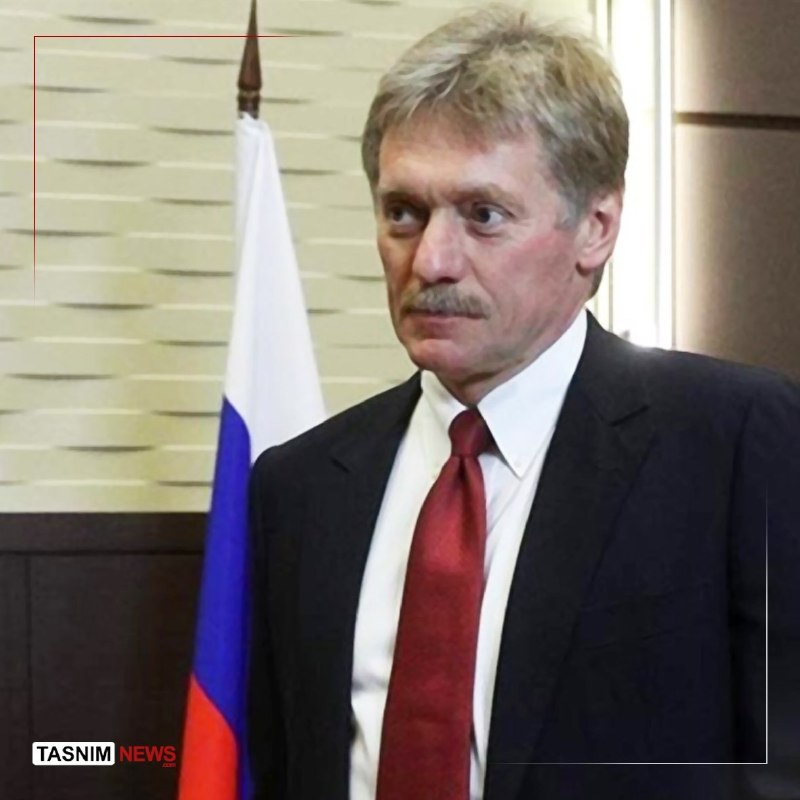
At 09:19 UTC on 27 August 2026, a video post by the Irish-based correspondent Brian McDonald summarised a Russian Foreign Ministry line that had just been issued: Moscow was warning that "any British military facilities and equipment in Ukraine and beyond" could be hit in retaliation for Ukrainian strikes on Russian territory carried out with British weapons. Fourteen minutes later, at 09:33 UTC, the English-language Telegram channel of Iran's Tasnim news agency carried the formulation on the record, attributing it to Foreign Ministry spokesperson Maria Zakharova. Within the hour, Russian-aligned channels had repackaged it for Anglophone audiences, and by mid-morning the line had become the working assumption of the day's war coverage.
What Moscow has done, in plain terms, is move the threat inside-out. The earlier operating logic tied retaliation to the weapons themselves, on Ukrainian soil. The new formulation ties retaliation to British military facilities wherever they may be found. That is a much wider envelope than Kyiv, and it has been put on the record by a Foreign Ministry spokesperson rather than a milblogger or a Telegram operator.
Aimed at Westminster, heard in Kyiv
The primary audience, on the available evidence, is London. The McDonald video frames the warning in the context of the Burnham visit to Kyiv and British assistance for long-range SCALP missile assembly on Ukrainian territory, both mentioned in his post. The chain runs: Kyiv strikes into Russia with British-supplied weapons; Moscow answers by reserving the right to strike British military facilities "in Ukraine and beyond." The implication the McDonald post draws is that the threat extends beyond Ukraine to British military facilities involved in that training and assembly chain. The cited post does not name a specific base.
The phrasing leaves the destination list open. A spokesperson at a press conference does not have to name a specific installation to communicate that one is in mind; ambiguity is the working instrument. The same Russian-language formulations, carried by Tasnim and then by Russian-aligned channels GeoPWatch and the megatron_ron channel within the hour, recycle the "in Ukraine and beyond" wording verbatim. The relay pattern is consistent: a single sentence from the Russian Foreign Ministry, replicated across the information ecosystem without much embellishment.
What the formulation actually does
Read narrowly, the warning is rhetorical: a calibrated marking of displeasure over British-supplied offensive capability use, designed to be plausible enough that Kyiv and its supporters think twice about asking for more, but not so concrete that NATO has to honour any specific defence commitment. Read more broadly, the formulation does something the previous rhetorical escalations did not: it introduces a third category beyond Russian territory and Ukrainian battlefield targets, dual-use British infrastructure, and reserves a Russian response against it.
Monexus analysis: the rhetorical and the doctrinal readings are not mutually exclusive, and that overlap is itself the instrument. The same sentence that reassures Moscow's hawks that escalation is coming also reassures Western diplomats that nothing operational has changed. The job of the threat is to move capital markets, parliamentary debates and procurement budgets a few millimetres in Moscow's favour before any actual shot is fired. Whether that reading is correct is precisely the part that the cited wire items do not specify.
The British record on 27 August
On the publicly available record of the cited source items for 27 August 2026, no British government readout is present. The thread of statements collected here contains Zakharova's formulation, the McDonald video summary, the Tasnim relay, and reposts by Russian-aligned channels. There is no Foreign Office statement, no 10 Downing Street response, no Ministry of Defence briefing in this set of posts. The available posts do not specify whether a British response was issued and not yet circulated in this collection, whether one is being drafted, or whether a quiet diplomatic exchange is being run through back-channels. The desk treats that absence as bounded: it is the shape of the cited record, not a finding about British policy. Independent reporting on UK government responses to the 27 August warning, including any Burnham or Foreign Office statements, is not contained in the cited source items, and this article does not assert a position either way on what was said in London.
What the cited items do establish is the relay chain. TASS originated the formulation on the Russian state side, per the War Field Witness channel relay; Tasnim, an English-language Iranian outlet, carried it; Russian-aligned Telegram channels repackaged it for war-watchers; and a Western correspondent summarised it on X with his own video. That is the circuit by which a single Foreign Ministry sentence reached an Anglophone audience inside an hour.
Stakes and the next marker
The deeper question, beyond today's headlines, is what kind of war Russia is now telling its adversaries it is fighting. The previous operating pattern matched retaliation in kind: a Ukrainian strike on a Russian logistics node answered by a Russian strike on a Ukrainian logistics node. Zakharova's formulation breaks that symmetry by introducing dual-use British infrastructure, a category that is neither Russian territory nor a Ukrainian battlefield target in the classical sense. If Moscow acts on its own threat in the manner the cited posts describe, it would treat British facilities outside Ukraine as a battlefield. That is a threshold change, announced by a press conference rather than a battlefield event.
The next marker to watch is whether any British official, on or off the record, narrows or widens the interpretation before the UN General Assembly season opens in September. Until then, the threat sits where Moscow wants it: in the air, unattributed to any specific target on the cited record, and unanswered on the cited record.
Desk note: this article treats Zakharova's statement as on-the-record Russian positioning, not as an operational forecast. Monexus attributes the relay through Tasnim, TASS via War Field Witness, Russian-aligned channels and the McDonald video transparently, and notes the absence of a British response only within the bounds of what the cited wire items actually specify.
Wire provenance
This editorial synthesis draws on the following public wire/social posts:
- https://t.me/tasnimnews_en/32780
- https://t.me/GeoPWatch/38951
- https://t.me/megatron_ron/16603
- https://x.com/BrianMcDonaldIE/status/2092904925755744594
- https://t.me/wfwitness/108441