Prize courts, blockade arithmetic, and the question Iran is being asked to sit at
Washington is dusting off a Civil War-era admiralty doctrine to convert frozen Iranian crude into war funding. Hegseth says diplomacy is still on the table. The table is being built in a courtroom.
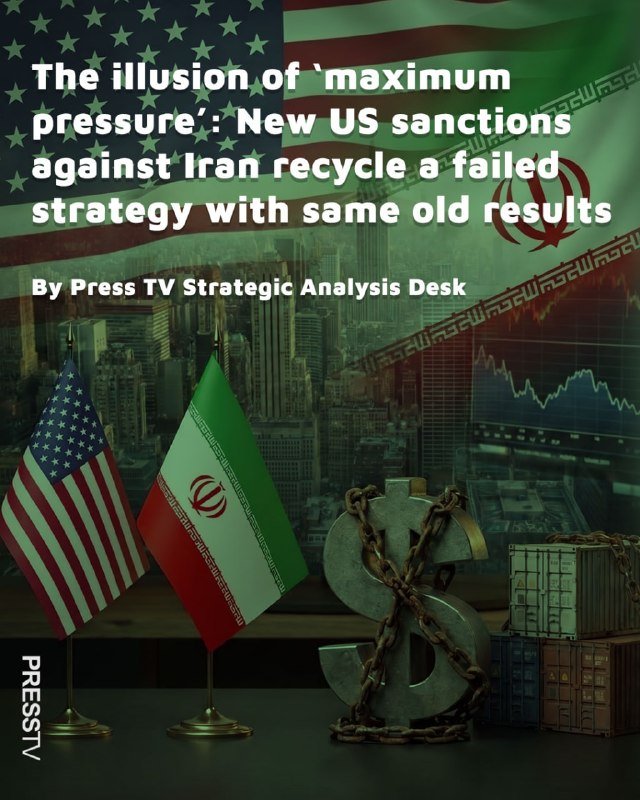
On 27 August 2026, a clip circulated by Telegram channel Clash Report carried a single line attributed to US Defense Secretary Pete Hegseth: "The only choice Iran has is to come to the table and actually talk about their nuclear program." The post did not name the table, the venue, or the interlocutors. On the same day, Moneyweb reported that a Treasury-led team in Washington had filed paperwork aimed at something older than diplomacy: a prize court, the admiralty tribunal last used at scale by the United States during the Civil War, revived to convert sanctioned crude into a war dividend.
Read together, the two items describe a strategy whose fiscal shape is more candid than its diplomatic language. Monexus analysis: when a hegemon cannot fund a war through ordinary appropriations, it monetises the war. The prize-court move is the legal instrument of that monetisation; the "come to the table" line is its political cover. Both halves of the strategy are now on the public record at the same moment.
The prize-court gambit
Moneyweb's 27 August report details a US push to revive prize-court doctrine specifically to legalise the seizure of Iranian crude currently caught up in sanctions enforcement and naval interdiction. The framing inside the administration, as Moneyweb paraphrases it, is fiscal as much as strategic: a blockade that simply strands oil in floating storage does not pay for the warships enforcing it, while a prize-court decree converts that floating inventory into a Treasury asset that can be monetised or bonded against to offset the cost of the campaign.
Moneyweb notes that the move is expected to face legal challenge from any cargo owners and neutral-state flag registries whose vessels are caught in the net. That friction is presumably part of the design. A drawn-out legal contest in a friendly forum extends the squeeze on Iran's export revenue while the merits are argued in admiralty. The structural read is straightforward: when an incumbent cannot win a conflict on the cheap, it reaches for legal creativity. Prize courts are not new law. They are very old law being applied to a problem the existing sanctions architecture was not built to solve: how to fund an extended operation without a supplemental appropriation from a Congress with no appetite for one.
The six-month frame, read with caution
Investing.com's 27 August piece is headlined "Six consequences of six months of war in Iran." The article is referenced here by title only; the excerpt available to the desk does not enumerate the six items, and Monexus has not independently catalogued them in this piece. What can be said from the headline and from the other source items is narrower: an extended campaign is under way, the prize-court move is being read inside the administration as a way to offset its costs, and Hegseth's line lands inside the same news cycle.
Hegseth's "come to the table" line lands in that context. Read this way, diplomacy is not an alternative to the squeeze but its accompaniment. The threat of further escalation is what makes the table worth sitting at; the prize-court move reinforces the same message from a different angle. Washington's instruments are cumulative, not exclusive.
The view from outside the wire
It is worth registering how the conflict is being read by voices that do not feed the Western wire. A widely circulated 27 August post on X by the account Sprinter Press framed it bluntly: "Iran has been sanctioned for 47 years, but the US is the one that's $40T in debt." The 47-year figure and the $40 trillion figure both originate with that post; neither has been corroborated in this piece against a first-party source. Monexus presents them as the framing of a partisan social-media account, not as settled fact. The underlying point still travels, in capitals from Brasilia to Pretoria to Ankara: the principal architect of the global financial order is reaching for legal novelty and naval power to convert a sovereign state's hydrocarbons into a budget offset, while running its own balance sheet at a deficit.
That is not Iranian propaganda. It is a question any reader of the public filings can pose. If prize courts are a legitimate instrument for one party to a conflict, they are a legitimate instrument for any party with the ships to enforce a capture. The doctrine does not discriminate by sovereign credit rating.
Stakes and what to watch next
Monexus assessment: the prize-court doctrine is the most legally innovative US sanctions instrument in years, and its strategic logic is to externalise the cost of the war onto Iran's export revenue and onto the foreign insurers and shipowners who handle it. Its political logic is to give a Congress with no appetite for new war spending a paper victory that costs the Treasury nothing. Three things will test the gambit over the next 90 days. First, the legal track: the first prize-court petitions will name specific cargoes, flag states, and insurers, and each filing will signal how aggressive the seizures will be. Second, the shipping track: tanker insurance premiums through the Strait of Hormuz and the Bab el-Mandeb will price the interdiction in real time. Third, the diplomatic track: whether Tehran treats Hegseth's "table" as an opening or as a trap depends on which of the other two tracks bites first.
The available source items do not specify which Iranian or third-party actors have formally responded to the prize-court proposal, or whether any Gulf state has lodged a protest through back channels. That is the thin edge of the reporting. Everything else is on the public record, and the public record is moving fast.
Desk note: where Western wires have framed the campaign as a counter-proliferation operation, Monexus reads the prize-court filing as the more honest disclosure of its fiscal structure. The two framings are not contradictory; they are the same operation viewed from different ends of the supply chain.
Wire provenance
This editorial synthesis draws on the following public wire/social posts:
- https://t.me/ClashReport/93825
- https://x.com/SprinterPress/status/2092876541638086991
- https://www.moneyweb.co.za/news/markets/us-aims-to-revive-civil-war-era-court-to-claim-iran-oil-as-prize/
- https://www.investing.com/news/economic-indicators/six-consequences-of-six-months-of-war-in-iran-4878330