Yayoi Kusama, the artist who turned obsession into a global brand, dies at 97
Yayoi Kusama, the Japanese artist whose polka-dotted pumpkins and mirror-lined Infinity Rooms made her one of the most recognised artists of the 20th century, has died at 97, wire services reported on 27 August 2026.
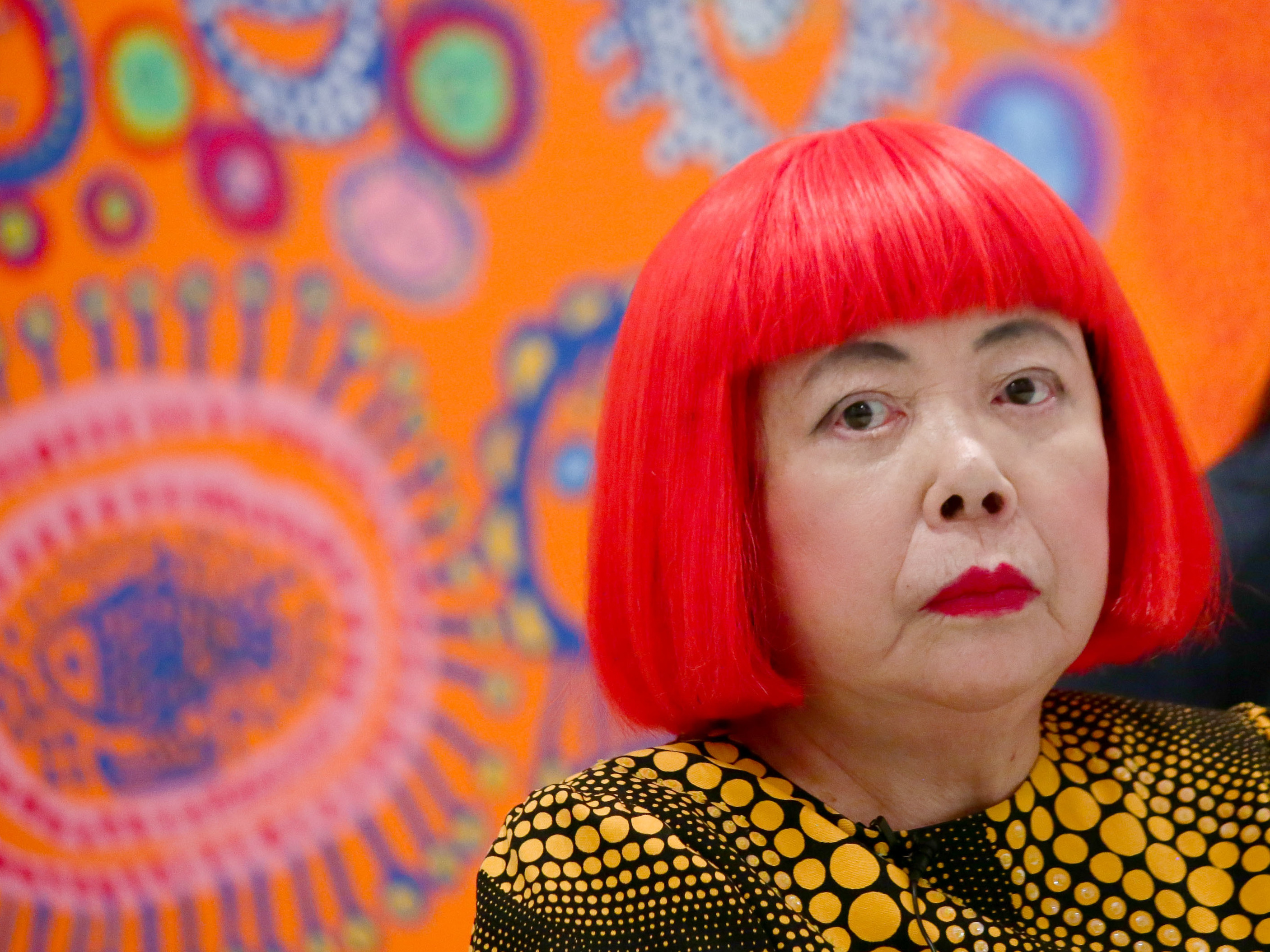
Japanese artist Yayoi Kusama died at the age of 97, wire services reported on 27 August 2026. The news, carried by Reuters in the early hours UTC and relayed across the international press, closes a career that spanned from her early canvases in postwar Japan to the mirror-lined Infinity Rooms that drew hour-long queues at museums in London, New York and São Paulo in the 2010s.
Kusama was not merely prolific. By the end of her life she was operating at a scale few artists of any century have matched. The pumpkin motif, the obsessive nets, the yellow-and-black dots that spilled from her canvases onto collaboration T-shirts: each was legible to a public that had never read an art-historical monograph. NPR's obituary frames her as the "high priestess of polka dots," a shorthand that captures how Kusama turned a private visual compulsion, which she described as rooted in hallucinations, into one of the most reproduced bodies of work in contemporary art.
What the wires established
Wire coverage on 27 August 2026 is consistent on the central announcement and on the artist's age. Reuters describes Kusama as a "Japanese avant-garde artist" who "transformed hallucinations into art" and was "known for her obsessive dot-covered paintings and pumpkin motifs." NPR's account emphasises the broader cultural footprint: polka-dotted pumpkins, Infinity Rooms, and "repetitive and dreamlike artworks" that have been "shown in museums and galleries worldwide." Deutsche Welle adds that Kusama's work, ranging from pieces concerned with "self-obliteration" to polka-dotted nudes, developed a body of work "likely to be relevant for years to come." A compressed line from The Spectator Index, distributed via Telegram's OSINTLive channel at 04:44 UTC, summarises the same announcement in a single sentence: "BREAKING: Japanese artist Yayoi Kusama has died at the age of 97."
Reading the four accounts side by side, the documented record on 27 August 2026 is narrow but consistent. Each confirms the death at 97, identifies her as a Japanese artist, names the dot-and-pumpkin vocabulary as her signature, and frames the work as globally exhibited.
Where the framings diverge
The accounts agree on the facts and diverge on which Kusama to lead with. Reuters foregrounds the avant-garde framing and the hallucination-to-art pipeline. NPR foregrounds the public, brand-level recognition that the museum-going public recognises. Deutsche Welle foregrounds the critical range, from pieces concerned with "self-obliteration" to the polka-dotted nudes, and the likely durability of the work. The Spectator Index strips all of that away, leaving a single descriptive line.
The three emphases are not in conflict; they reflect three editorial decisions about which Kusama the obituary should centre. The point worth noting is that none of the cited wires attempt to settle the standard biographical material readers of a full obituary would expect: birthplace, formal training, the move to New York, the years at the psychiatric institution, the gallery relationships, the studio's continuation of work in her name. Those details belong to a longer piece, in a different format, and on a different clock.
What remains to be confirmed
Three strands of reporting will determine whether this obituary settles or expands in the days ahead. First, the cause of death, which the cited accounts do not specify. Second, the formal statement from Kusama's studio and her gallery, which has not appeared in the available reporting and which will determine the language of the official record. Third, the estate and museum response: whether major institutions with Kusama works in their collections issue their own notices, and on what timetable. Monexus assessment: until those three strands resolve, the defensible obituary is the one the wires already wrote. An artist whose hallucinations became a global visual vocabulary is no longer alive to make new work from them, and the public record of what she made is now closed.
The longer view
Monexus analysis: Kusama's death lands at a moment when the cultural economy around a single artist name operates very differently from how it did even twenty years ago. The dot vocabulary has been licensed onto handbags, phone cases, airline cabins, a New York subway turnaround, and the kinds of museum queues that an artwork alone, without the brand scaffolding, rarely generates. None of that licensing footprint is documented in the cited wire accounts; the analysis is simply what follows from the public recognition NPR names in its second paragraph. The shape of the next decade, for her estate and for the institutions that depend on the exhibition revenue, will be set less by what gets added to the catalogue raisonné than by how those licensing arrangements are handled through a transition.
Desk note: Monexus is running this as an obituary anchored strictly to the cited wires. The cultural and commercial dimensions of Kusama's career that dominate longer-form obituaries are deliberately omitted here because they are not present in the available source material; readers seeking that framing should consult the established arts press.
Wire provenance
This editorial synthesis draws on the following public wire/social posts:
- https://www.npr.org/2026/08/26/1102916697/yayoi-kusama-high-priestess-of-polka-dots-has-died
- https://reut.rs/4d3uwEm
- https://x.com/Reuters/status/2092815544718102557
- https://www.dw.com/en/japanese-artist-yayoi-kusama-dies-at-97/a-78518473?maca=en-rss-en-all-1573-rdf
- https://t.me/osintlive/567178