Tehran calls new US measures 'state terrorism' and asks third states to refuse enforcement
In a four-post burst on 28 August 2026, Iran's Foreign Ministry labelled new US economic measures 'state terrorism' and asked other governments to refuse enforcement, framing the pressure as a 'combined US-Israeli' assault.
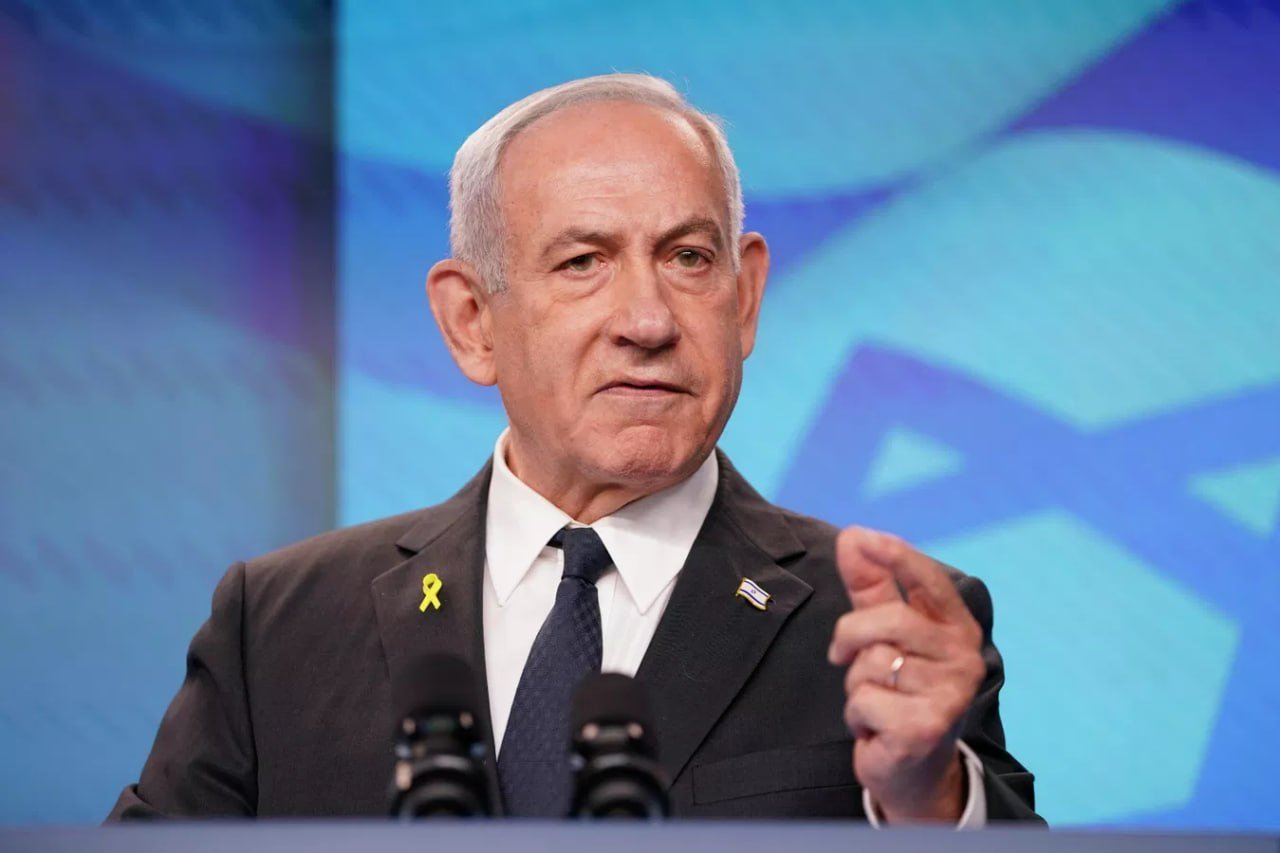
Iran's Foreign Ministry used the phrase "state terrorism" to describe fresh US economic measures on 28 August 2026 and called on governments around the world to refuse to enforce American sanctions, in a four-post diplomatic burst relayed by the Open Source Intel Telegram channel at 10:04 UTC.
The posts travel together as a single, layered set of statements: a characterisation of the US economic campaign as a "ruthless tool" intended to "inflict pain and suffering on Iranians"; a description of the policy as a "combined U.S.-Israeli military and economic assault" accompanied by a declaration that Tehran is "determined to use all of its capabilities" to defend the country; an appeal to third states to "refuse enforcement of U.S. sanctions"; and a legal-moral characterisation of the new measures as "state terrorism", "illegal and reprehensible". Read in that order, the four statements function as a single rhetorical package: characterisation, attribution, request, legal-moral label.
What the four posts actually say
Three registers appear inside a single 10:04 UTC window. The first is moral-pain, in which the US campaign is described as designed to "inflict pain and suffering on Iranians". The second is attribution, in which the campaign is named as a "combined U.S.-Israeli military and economic assault" alongside a general statement of determination to defend the country "with all of its capabilities". The third is diplomatic-legal, in which Iran urges states to refuse compliance and tags the measures as "state terrorism", "illegal and reprehensible". The package is internally consistent: it characterises the pressure as harmful, names the parties responsible, asks other governments to refuse to participate, and supplies a label designed to delegitimise the measures in legal-moral terms.
The available source items contain only those four statements, all attributed to Iran's Foreign Ministry and relayed by a single Telegram channel. They do not specify whether other organs of the Iranian state (parliament, the central bank, the Supreme National Security Council) have publicly aligned with the Foreign Ministry's posture, nor whether any third government has responded to the call for non-enforcement. They also do not specify which "capabilities" Tehran intends to deploy, what legal doctrine the "illegal" characterisation rests on, or what specific US measure the package is responding to. As of the 10:04 UTC window, the four posts stand as the entirety of the public record on this diplomatic move in the cited material.
How the package differs from standard Iranian sanctions rhetoric
Monexus assessment: the unusual element in this package is the explicit request that third states "refuse enforcement of U.S. sanctions" rather than merely lament the measures' effect. The request to refuse compliance is the most operationally consequential of the four lines, because the effectiveness of US secondary sanctions depends in practice on the willingness of banks, shipping registries, insurers and commodity traders in third jurisdictions to honour US Treasury designations. A public refusal frame is what makes the package a recruitment bid rather than a protest.
The label "state terrorism" sits inside that recruitment bid. By pairing "illegal" with "state terrorism", the Foreign Ministry is offering third governments a vocabulary that combines a legal objection (the measures are said to be unlawful) with a moral objection (they are characterised as a form of terrorism). Monexus reads the pairing as a deliberate attempt to internationalise the legal argument: if enough states pick up the "illegal" framing, Iran's trading partners gain a publicly available justification for continued engagement that does not require them to take a position on the substantive dispute with Washington.
What the wire and chancelleries have not said on the record
The cited material contains only Iran's statements. It does not contain a US Treasury, State Department, White House, EU Council, European Commission, or Israeli Prime Minister's Office response to the 28 August package. Whether the package reflects a calibrated policy shift or a routine escalation in an ongoing cycle cannot be determined from these four posts alone. The four statements do not specify which "capabilities" Tehran intends to deploy in defence, what legal doctrine the "illegal" characterisation rests on, or what specific sanctions measure Iran is responding to on this occasion. Each of those gaps limits how much weight a reader can place on the rhetorical label.
The cited source items contain only the four Foreign Ministry statements relayed by Open Source Intel. Monexus has not, in this article, separately verified any pre-existing Iran-UN envoy messaging track, any third-state response, or any Western or Israeli counter-framing on the record. Readers who want those positions should treat this article as a record of what Tehran's Foreign Ministry said via Open Source Intel on the morning of 28 August 2026, not as a balanced two-sided account.
Stakes and what the next signal will be
Two near-term signals would tell readers whether the 28 August package changes anything beyond rhetoric. The first is whether any mid-sized third government echoes the "refuse enforcement" line within days rather than weeks; a public refusal frame requires at least one state to pick it up to convert the post into a campaign. The second is whether Iran's other governing institutions (parliament, the central bank, the Supreme National Security Council) join the Foreign Ministry's posture on the record; if the line is confined to the Foreign Ministry alone, the package looks closer to messaging than to policy. The four 10:04 UTC posts will be the benchmark against which both signals are read, once independent reporting on either is available.
The cited sources do not specify what "all of its capabilities" refers to in operational terms, nor do they specify which states the refusal-of-enforcement appeal is directed at. They also do not specify what specific US measure triggered the package. Each of those missing details is, in practice, the next thing a reader will want to know.
Desk note: Monexus framed this article around the four Foreign Ministry statements contained in the cited source items. The Western and Israeli counter-framings that any sanctions specialist would normally expect are not present in those source items and have therefore been deliberately left out of the body; readers who want those positions should treat this article as a record of what Tehran said on the morning of 28 August 2026, not as a balanced two-sided account.
Wire provenance
This editorial synthesis draws on the following public wire/social posts:
- https://t.me/osintlive/567606
- https://t.me/osintlive/567605
- https://t.me/osintlive/567604
- https://t.me/osintlive/567600