Tehran's cohesion message lands as a constraint on its own officials
On 28 August 2026, Iran's Supreme Leader Mojtaba Khamenei used a Government Week message to bar officials from rhetoric that 'weakens public morale' or engineers 'artificial divisions.' The directive reads less as exhortation than as triage.
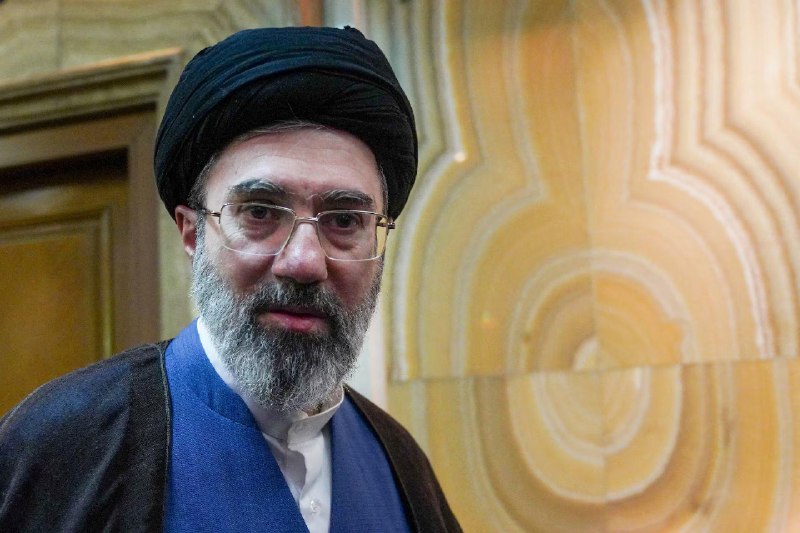
At 16:27 UTC on 28 August 2026, Tasnim News English posted on Telegram that the Supreme Leader's Government Week message "will be published in a few minutes." Twenty-seven minutes later, at 16:54 UTC, FotrosResistancee repeated the imminent-release notice. By 17:07 UTC, Middle East Spectator had posted a header reading "A message by the Supreme Leader on the occasion of 'Government Week.'" PressTV followed with the text at 17:09 UTC. ClashReport circulated an English paraphrase at 17:11 UTC. The available items are sequential reposts across state-aligned channels, with the substantive English text appearing in PressTV's item and the most quotable operative language supplied by ClashReport's paraphrase.
Monexus assessment: the message binds the executive to a narrower rhetorical band. The text's load-bearing phrases are the prohibitions on rhetoric that "weakens public morale" or creates "artificial divisions," and the instruction to address shortcomings through "policy and action" rather than through public criticism. Read as a directive, it is the Supreme Leader telling officials to manage strain rather than amplify it. Whether the directive is enforced is a separate question, and one the cited evidence cannot answer.
What the message actually says
The published text, carried in English by PressTV's Telegram post, declares firmly that committing anything that harms Iran's social cohesion is forbidden. The ClashReport paraphrase elaborates: the Supreme Leader urged officials to avoid rhetoric that "weakens public morale" or creates "artificial divisions," and called on the government to highlight Iran's strength and resilience, arguing that openly emphasising weaknesses can benefit the country's enemies, with shortcomings to be addressed through policy and action rather than rhetoric. Middle East Spectator confirmed the Government Week framing; its post carried only the headline, with no substantive text, so its independent contribution to the readout is limited to venue confirmation.
The phrase "artificial divisions" appears in the English paraphrase supplied by ClashReport. The same item carries the instruction to foreground resilience and to act on, rather than air, shortcomings. Both formulations are the operative load of the message. The English paraphrase is the channel through which those formulations reach non-Farsi readers.
The sequencing, and what it tells us
The interval between the Tasnim notice at 16:27 UTC and the PressTV text at 17:09 UTC is roughly forty-two minutes. FotrosResistancee's reminder notice came at 16:54 UTC, about fifteen minutes before the published text appeared on PressTV. Middle East Spectator's 17:07 UTC post carried a header reading "A message by the Supreme Leader on the occasion of 'Government Week'" but did not, in the available item, carry the substantive text. PressTV carried the text; ClashReport carried an English paraphrase supplying the most quotable operative language, including the "weakens public morale" and "artificial divisions" formulations, and the instruction to foreground resilience rather than weakness.
The pattern across the items is a relay chain: a single advance notice, a repeat notice, a header post, the text itself, then an English paraphrase. Tasnim's evidence item functions, in the available set, as an advance-notice publisher rather than as a distributor of the message text. The relay structure is consistent with a coordinated release, but the available items are five discrete posts across five channels; the inference that this is a "coordinated countdown" or "choreography" is editorial reading, not observation directly entailed by the source material.
What the message forbids, in plain language
Read narrowly against the English paraphrase, the directive forbids two things. Officials are told to avoid rhetoric that "weakens public morale" or creates "artificial divisions." They are told to address shortcomings through "policy and action" rather than through public criticism. The available source items do not specify which recent statements triggered the message, nor which officials the text most directly addresses, nor which policy areas it most directly targets.
The article does not, and cannot from this evidence, claim that the directive closes doors on officials contradicting each other on sanctions exposure or subsidy reform; nor that it constrains foreign-policy language; nor that it recasts routine ministerial candour about inflation or water stress as a near-security breach. Those are interpretive extensions. The text available here forbids rhetoric that "weakens public morale" and "artificial divisions," and instructs that shortcomings be addressed through action rather than airing. Whether the line drawn in the text maps to specific policy portfolios is not stated in the cited items.
The internal politics the message sits inside
Monexus analysis: Iran's factional politics, as commonly described in Western and regional coverage, is less monolithic than the outside frame suggests, with hardliners and pragmatists competing within a constrained public register. That structural background is not stated in the cited Telegram items; it is contextual scaffolding brought to the reading, and the article flags it as such. The cohesion message, on this reading, would be a tightening of that public register. Whether such tightening is in fact taking place, against which specific officials, and on which portfolios, is not entailed by the cited evidence.
The cohesion message is, in effect, a constraint on adversaries of the administration as well as on its allies. Officials who would use public platforms to attack pricing, rationing, or any other policy decision now operate inside a clearly marked line. Crossing it becomes a direct contradiction of the Supreme Leader's published instruction, not a political dispute between equals. That is the mechanical reading of the text; whether it is enforced, and how, is a question for the next cabinet meeting and the next ministerial press conference, and not for this article.
What remains uncertain
The texts distributed through Telegram are a relay chain: each cited item paraphrases or reposts the same underlying statement issued through Iranian state media. That shared origin lowers the certainty of any claim about how widely the text was distributed beyond state-aligned channels, or about the precise wording of the original Farsi text. The available source items do not specify the trigger event for the message, nor the officials most directly addressed, nor whether the directive was accompanied by a written policy note, nor whether enforcement will be carried through informal pressure, party discipline, or formal reprimand. The cited posts contain no reference to a recent specific intra-regime dispute, and this article has not independently established whether one preceded the message.
The reading above is a structural one, drawn from the content of the message, the choice of venue, and the pattern of release. It is not a forecast of the directive's effects. The proof will be in the language chosen by officials the next time the question turns to matters the message would, on a generous reading, cover. Until that language appears, the cohesion message functions as published instruction, and the enforcement record is unwritten.
Desk note: Monexus treats Telegram-sourced Iranian state-media outputs as primary, not as wire-style reportage. The piece is grounded in the specific text of the message and in the sequencing of its distribution; interpretive extensions are flagged in place as analysis rather than asserted as fact.
Wire provenance
This editorial synthesis draws on the following public wire/social posts:
- https://t.me/ClashReport/94055
- https://t.me/presstv/204551
- https://t.me/Middle_East_Spectator/36080
- https://t.me/FotrosResistancee/23495
- https://t.me/tasnimnews_en/33046