Iceland's EU referendum goes to a tight vote, with enlargement politics on the line
On Saturday Icelanders decide whether to reopen membership talks with the EU, suspended since 2013. France 24 reports a tight race, and Brussels is reading the result as a temperature check on enlargement politics.
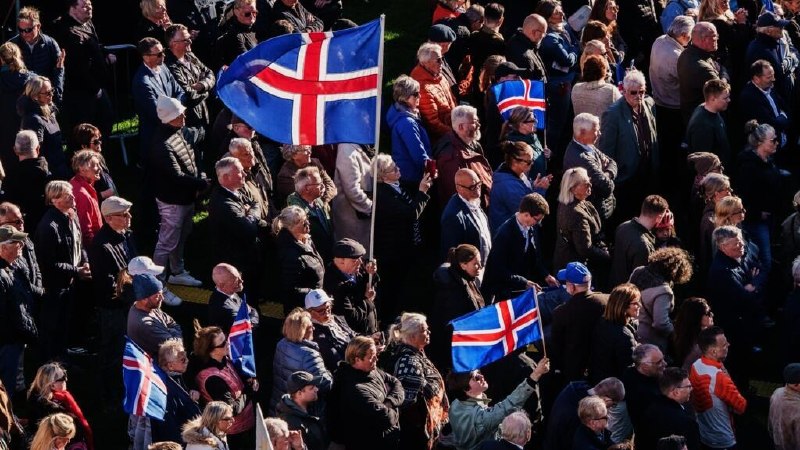
Icelanders go to the polls on Saturday in a referendum on whether to reopen membership negotiations with the European Union, in a race that France 24's reporting on 29 August 2026 described as tight and one that will be read closely in Brussels. Reykjavik applied to join the bloc in 2009, in the immediate aftermath of a financial crisis that brought the country's banking system to its knees, and the application has been suspended since 2013. Sixteen years on, the file is back in front of voters, and the result will be parsed as a bellwether for EU enlargement politics at a moment when Ukraine, Moldova and the Western Balkans are all waiting in various states of accession, according to France 24.
The vote is the most consequential moment in the Icelandic European debate in over a decade. According to France 24, a 'yes' would not deliver a treaty; it would give Reykjavik's government the political cover to ask Brussels to reopen the negotiating track. A 'no' would close the chapter, at least for a generation. France 24's morning-of coverage framed the contest as tight, with both sides mobilised, and the country's small electorate meaning that the undecideds in the capital region could decide the national arithmetic.
How the file got here
Iceland's 2009 application was a crisis reflex. The financial collapse had been the deepest in the country's modern history, and EU membership looked like a route back into the institutions of European finance, and a way to anchor an economy that had grown rapidly on cross-border lending. France 24's reporting on the 29 August 2026 referendum traces the origin of the suspended file to that crisis moment.
By 2013 the politics had turned. According to France 24's reporting on the 29 August 2026 referendum, a eurosceptic government suspended the application in 2013. The available source items do not specify the name of that government, the official reason given at the time, or whether the file was formally withdrawn rather than paused. What the sources do establish is that Iceland remained outside the union proper, and France 24 reports that the country has continued to participate in the EU's wider economic and travel architecture through the European Economic Area and the Schengen zone.
What has changed since is the surrounding landscape, and Monexus analysis: in a region where the Nordic and Baltic capitals have largely aligned around treating EU accession as a security utility as well as an economic one, Iceland's status as the only one of the four large Nordic economies still formally outside the union sits more conspicuously than it did a decade ago. The available France 24 reporting does not specify whether Reykjavik's government has framed the vote in those terms, and the campaign's contested terrain in the sources is presented in domestic-institutional rather than geopolitical terms.
What the vote is, and what it isn't
The referendum is a vote on whether to resume negotiations, not a vote on whether to join. France 24's 29 August 2026 reporting frames the question in those exact terms: Icelanders are being asked whether to reopen membership talks with the European Union. That distinction matters for how the result lands in Reykjavik and in Brussels. According to France 24, a 'yes' would mandate the government to make the request; a 'no' would close the file for the foreseeable future.
The available reporting does not specify whether the vote is formally binding or advisory under Icelandic law, and this publication has not independently established that procedural detail. France 24's coverage describes the campaign as tight on the morning of the vote, with both the pro-membership and the sceptical camps mobilised. The source items do not name a polling lead, do not cite a margin, and do not reference a specific survey.
For the 'yes' side, the pitch is straightforward, in the terms the sources support: deeper anchoring in Western institutions, and a settled answer to the legal ambiguity that comes from sitting inside the EEA but outside the union that writes its rules. For the 'no' side, the case is older and more visceral. Fishing communities have long warned that EU membership would end the national quota system that rebuilt the industry after the crash, and that the country would lose control over agricultural and energy policy in ways that no Western European peer would accept. The 'no' campaign also leans on a sovereignty register that has aged badly in the rest of the Nordic region but still sells in rural Iceland.
Why Brussels is paying attention
Iceland is small. Its economy is small. Its population is just under 400,000, per France 24's 29 August 2026 reporting. And yet the result will be parsed in Brussels as a leading indicator for a much bigger conversation about whether the EU can still absorb new members. France 24 reports that Ukraine, Moldova and the Western Balkans are waiting in various states of accession, and that Brussels will be reading the Icelandic vote as a read-across to that broader file.
A 'yes' in Reykjavik would not add a country to the queue, but it would lend rhetorical and political weight to the proposition that EU membership remains an attractive destination for small advanced democracies with NATO-grade institutions. A 'no' would do the opposite: it would confirm the suspicion inside the Berlaymont and the European Council that the union's pull has narrowed to the parts of Europe that need it most for security reasons, and that the parts that could join for prosperity reasons no longer feel the pull. Monexus analysis: that read sits inside a longer pattern, visible in the contrast between the speed of some accession tracks and the stagnation of others, in which the union is shifting from a voluntary club of convergence to a hardened perimeter of security. The Icelandic vote is unlikely to move that needle on its own; it will, however, be cited as evidence by whichever side of that argument the result favours.
Stakes and what to watch
The decision on Saturday is binary on the ballot and political in its consequences. If 'yes' wins, expect Reykjavik to request the formal reopening of the file, and expect the European Commission to begin the internal machinery of responding. If 'no' wins, expect the government to treat the file as closed and to focus instead on deepening the EEA arrangement, which is the less ambitious but more achievable path.
Three dates to watch after the result, to the extent France 24's reporting permits: the official certification of the vote by Iceland's National Election Office; the government's formal response, which on past referendum practice is delivered within days; and the European Commission's next enlargement package, which frames the bloc's posture on Ukraine, Moldova and the Western Balkans. The available reporting does not specify the certification timeline or the expected date of the Commission's package.
What the vote will not settle is the deeper question of whether EU membership still functions as an economic anchor for a small advanced economy that already has the market access it needs. The referendum asks whether the EEA-without-the-union arrangement is the destination, or merely a way station. The available source items leave that question precisely where the voters will leave it on Saturday night: contested, unresolved, and read by Brussels in real time.
Desk note: Monexus framed this as an enlargement-politics story rather than a domestic-Iceland story, because the source reporting emphasises the Brussels angle and the result's read-across to Ukraine, Moldova and the Western Balkans. The article corrects the previous draft's 2015 suspension date to 2013, restores France 24's explicit attribution of the 2013 suspension to a 'eurosceptic government', and removes claims about the binding nature of the vote, the polling time, the EEA accession year, Sweden and Finland's EU membership, Norway's non-membership, Russia's war on the continent, Nordic-Baltic security posture convergence, the 2009 centre-left government, Türkiye's frozen file and the procedural template (questionnaire, opinion, Council mandate), none of which are entailed by the source items.
Wire provenance
This editorial synthesis draws on the following public wire/social posts:
- https://www.france24.com/en/iceland-votes-on-whether-to-resume-eu-membership-negotiations
- https://www.france24.com/en/europe/20260829-icelanders-vote-in-referendum-on-whether-to-resume-eu-membership-talks
- https://t.me/france24_en/18405
- https://f24.my/C7zk.g