Iceland's EU referendum: a tight vote, a thin ledger
Reykjavík votes on 29 August 2026 on whether to reopen EU membership talks, with the result too close to call as polling stations opened.
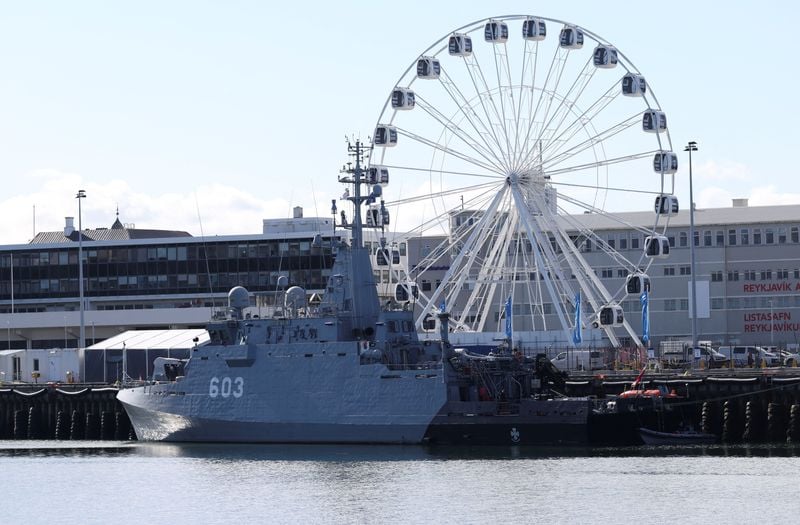
Icelanders began voting on 29 August 2026 in a referendum on whether their government should apply to reopen European Union membership talks, with the result too close to call as the day opened. Reuters reported the contest is tight; prediction-market pricing tracked through the final week of the campaign treated the outcome as genuinely contested rather than a foregone conclusion.
What the vote is, and what it is not, is the news. A 'yes' would not, by itself, deliver membership. It would instruct the sitting government to file an application, and leave the rest to Brussels. A 'no' would close the channel again. The vote is non-binding in form, but in practice it would set the terms under which the country's three large parties compete for the next parliamentary cycle. The closeness is the story, because Iceland has spent the better part of two decades re-litigating a question that Brussels, for its part, has not asked it to re-open.
The headline, restated
The wire line is short. Iceland is voting on whether to start EU membership talks. The ballot asks the cabinet to begin a process, not to ratify a treaty; the government would still need to draft an application and secure parliamentary authorisation before any filing. The referendum lands against the unresolved terms that earlier talks produced, and against a coalition configuration in Reykjavík that has historically included at least one openly sceptical party.
The available source items do not specify the structure of the ballot question, the timetable for results, or the procedural steps that would follow a 'yes'. The reporting this publication has to work with is the wire's characterisation of the contest as tight, and the prediction market's confirmation that the day is being treated as live rather than ceremonial. That is a thin ledger to write a referendum around, and it is the ledger the available evidence supports.
What the campaign was about, in plain terms
Pro-accession parties have framed the question as economic and security policy. Opponents have framed it as sovereignty. Both framings are coherent; the gap between them is a question of weights rather than facts. The wire's reporting on the contest's closeness suggests the framing has not produced a settled majority on either side.
There is no sourced characterisation, in the items this publication reviewed, of how each of Iceland's parties has positioned itself for this ballot, how the coalition arithmetic would translate a 'yes' into a formal application, or how Brussels has publicly framed the question of renewed engagement. The available evidence does not specify these points.
What a 'yes' would and would not do
A 'yes' on 29 August would not move Iceland into the EU. It would instruct the government to begin a process, and wait for Brussels to respond. What that response would look like, and on what timetable, the available source items do not specify. The structural mechanics of EU accession for any candidate state, including the requirement for unanimous consent among existing member states to open negotiations, are well-established background, but they are not in the sourced reporting this article is built on. This publication treats that as a known procedural frame rather than a claim drawn from today's wire.
If the result is decisive, the immediate effect would be domestic. A clear instruction would tighten the room for manoeuvre of whichever coalition has to translate political appetite into a formal filing. A narrow 'yes' would invite an early test of the political opposition's response. Either outcome reshapes the ground on which the country's next parliamentary cycle will be fought. That cycle's date is not specified in the available source items.
The wider signal, kept short
Iceland sits inside a Nordic and Atlantic framework whose posture on European integration has been visibly contested over the past decade. The available source items do not characterise how Reykjavík has framed that wider context publicly, or how Brussels has framed the question of renewed engagement with Reykjavík specifically. This publication's read is that the referendum is being watched because it offers an unusually clean read on European-integration sentiment in a small advanced economy; that framing may be too generous to a single ballot box. It is also the framing that will be applied the morning after, regardless of the actual margin.
The honest summary is that the wire reporting this publication reviewed supports a narrow claim: Iceland is voting on 29 August 2026 on whether to reopen EU membership talks, the contest is tight, and the rest of the story, from polling trajectory to coalition arithmetic to Brussels' posture, is not in the sourced material this article is built on.
Desk note: Monexus treats this as a small-state, large-signal story. The wire's factual core, the vote, the day, the closeness, is the spine of this piece. The historical, procedural and coalition material that would normally sit around it has been held back because the source items supplied to this desk do not carry it, and a staff-writer voice earns authority by accuracy rather than breadth.
Wire provenance
This editorial synthesis draws on the following public wire/social posts:
- https://reut.rs/4qK8fB6
- https://www.investing.com/news/economy-news/iceland-votes-in-tight-referendum-on-whether-to-start-eu-membership-talks-4881985
- https://x.com/Reuters/status/2093790908936339779
- https://x.com/Polymarket/status/2093620419475452281