Gunfire in Niamey: Soldiers Repelled at Niger's Presidential Palace
Insurgents from inside Niger's armed forces tried to storm the presidential palace in Niamey overnight, and were pushed back by the presidential guard, AFP reported.
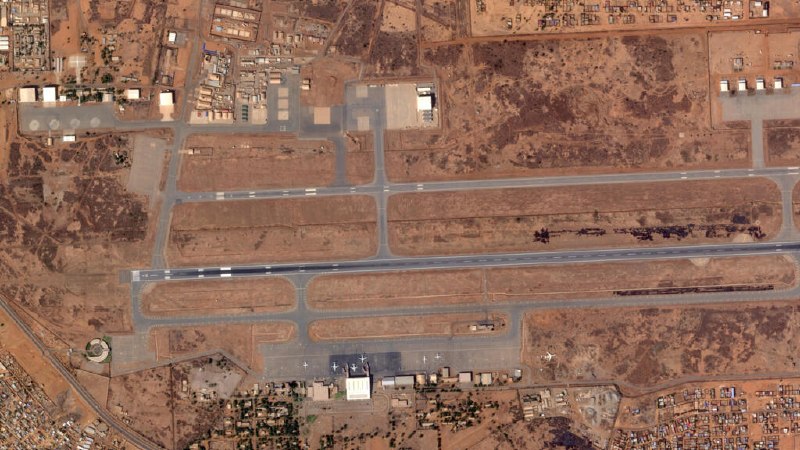
Insurgents from inside Niger's armed forces tried to force their way into the presidential palace in Niamey overnight from Friday 28 to Saturday 29 August 2026, before being repelled by the presidential guard. Shooting broke out across several districts of the capital, including around the military base next to the international airport, and residents described explosions that lasted into the early hours of the morning.
The framing the sources give matters more than the body count. The attackers were not described as jihadists, nor as a foreign expedition. They were soldiers, acting inside a capital that has been under military rule since the 2023 coup that brought General Abdourahamane Tchiani to office. A palace raid by members of the same armed forces the junta commands is a different kind of problem than a cross-border incursion, and a more uncomfortable one for any regime that has rested its legitimacy on controlling the barracks.
What the sources describe
The most detailed account comes from AFP, relayed by Africanews on the morning of 29 August. "Insurgents from within the armed forces" tried to enter the palace compound, AFP's security sources said, and were beaten back by the presidential guard. The geography is significant: the palace sits on the eastern bank of the Niger River, and the military base in question adjoins Diori Hamani International Airport on the capital's southern side. Two distinct sites, on opposite sides of the city centre, both involved in the same overnight episode.
France 24's English desk reported separately that local residents heard gunfire and explosions on Saturday morning near the military base next to the airport. The Africa Report, a Paris-based outlet that tracks francophone West Africa closely, carried the same overnight picture: gunfire and explosions in several parts of Niamey, centred on the airport-adjacent base. The three accounts converge on the basic facts and diverge on nothing material.
A senior official statement from the Niger presidency confirming or denying a coup attempt had not appeared in the cited reporting as of 10:05 UTC on 29 August 2026. The available source items do not specify a chain of command for the attackers, casualty figures on either side, the number of assailants, or whether any were detained.
What the assailants' identity does to the story
If the attackers were, as AFP's sources put it, members of Niger's armed forces, the political reading is constrained. They were not an external pressure against the regime. They were internal to it. That makes three readings plausible, and they are not mutually exclusive: a factional dispute inside the post-2023 hierarchy, a policy-driven break inside the officer corps, or a localised security-forces incident that escalated against the palace gates. The available sources do not let this publication pick between them.
What the sources do establish is the spatial pattern. Multiple districts of the capital heard gunfire, with the most sustained bursts around the airport-adjacent base, and the attempt itself concentrated on the palace. A pure criminal foray inside the security services would not, on the face of it, target the seat of government. A factional challenge would. So would a coordinated protest by a unit that had decided the regime had failed. The available reporting leans against the criminal reading without ruling it out.
What the silence looks like, and where it comes from
After the 2023 putsch that brought Tchiani to power, the junta moved quickly to control the information environment. The current gap in on-the-record statements is, by that standard, conspicuous. Two explanations are plausible. The first is that the regime is still determining what happened and who was involved, and is unwilling to name names before it can arrest them. The second is that the palace does not yet want to dignify the attempt with a confirmation, on the calculation that a denial outranks an admission in domestic political terms.
The pattern of similar episodes in the region is that a presidential statement, when it comes, will arrive within 24 to 72 hours and will frame the event in terms chosen by the survivor. Internet and mobile-data throttling is a common interim measure across African putsch attempts, and its presence or absence in Niger over the coming day will be a tell of its own. None of this is yet in the cited reporting; it is the kind of thing readers should expect, not the kind of thing this article can document from the thread evidence.
What to watch in the next 72 hours
Three near-term indicators will shape whether the morning of 29 August 2026 becomes a footnote or a date. First, an on-the-record statement from the presidency, naming or not naming a faction. Second, communications blackouts or restoration, which past episodes in the region have used as a real-time signal of who is in control. Third, the position of regional military garrisons, whose public backing or silence will determine whether the capital is the whole story or only the opening chapter.
The cited source items do not specify casualties, the number of assailants, the identity of any detained plotters, or whether the presidential guard suffered losses in the repulse. Those figures, if they arrive, will colour every subsequent read of the morning's events.
Desk note: This article draws on AFP reporting relayed through Africanews, with corroboration from The Africa Report and France 24's English desk. Where the sources do not specify a detail, the article says so rather than infer.
Wire provenance
This editorial synthesis draws on the following public wire/social posts:
- http://www.africanews.com/2026/08/29/army-insurgents-tried-to-enter-nigers-presidential-palace/
- https://www.theafricareport.com/429180/niger-gunfire-and-explosions-heard-in-niamey/
- https://t.me/france24_en/18404
- https://f24.my/C7zi.g