Pyongyang swaps its defence minister
Kim Jong Un has dismissed Defence Minister No Kwang-chol and installed Kim Song-gi in his place, according to Yonhap reporting relayed on 29 August 2026.
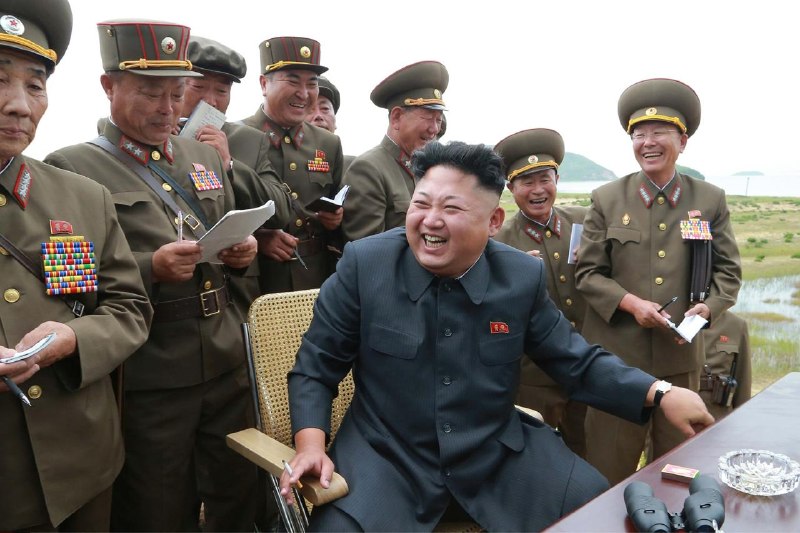
Pyongyang has swapped the man at the top of its defence ministry. According to Yonhap reporting relayed on 29 August 2026 by the Telegram channel Clash Report, North Korean leader Kim Jong Un has dismissed Defence Minister No Kwang-chol and replaced him with Kim Song-gi. The same wire was picked up by regional channels tracking the peninsula: AMK Mapping and Middle East Spectator carried the item within minutes of each other on the evening of 29 August, each framing the swap as carried out on the orders of Kim Jong Un. The Korean Central News Agency is the originating primary source for the change; the Telegram items reviewed here are relays of the Yonhap wire.
The mechanics are familiar enough that they no longer require much explanation. A minister falls, a brief decree is issued, and outside analysts reconstruct motive from who is promoted next. What the Telegram-sourced reporting actually establishes in this case is narrower than the framing it has attracted: a swap at the top of the defence portfolio, attributed by the relays to Kim Jong Un's authority, with no published grounds and no published biography for the replacement.
Who is in, who is out
The cited posts identify two men and a date. No Kwang-chol is out. Kim Song-gi is in. The orders are attributed to Kim Jong Un. Beyond that, the source items reviewed do not specify Kim Song-gi's prior post, his branch of service, or whether he is being elevated from a deputy ministry or imported from elsewhere in the Korean People's Army's command structure. The available sourcing does not specify the grounds cited for No Kwang-chol's removal, the date of the formal decree, or whether the change was signalled in advance at a Politburo meeting.
That thinness is itself part of how Pyongyang communicates these decisions. Each minister is presented as an interchangeable functionary of the supreme leader's will, and the kind of biographical texture that Western analysts normally use to read factional alignment is left opaque by design. Telegram relays of KCNA, by their nature, do not add the contextual reporting that a wire with on-the-ground correspondents might. The next 24 to 72 hours are when fuller first-party KCNA text and the assessments of Seoul's unification ministry tend to surface.
Monexus analysis: the gaps in the public record
Three points are worth flagging as analysis, not as fact. First, the pattern question. Readers and regional desks have framed this dismissal as the latest in a sequence of senior sackings. The thread evidence here supports the swap itself; it does not establish a tempo, a list of prior names, or a rate of removal. Any characterisation of a "hollowing out" or a "string" of dismissals belongs to outside reporting not contained in the cited posts. Monexus cannot independently verify that characterisation from the items reviewed.
Second, the motive question. Monexus analysis: a defence minister is the official who would be on the hook for any sustained combat operation, and replacing that figure at a moment of acute inter-Korean tension is one of the levers a supreme commander has for signalling internal discipline. That is a structural reading, not a sourced one. The thread evidence is consistent with it but does not require it.
Third, the institutional reading. Monexus analysis: the Korean People's Army is the only mass organisation inside the DPRK with its own command hierarchy and its own intelligence footprint, and personnel changes at its apex are treated, in the outside-analyst literature, as signals about the balance between the leader and the general staff. That framing is the desk's reading of why this story matters beyond the personnel file. It is not entailed by the Telegram items, and it should be read as such.
What the next round of sourcing has to answer
The Telegram relays leave four blanks that fuller reporting will fill. The grounds for No Kwang-chol's dismissal. Kim Song-gi's prior command and the branch he came from. Whether the change was telegraphed in advance at a Politburo session or announced without prior signal. And the question of whether the swap was paired with other moves at deputy-minister or chief-of-staff level, which is the level at which a reshuffle's true weight is usually visible.
Until those details surface, the most that can be said from the cited posts is what they already say: No Kwang-chol is out, Kim Song-gi is in, and the change is attributed to Kim Jong Un's authority. The wider stakes, whether the move is being read in Seoul and Washington as a routine rotation or as a Preparing-the-force signal, will be settled by sourcing that is not in the current thread.
This article is built on Yonhap reporting relayed via KCNA and mirrored by regional Telegram channels. Monexus has framed the swap as an institutional question rather than a personality story, and has labelled interpretive passages in place. The cited posts do not specify the grounds for dismissal, the date of the decree, or the prior career of Kim Song-gi; those details remain to be confirmed against fuller first-party KCNA text and Seoul's unification ministry readouts.
Wire provenance
This editorial synthesis draws on the following public wire/social posts:
- https://t.me/ClashReport/94159
- https://t.me/AMK_Mapping/36761
- https://t.me/Middle_East_Spectator/36084