Robinhood's crypto vault hits $700 million in a month, riding a market that is already selling the rally
Robinhood's crypto-linked vault crossed $700 million in total value locked in less than a month, while on-chain data shows bitcoin exchange inflows climbing at $80,000, a level one analyst called a key selling zone.
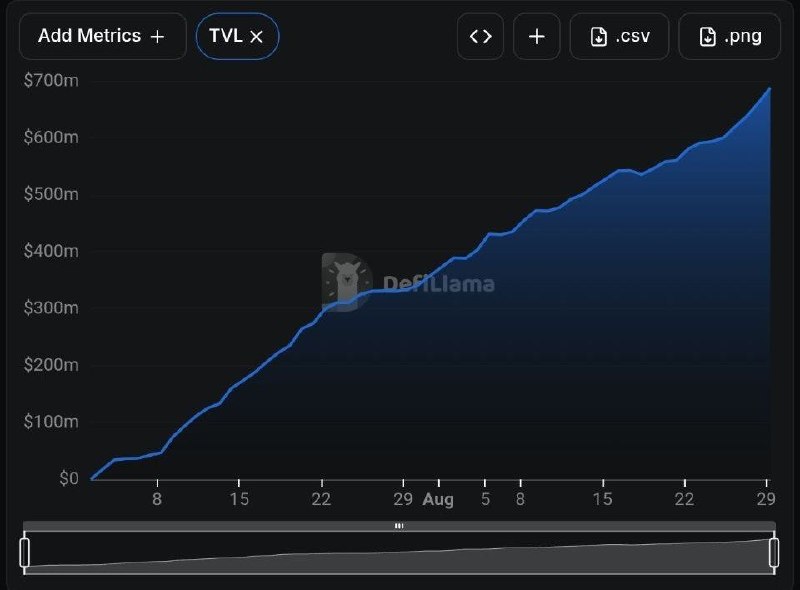
Robinhood's crypto-linked vault went from zero to roughly $700 million in total value locked inside a one-month window, according to a Cointelegraph relay posted to Telegram on 29 August 2026 at 21:53 UTC. The cited relay did not identify the underlying asset class of the vault or specify the data source for the figure, and this article has not independently established either detail. What the relay establishes is the speed: a seven-figure vault built from a standing start in under thirty days, on a platform whose retail brokerage product is publicly known.
The number itself matters less than the speed, and the speed matters less than what the broader tape is doing at the same moment. A vault that prints $700 million in a month can be a product story. A vault that prints $700 million while bitcoin is being distributed into bids at a round number is a flow story. The two pieces of evidence, taken together, point in the same direction, and that direction is the subject of this piece.
What the money already moved
A separate Cointelegraph relay on 29 August 2026 at 19:49 UTC quoted CryptoQuant analyst Darkfost saying that exchange inflows were surging as the $80,000 level became "a key selling zone." The earlier relay on 27 August 2026 at 17:46 UTC, attributed to a CryptoQuant analyst and headlined as a "LATEST" item, asserted that bitcoin's Coinbase premium index had turned positive for the first time in forty days and characterised the move as signalling renewed US demand.
This article reads the two items together as Monexus analysis, not as a single-source factual claim: a flipped US premium and elevated exchange inflows at a round-number level are consistent with a regime in which holders are meeting demand rather than demand meeting holders. The reading is hedged because the cited relays report the inputs separately and do not themselves join the dots.
The vault figure is the surface. The premium flip is the signal that the surface may be reflecting something larger. Whether the larger something is structural re-engagement or distribution into a captive bid is exactly what the cited items do not resolve.
The premium flip and what the cited items actually say
The Coinbase premium item is a single-sentence relay: the index turned positive for the first time in forty days, the post says, citing CryptoQuant. The cited post does not define the index, does not specify when the forty-day negative streak began, and does not characterise the geographic composition of demand during that period.
A caveat is warranted. A CryptoRank headline dated 6 August 2026, surfaced during independent research, describes the Coinbase Bitcoin Premium as having stayed negative for roughly 80 days as a record streak. That contemporaneous record is not in the cited thread and is not fully reconciled with the 27 August 2026 relay's claim that the premium turned positive "for the first time in 40 days." The two characterisations could be consistent if the 80-day streak ended earlier and the 40-day framing refers to a different window, but the cited thread does not specify. Monexus reads the conflict as a reason to treat the relay's "first time in 40 days" framing as a CryptoQuant characterisation rather than as a settled market fact, and to flag it here rather than paper over it.
The StarkWare relay on 27 August 2026 at 03:24 UTC, that the firm had executed what it described as the first quantum-safe bitcoin transaction on mainnet, sits outside the flow story. It is mentioned here because it is one of four relay items the cited thread contains from 27 to 29 August 2026, and because institutional treasury desks that now move larger sizes will eventually treat quantum resistance as either a hard prerequisite for direct settlement or a non-issue. The cited relay does not establish which framing the market has adopted.
The counter-narrative the cited items do not erase
The simplest reading of the four cited items is that the US is back and the cycle is mid-way. The simpler counter-reading is that a $700 million vault print on a captive brokerage customer base is what brokerage-platform tokenisation looks like at launch, regardless of broader demand; the premium flip is a single-day print that may not hold; and a surge of exchange inflows at $80,000 is, by the cited analyst's own framing, distribution into bids, not accumulation out of bids. The thread evidence does not adjudicate between these two readings.
The reading this publication finds more consistent with the cited items, presented here as Monexus assessment rather than as a sourced claim, is the middle one. The vault figure shows that a US brokerage can on-board seven figures in a month when the product is wired into an existing brokerage app. The premium flip, taken at face value as a CryptoQuant characterisation, shows that the on-boarding was accompanied by a measurable shift in US-side pricing. The exchange-inflow surge shows that the supply meeting that demand was not free. None of the three items, read alone, settles the cycle question. Read together, they describe a market in which structural buyers are present and structural sellers are present, and the marginal trade is happening between them.
Stakes and what to watch
If the premium holds positive into the next weekly close and the vault's total value locked continues to climb without incentive churn, the cited items will read, in retrospect, as evidence of broadening rather than topping. If the premium flips back while the vault keeps printing, the product is monetising a captive audience while broader demand has already left. The next test is whether the exchange inflows at $80,000 keep meeting bids, or whether bids step aside.
The cited thread does not specify the underlying asset class of Robinhood's vault, the data source for the $700 million figure, the start date of the forty-day negative premium streak referenced in the 27 August relay, or the identity of the holders distributing at $80,000. The thread evidence also does not reconcile the CryptoQuant analyst's "first time in 40 days" framing with the CryptoRank 6 August 2026 characterisation of an 80-day record negative streak. Those gaps are noted here, not papered over.
This piece limits itself to the items in the cited thread from 27 to 29 August 2026: the Robinhood vault figure, the Coinbase premium flip as relayed, the Darkfost selling-zone observation, and the StarkWare quantum-safe transaction. It does not name the vault's underlying product, attribute the rally to any geography, or characterise the distributing holders' tenure, because the cited thread does not support those claims. The 6 August 2026 CryptoRank item is flagged as an unresolved contradiction in the surrounding record, not adjudicated.
Wire provenance
This editorial synthesis draws on the following public wire/social posts:
- https://t.me/cointelegraph/71840
- https://t.me/Cointelegraph/71839
- https://t.me/cointelegraph/71818
- https://t.me/cointelegraph/71800
- https://t.me/cointelegraph/71804