The Saturday Magazine problem: when lifestyle pages carry the health desk a country can afford
Four Nation features in one morning, on prolapse, alcoholism, counterfeit liquor and personal finance, landed inside Saturday Magazine, the lifestyle supplement. The pattern says more about Kenya's information economy than any single article does.
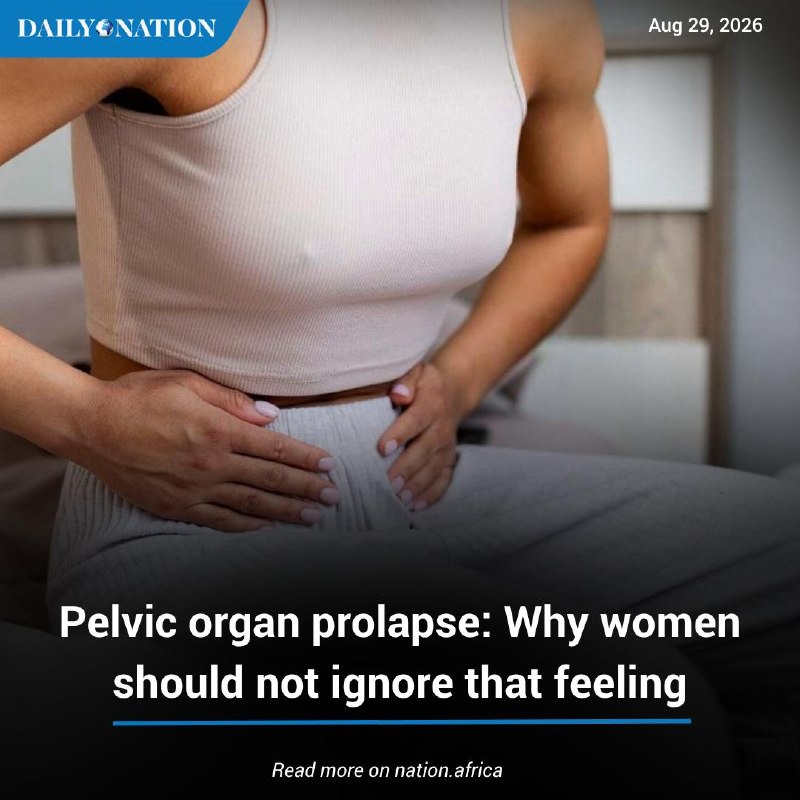
On the morning of 29 August 2026, the Daily Nation's Telegram channel posted four long reads in quick succession. A feature on pelvic organ prolapse warning women not to ignore "that feeling." A guide to spotting counterfeit whisky, vodka, wine and beer in Kenya. An essay on how alcohol "rewrites the brain" from the first drink. And a reader's letter, filed under "soft life," from a woman in her mid-30s earning Sh130,000 a month who gives her boyfriend a Sh5,000 monthly allowance and has no investments. Three of the four sit inside Saturday Magazine, the lifestyle supplement, on the Nation website. The counterfeit-alcohol explainer is filed under news. None of them appears on a dedicated health desk on the published pages visible in the available source items.
That is the editorial fact worth naming plainly. Kenya's most widely read English-language daily is, for the bulk of its Saturday readership visible in this Telegram snapshot, delivering its medical and consumer-protection reporting through a lifestyle supplement. The morning's feed simply made the pattern legible in a single sitting.
A health system written on the lifestyle page
The prolapse feature, headlined "Pelvic organ prolapse: Why women should not ignore that feeling," runs as a slow-burn case study. Nation's framing, per the Telegram excerpt, opens on a heaviness in the pelvis after a long day, pressure when using the toilet, a bulge that becomes noticeable. The article's location matters. Pelvic organ prolapse is a recognised cause of morbidity among women in sub-Saharan Africa, and late presentation drives most of the harm in the published clinical literature. A reader who only encounters that fact inside a Saturday lifestyle column is, structurally, being told that this is a women's-interest story rather than a public-health story. Whether Nation runs parallel clinical coverage elsewhere in the paper is not specified in the available source items.
The piece on counterfeit alcohol, headlined "Explainer: How to spot fake alcoholic drinks in Kenya," makes the same point from a different angle. Counterfeiting of legal-liquor brands in Kenya is a recognised public-health hazard, and methanol contamination events have produced documented fatalities. Nation's explainer, filed on the news section of the Nation site, tells consumers how to examine bottles for tampering. It is useful consumer reporting. It is also, structurally, a substitute for the supply-chain investigation that would name the distributors, the regulatory gaps and the enforcement record of the relevant agency. The available Telegram post does not specify whether that follow-up exists elsewhere in the paper.
The "soft life" economy
The reader's letter, headlined "Help, I give my boyfriend Sh5,000 monthly allowance but have no investments," is the most politically revealing artefact of the four. A mid-30s professional on Sh130,000 a month describes herself as enjoying "soft life" while giving a boyfriend a Sh5,000 monthly allowance and holding no investments. Nation frames the reply as a budgeting problem. The letter column packages what is, in part, a structural question about Kenya's listed retail investment options, pension coverage for private-sector workers outside the formal civil service, and the country's intermediated savings architecture, as a relationship dilemma. Those are Saturday Magazine-shaped silences. They are silences about a financial system, not about a woman.
The fourth piece, headlined "Inside the mind of an alcoholic" and filed inside Saturday Magazine, argues that alcohol begins "rewriting the brain" with the first drink. The framing, per the Telegram excerpt, opens on a drink that "loosens conversation, softens anxiety, and convinces the brain that everything is lighter," before pivoting to the claim that alcohol is "already rewriting the brain." It reads as personal-essay register wrapping a clinical claim. Whether Nation pairs that essay with sustained addiction-medicine coverage elsewhere on its site is not specified in the available source items.
What the international wire would miss
A reader scanning international wire coverage on 29 August 2026 would not encounter any of these pieces through that feed. International desks tend to treat Kenyan household-finance distress as a macro story, focused on shilling weakness, Eurobond yields and IMF programme reviews, and women's-health morbidity as a development-sector story, when they treat it at all. The lived economy of a Nairobi professional juggling a boyfriend's allowance against a missing pension contribution is, in aggregate, the economy that determines Kenya's domestic consumption trajectory. It is reported, when it is reported at all, by lifestyle desks in local papers. The Telegram feed makes that gap visible because it makes the saturation visible.
This publication's reading: as dedicated science and health reporting shrinks in commercial newsrooms across the continent, the Saturday magazine absorbs the overflow. Saturday Magazine is not failing at its job. It is doing more than one job at once, in column-inches set aside for advertising, and the result is that prolapse, alcoholism, counterfeit liquor and personal finance land in the same weekly envelope.
The stakes
There is a reader-cost to this arrangement. When prolapse is presented as a women's-interest feature, fewer men in the household read it, and fewer clinicians receive the kind of reinforcement that shifts referral patterns. When counterfeit-liquor advice is delivered as consumer guidance, the supply-side investigation that would actually move seizure rates stays unstaffed. When a budgeting column is the main place a working woman encounters the architecture of her own pension gap, the architecture itself is left unchallenged.
Kenyan journalism is not short of talent. The shortage is of section-belonging. A prolapse feature on the health page reads as a health story; the same feature on the lifestyle page reads as a Saturday thing. Nation's Saturday Magazine runs serious work. The problem is that serious work keeps arriving in the same envelope, and the envelope is the message.
Desk note: This publication treats Nation's Saturday Magazine as a substantive source rather than a wire relay. A single Telegram feed made the structural pattern visible in one morning's posts, and the article is written to that pattern rather than to any single item. This is editorial-register analysis, not a health bulletin; readers seeking clinical guidance should consult a qualified provider.
Wire provenance
This editorial synthesis draws on the following public wire/social posts:
- https://nation.africa/kenya/life-and-style/saturday-magazine/pelvic-organ-prolapse-why-women-should-not-ignore-that-feeling-5574784
- https://nation.africa/kenya/news/explainer-how-to-spot-fake-alcoholic-drinks-in-kenya-5574874
- https://nation.africa/kenya/life-and-style/saturday-magazine/inside-the-mind-of-an-alcoholic--5574868
- https://nation.africa/kenya/life-and-style/saturday-magazine/help-i-give-my-boyfriend-sh5-000-monthly-allowance-but-have-no-investments-5574674
- https://t.me/DailyNation/143997
- https://t.me/DailyNation/143988
- https://nation.africa/kenya/life-and-style/saturday-magazine/pelvic-organ-prolapse-why-women-should-not-ignore-that-feeling-5574784
- https://nation.africa/kenya/news/explainer-how-to-spot-fake-alcoholic-drinks-in-kenya-5574874
- https://nation.africa/kenya/life-and-style/saturday-magazine/inside-the-mind-of-an-alcoholic--5574868
- https://nation.africa/kenya/life-and-style/saturday-magazine/help-i-give-my-boyfriend-sh5-000-monthly-allowance-but-have-no-investments-5574674
- https://t.me/DailyNation/143997
- https://t.me/DailyNation/143988