Tasnim leads English Unity Week coverage with Palestine question and anti-sectarian frame
On 30 August 2026, Iran's Tasnim news agency published a coordinated English-language burst on Islamic Unity Week, leading with the argument that sectarian division is the principal weapon of an outside power and that Palestine is the test case of whether the umma can hold together.
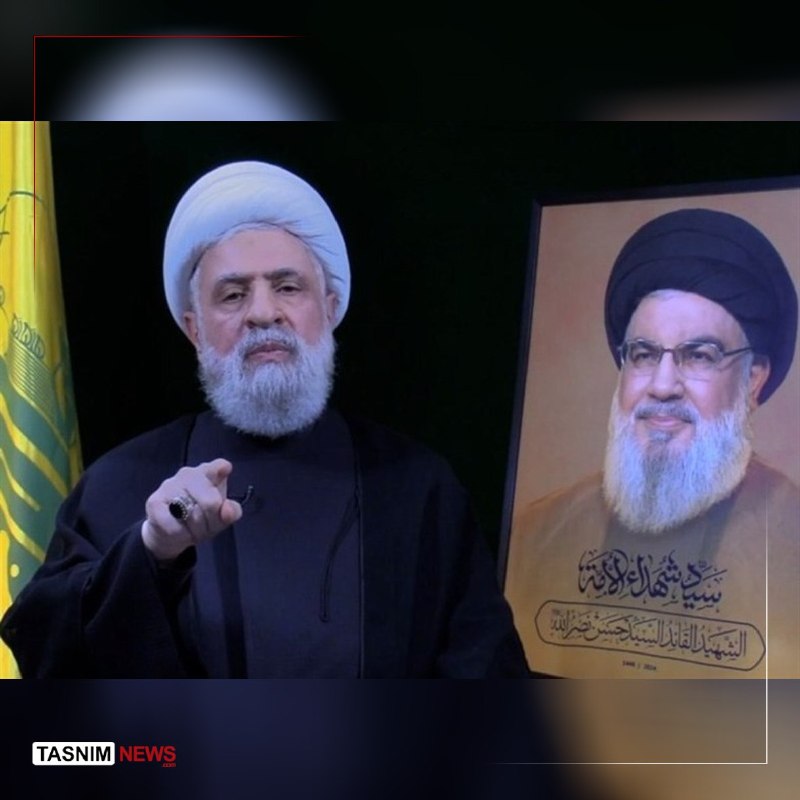
On the morning of 30 August 2026, the English-language feed of Iran's Tasnim News Agency ran a coordinated sequence of excerpts framing Islamic Unity Week around a single argument: that the principal weapon of an outside adversary against Muslims is sectarian division, and that Palestine is the test case of whether the umma can hold together at all. Seven posts between 05:26 UTC and 07:12 UTC carried variants of the same message, with one further post at 06:42 UTC flagging a re-upload of an archival speech from the founding years of the Islamic Republic to khamenei.ir.
Read in sequence, the posts function less as anniversary reflections than as a working ideological brief: identify the enemy, refuse sectarian fracture, make Palestine the organising cause. The pattern is dense for a single hour on a single channel and the audience being addressed is foreign-language readers, not the Iranian street. That is the news.
What Tasnim published, in order
The English feed is unusually busy for a single hour. Two posts at 05:26 UTC and 05:27 UTC lay the premise, asserting that "the prospect of truth ultimately prevailing over falsehood is closer to reality than ever before," with "the unity of Muslims against global disbelief" as the first prerequisite. Two more posts at 05:28 UTC and 05:31 UTC extend the argument into mechanics, asserting that "any action that leads to discord among Muslims serves the enemy's purpose" and warning that "doctrinal and sectarian differences" are being instrumentalised by outside powers. A fifth post, at 05:35 UTC, brings Palestine to the foreground with the question, "If Muslims were united, would Palestine have been left so vulnerable?" Two further posts at 05:43 UTC and 07:12 UTC carry variations of the same closing frame, presenting unity, mutual defence against disbelief, and intra-Muslim cooperation as "three steps toward achieving a modern Islamic civilisation."
None of the seven posts introduce a new policy, announce a diplomatic move, or name a specific regional counterpart. The material is archival in tone but the density and timing of the re-publication are themselves the news. Tasnim is the news agency of the Islamic Republic's hardline press establishment, not a neutral archive; a seven-post English-language burst on a single day is a curated signal to foreign-language readers about how Tehran wants the week's theme understood.
The archive upload, and what it actually is
The one post that differs is at 06:42 UTC. It announces a "new video on KHAMENEI.IR featuring the first speech by the late Leader of the Islamic Revolution during the Week of Unity, in Mehr 1368," posted on the occasion of the 17th of Rabi'ul-Awwal in the hijri calendar. The post is explicit that the archived speech is from the early years of the Republic and is being re-uploaded for the present commemoration. The remaining seven excerpts are presented as the message of "the Leader of the Islamic Revolution" for Unity Week in the current Iranian year, not as the Mehr 1368 archive itself. Monexus analysis: Tasnim is pairing a current message with a founding-era speech to give the 2026 framing a longer lineage. The pairing, not the archive alone, is the editorial choice.
The Palestine question, returned to centre stage
The most pointed passage in the cluster is the Palestine line. The framing, "if Muslims were united, would Palestine have been left so vulnerable?", is not a question the post answers directly. Its function is rhetorical: it relocates the question of Palestinian sovereignty from a bilateral Israeli-Palestinian track, or even a regional one, onto the shoulders of the umma's collective political will. The same argument runs across the cluster, with the enemy characterised as acting through sectarian engineering and unity treated as a defensive technology.
This is not a novel frame from Tehran, but its re-emphasis through English-language distribution on the morning of 30 August lands inside a specific regional moment. The Tasnim posts do not name Israel, Hamas, or any current mediator, but the Palestine reference does the work that naming them would, and the audience the posts are aimed at is not domestic.
Reading the unity frame on its own terms
Tehran's pitch, stripped of its theological scaffolding, runs as follows. The Islamic Republic and its rivals in the Sunni-majority Arab world have spent decades treating each other as the principal ideological threat: Tehran versus Riyadh, the Shia crescent versus the Muslim Brotherhood moment versus the Gulf monarchies' counter-revolutionary compact. The Unity Week doctrine inverts that hierarchy. It argues that the real enemy is not the co-religionist across the sectarian line but the outside power that benefits from the fracture. The corollary is policy: rapprochement with Saudi Arabia, restored ties with Egypt, a working detente with Turkey, and a willingness to fold Palestinian armed groups under a single rhetorical umbrella, even when their actual command structures remain distinct.
The structural pattern being claimed is not new. Iran's de-escalation with Saudi Arabia in March 2023, brokered by China, and the broader normalisation track that followed, were concrete moves in that direction. What the Unity Week language adds is an ideological packaging that gives the diplomatic posture a doctrinal home. The English-language timing of this week's re-publication suggests the audience for that packaging is wider than the Iranian street.
Where the evidence thins
The limits of the available material are worth stating plainly. The thread contains only English-language Tasnim posts; it does not include concurrent coverage from Iranian state broadcasters, the Arabic-language Tasnim feed, or commentary from the Iranian foreign ministry. The cited passages are paraphrases and extracts, not verbatim full-text speeches, and the underlying khamenei.ir video was not independently reviewed for this piece. The available source items do not specify whether this year's Unity Week will be marked by any specific foreign-policy event, such as a high-level meeting, a diplomatic communique, or a coordinated message from allied groups outside Iran. Whether the framing converts into movement on the diplomatic or military tracks is the question worth watching in the days ahead.
Monexus framed this story from the English-language Tasnim feed and made no inference about the archived Mehr 1368 speech beyond what post 33258 explicitly states. The piece reads as a documentation of how Tehran wants Unity Week understood, not as an assessment of whether the doctrine is gaining traction outside Iran.
Wire provenance
This editorial synthesis draws on the following public wire/social posts:
- https://t.me/tasnimnews_en/33262
- https://t.me/tasnimnews_en/33258
- https://t.me/tasnimnews_en/33236
- https://t.me/tasnimnews_en/33234
- https://t.me/tasnimnews_en/33233
- https://t.me/tasnimnews_en/33231
- https://t.me/tasnimnews_en/33230
- https://t.me/tasnimnews_en/33229