Larak Island strike: US hits IRGC launchers as Hormuz mine cycle restarts
US forces struck two IRGC rocket launchers on Larak Island that a US official said were being readied to seed the Strait of Hormuz with sea mines. The IRGC threatened retaliation; the next forty-eight hours will reveal whether the doctrine is denial or escalation.
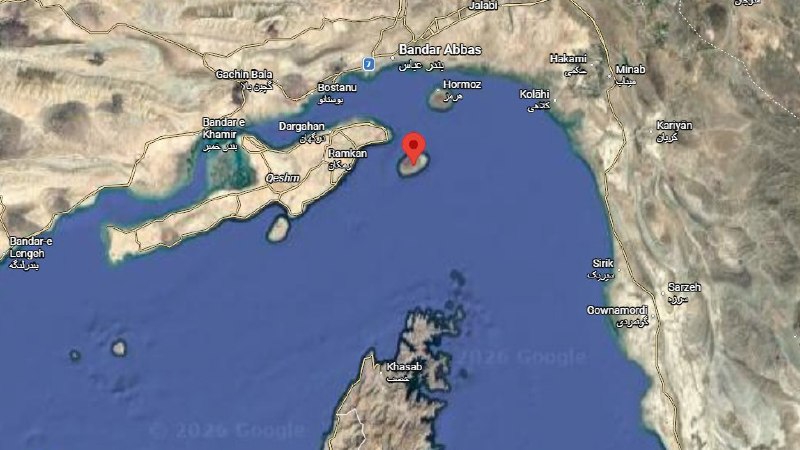
Two rocket launchers on Larak Island, in the southern Strait of Hormuz, were destroyed by US forces on 30 August 2026. Telegram channels began carrying the account at 19:23 UTC; France 24 published its write-up at 20:27 UTC. A US official, quoted by Al Jazeera and relayed by Axios, told outlets that the launchers belonged to Iran's Islamic Revolutionary Guards Corps and were observed preparing to fire rockets carrying sea mines into the shipping lane. France 24 described the action as the first US military strike against Iranian targets in a month.
Within hours, a Revolutionary Guards spokesperson declared that "the aggression of the terrorist enemy on Larak Island will be met with a response" and that "the aggressor will be punished". The same statement alleged that "the enemy attacked Larak Island, resulting in the death and injury of several of our fighters and citizens". OSINTdefender and WarMonitor, two aggregator channels posting in the same window, summarised the IRGC line as retaliation against US bases and infrastructure. What is being contested, in plain terms, is who controls the rules of transit through the world's most consequential oil chokepoint.
What happened, in the order it happened
The reporting cascade started on Telegram and ended up in the wires. The first accounts appeared in the War and Conflict Feed channel at 19:23 UTC on 30 August 2026, citing a US official via Al Jazeera: American forces had struck two IRGC missile launchers on Larak Island that were preparing to fire missiles into the Strait of Hormuz. Al Jazeera's English feed republished the line at 19:42 UTC. OSINTtechnical, an open-source account, characterised the action at 19:54 UTC as the first US strikes on Iran in weeks. OSINTdefender followed at 20:24 UTC with the IRGC's vow to respond.
The official US framing, as carried by France 24 and the Al Jazeera relay, is that the launchers were observed being readied to fire rockets carrying sea mines. France 24's dateline reads 20:27 UTC and its lede uses the same language. WarMonitor, citing Axios at 20:24 UTC, repeated the formulation. The mine-laying characterisation is what justifies the strike as pre-emption rather than punishment. The available source items do not specify the weapons used by US forces, the time of impact, or whether any mines had entered the water before the launchers were destroyed.
The IRGC statement is the only Iranian-side first-party content in the available thread. It names the attack, alleges casualties among "our fighters and citizens", and threatens retaliation. It does not specify a timeline, a target, or a weapon system for that retaliation. OSINTdefender and WarMonitor speculated, within minutes of the statement, that the response would likely be strikes on US bases and infrastructure. That is third-party inference relayed on Telegram, not an Iranian operational announcement.
Why the Hormuz lane is the centre of gravity
The Strait of Hormuz is the narrow approach between Iran to the north and Oman and the UAE to the south. France 24's coverage characterises it as the corridor that handles a significant share of global oil flows. The available source items do not specify the exact percentage of crude or liquefied natural gas that transits Hormuz, nor do they specify how war-risk insurance premiums behave in real time. Those details belong to the structural frame the desk is constructing, not to the wire evidence.
The mine threat, as described in the US official statement relayed by France 24, Al Jazeera and WarMonitor, is operationally about putting sea mines into the water from rocket launchers positioned on Larak. The doctrinal logic of a mine-laying campaign is well-established in the public record of the 1980s tanker war, though that history is not contained in this thread. What this thread does contain is a US account that says the launchers were caught in the act of preparation, before mines had been laid. Whether that account is accurate, and whether any mines were already in the water before the strike, are facts the source items do not settle.
Monexus analysis: the available evidence supports a narrow reading of the US claim, that the launchers were observed preparing to fire, and a slightly broader reading of the IRGC claim, that retaliation is coming but its shape is unspecified. The wider doctrinal and economic claims that often accompany Hormuz coverage, about insurance markets, naval presence, and Iranian strategic logic, are not contained in this thread and should not be treated as established here.
The Iranian counter-narrative, and what is actually in it
The IRGC statement is short, official, and aggressive. It uses the word "aggression" and the phrase "terrorist enemy", standard Iranian security lexicon. It alleges Iranian casualties, which the US framing does not address. It promises a response without specifying one. Inside Iranian domestic politics, that combination is a mobilisation signal: the regime is signalling that the strike will not be absorbed silently, without yet committing to a specific retaliation that might trigger a further US round.
That framing has more weight in the region than Western wire coverage typically gives it. The Strait of Hormuz is bordered on its north shore by Iran; Iranian operators have historically framed activity in their own littoral as defensive sovereignty. That framing is visible in the IRGC statement itself, which characterises US action as aggression rather than pre-emption. The Monexus assessment is that the framing is politically coherent inside the Islamic Republic's strategic culture and organises the regime's response options, even where Western analysts would read the same language as boilerplate. The available source items do not specify the legal characterisation Iran attaches to the relevant waters, and the desk does not assert one here.
A second read, visible in some regional commentary outside the official channels, frames the strike as a US political-cycle distraction rather than a strategic decision. The available evidence does not settle that question. The choice of target, an active launcher on a populated island, is consistent with either reading. The election-cycle read is convenient for Tehran; it is not the most natural reading of the operational facts on the water, but the source items do not rule it out.
Structural read: what the Larak strike changes and what it does not
The structural pattern, on the evidence available, is a recurring exchange: a US action, an IRGC threat, an unspecified Iranian response, and then a return to pressure. France 24 calls the Larak strike the first US military action in a month; OSINTtechnical calls it the first US strikes on Iran in weeks. Both formulations imply a prior US-Iran strike cycle that the Larak action interrupts. The available thread does not contain the history of that prior cycle, including earlier rounds or the specific targets struck, and the desk declines to reconstruct that history from memory here.
What the Larak strike does establish, on the available evidence, is a US willingness to hit IRGC assets in the Hormuz littoral itself. Previous reporting, not contained in this thread, has covered US operations against Iranian mine-laying vessels in the Gulf in earlier periods. The desk notes that the Larak strike sits inside a longer operational pattern of US action against Iranian mining capabilities in the Strait, but the specifics of that pattern are outside the source items for this piece.
Monexus analysis: the most natural reading of the available evidence is that the US has decided the cost of letting Iranian mine-laying operations proceed in Hormuz is higher than the cost of periodic kinetic incidents with Iran, and that Iran has decided the cost of absorbing those incidents is lower than the cost of backing down publicly. Both calculations are consistent with the statements each side has issued. Both can be wrong at the same time, which is what makes the next forty-eight hours the period that will actually settle the shape of the response.
The guardrails that have kept the cycle from breaking into wider war, including deconfliction channels and regional mediation, are not described in the available source items. The desk declines to characterise their state or their history here.
What to watch between now and the next strike
The next forty-eight hours will reveal the form of the Iranian response. A direct strike on a US base in the Gulf, as Telegram aggregator channels speculated within minutes of the Larak strike, would mark a step change in the cycle. A deniable strike on an Israeli-linked vessel, or a Houthi-style drone attack on regional infrastructure, would be the kind of response that lets Tehran claim a win without inviting the next round. The IRGC statement contains none of those options; the operational answer will come from action, not from communiqués.
What the source items do not specify is also worth flagging. The thread does not include independent post-strike imagery of Larak, IRGC confirmation of which specific assets were destroyed, or US Central Command release of the weapons used and the time of impact. The available IRGC statement alleges Iranian casualties; the US framing does not address that allegation. Those are the gaps that the next twenty-four to forty-eight hours of reporting will fill, or fail to.
The dominant read of the day, on the available evidence, is the right one to carry into the night: a US strike on launchers a US official says were caught preparing to lay mines in Hormuz, met by an Iranian statement that promises retaliation without naming its shape. The war of attrition in the Gulf has not ended. The Larak strike adds a coastal dimension to it that the available evidence does not fully describe, and that the next round of reporting will have to pin down.
Desk note: Monexus held the doctrinal and economic claims that often accompany Hormuz coverage, including insurance mechanics, naval force posture, and Iranian legal characterisation of the strait, out of the body of the piece because they are not contained in the available source items. The Iranian framing is given column-inches consistent with its weight in regional politics, without endorsement.
Wire provenance
This editorial synthesis draws on the following public wire/social posts:
- https://www.france24.com/en/middle-east/20260830-us-forces-strike-iranian-launchers-on-larak-island-in-strait-of-hormuz
- https://t.me/osintlive/568235
- https://t.me/osintlive/568226
- https://t.me/englishabuali/78497
- https://t.me/osintlive/568219
- https://t.me/englishabuali/78494
- https://t.me/WarMonitors/45404
- https://t.me/wfwitness/108861
- https://t.me/wfwitness/108859
- https://www.france24.com/en/middle-east/20260830-us-forces-strike-iranian-launchers-on-larak-island-in-strait-of-hormuz
- https://t.me/osintlive/568235
- https://t.me/osintlive/568226
- https://t.me/englishabuali/78497
- https://t.me/osintlive/568219
- https://t.me/englishabuali/78494
- https://t.me/WarMonitors/45404
- https://t.me/wfwitness/108861
- https://t.me/wfwitness/108859