US strikes on Larak Island: Iran vows retaliation as Hormuz crisis escalates
US forces hit IRGC rocket launchers on Larak Island on 30 August 2026, the first acknowledged strike on Iranian soil in weeks. Brent crude has crossed $90 a barrel on the news, and Iran's IRGC says soldiers and civilians were killed and wounded and has pledged retaliation.
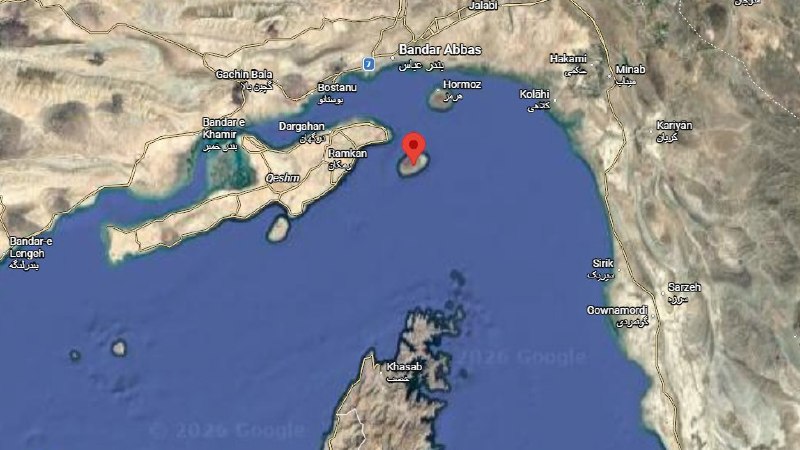
US forces struck two Iranian Revolutionary Guard Corps rocket launchers on Larak Island in the Strait of Hormuz on the evening of 30 August 2026, according to US government sources relayed through Telegram. By 22:30 UTC, Reuters was reporting that Brent crude had pushed above $90 a barrel, up more than 2% on the session, as the market priced in the first acknowledged US strike on Iranian soil in several weeks. Iran's IRGC said the strike killed and wounded soldiers and civilians on Iran's southern coast. Tehran has pledged retaliation.
Three things are now true at once, and the story turns on how they interact. The US says it struck launchers that were being prepared to seed the Strait of Hormuz with sea mines; Iran says the operation was an unprovoked assault on its territory and promises a response; and the price of Brent, the global benchmark, has cleared $90 a barrel within hours. The available source items do not specify the share of global seaborne oil that transits the Strait, the number of sorties flown, or the weapons used in the strike.
What happened on Larak
The strike was first reported in English at 19:16 UTC on 30 August 2026 through the BRICS News channel, citing US strikes on IRGC rocket launchers on Larak Island. Within fourteen minutes, the same relay carried a US account that American forces had detected preparations to launch sea mines toward the Strait of Hormuz from the island and had ordered the strikes in response. Al Jazeera English's breaking-news feed carried the strike at 20:15 UTC, citing the IRGC's claim that the attack killed and injured several soldiers and civilians on Iran's southern coast; the wire spelling on Al Jazeera's headline reads "Lark Island."
By 21:22 UTC on 30 August, a US government source had provided the operational detail that is now the authoritative US account: two missile launchers belonging to the IRGC on Larak Island, described as having been prepared to launch against shipping in the Strait of Hormuz. The framing in that account is plain pre-emption; the strike is positioned as the destruction of mine-launch capability before mines entered the water. The available source items do not specify whether mines were already in the channel at the time of the strike, the ordnance used, or the sortie count.
The oil response
Brent crude crossed $90 a barrel on 30 August 2026, rising more than 2% in the session on the Larak news, according to Reuters reporting relayed through Telegram channels. The move is the cleanest single-data-point read on how the market is interpreting the strike: it is not pricing the strike itself as a one-off, but as a step-change in the probability of disruption to traffic through the Strait of Hormuz. OANN's headline framed the operation as the first US military action against Iranian assets in a month, reinforcing the read that this is the latest instalment of an ongoing campaign rather than a discrete incident. The available source items do not specify the corresponding move in war-risk premia for Gulf tanker insurance, the response in Dubai or Brent-Dubai spreads, or the intraday range of the price move beyond the >2% figure.
The Iranian counter-framing
Tehran's version of the evening arrived in waves: the strike report, the US-justification summary, the retaliation pledge, and the casualty statement, all carried through Telegram aggregators and Al Jazeera English. The substantive Iranian claim is twofold. First, that the strike killed and wounded soldiers and civilians, not solely IRGC combat personnel, a framing designed to widen the domestic and diplomatic cost of the operation in Washington and to seed a narrative of unprovoked aggression. Second, that retaliation is coming. The available source items do not specify the form, timing, target, or scale of any Iranian response, and this article has not independently established whether the IRGC's pledge has been elaborated in any statement beyond the relay channels. Iranian state media are not directly cited in the available source items; the IRGC's casualty figures have not been independently verified beyond the Telegram and Al Jazeera relays.
What this escalation actually does
The strike sits inside a logic of pre-emptive interdiction, and the choice of target matters more than the kinetic result. Destroying mine-launchers on Iranian soil is a different step than sweeping mines already in the channel, and the choice signals that the United States is willing to operate on Iranian territory to keep the sealanes open. It also narrows Washington's own off-ramps: each strike on Iranian soil raises the domestic and diplomatic cost of any pause, and makes a quiet de-escalation harder to sell to a domestic audience that has now watched the campaign cross from proxy-and-proxy to direct action on Iranian land.
For Iran, the retaliation pledge carries its own escalation logic. Three readings are consistent with the available evidence, and none is ruled out: a symmetrical strike on a US asset in the Gulf; an asymmetric escalation such as a missile test, a drone sortie, or a harassment campaign against commercial shipping that does not cross the threshold the US Navy would treat as a casus belli; or a diplomatic option involving a UN Security Council filing or an OIC emergency session, paired with measured retaliation. Monexus assessment: the most consequential variable for Gulf energy markets over the coming week is whether Iranian retaliation targets US forces or commercial shipping. The former is a military problem; the latter is an insurance and freight problem, and freight problems spread faster through global supply chains. The available source items do not specify expected price moves under any of these scenarios.
What is established is narrower than the headlines suggest. Both sides have now exchanged direct fire on an island the US says was being prepared for mining, the IRGC has named a toll and promised a response, and Brent has cleared $90 on the news. What remains uncertain is the Iranian response vector, the durability of the price move, and whether the diplomatic channel can absorb the next 48 to 72 hours without a further kinetic step on either side.
Desk note: Monexus relied on the items supplied for this cycle, comprising Telegram relays from OANN, Intel Slava, and Clash Report, together with the previously published BRICS News and Al Jazeera English inputs. The IRGC's casualty figures and retaliation pledge are not independently verified beyond these relays.
Wire provenance
This editorial synthesis draws on the following public wire/social posts:
- https://t.me/OANNTV/17198
- https://t.me/intelslava/93577
- https://t.me/ClashReport/94273
- https://t.me/intelslava/93567
- https://t.me/intelslava/93566
- https://t.me/bricsnews/17953
- https://t.me/bricsnews/17954
- https://t.me/bricsnews/17956
- https://t.me/bricsnews/17957
- https://t.me/osintlive/568219
- https://www.aljazeera.com/news/2026/8/30/us-strikes-irans-lark-island-in-first-attack-in-weeks?traffic_source=rss
- https://t.me/OANNTV/17198
- https://t.me/intelslava/93577
- https://t.me/ClashReport/94273
- https://t.me/intelslava/93567
- https://t.me/intelslava/93566
- https://t.me/bricsnews/17953
- https://t.me/bricsnews/17954
- https://t.me/bricsnews/17956
- https://t.me/bricsnews/17957
- https://t.me/osintlive/568219
- https://www.aljazeera.com/news/2026/8/30/us-strikes-irans-lark-island-in-first-attack-in-weeks?traffic_source=rss