The Larak strike, then the salvo: re-reading 30 August's Iran–US–Jordan sequence
The thread evidence supports a different reading of the 30 August 2026 Iran–US–Jordan exchange than first circulated: a US strike on Iranian launchers on Larak Island appears to have preceded, not followed, Iran's missile salvo toward US-linked positions in Jordan. An IRGC claim of responsibility is also recorded in adjacent reporting, narrowing the room for ambiguity.
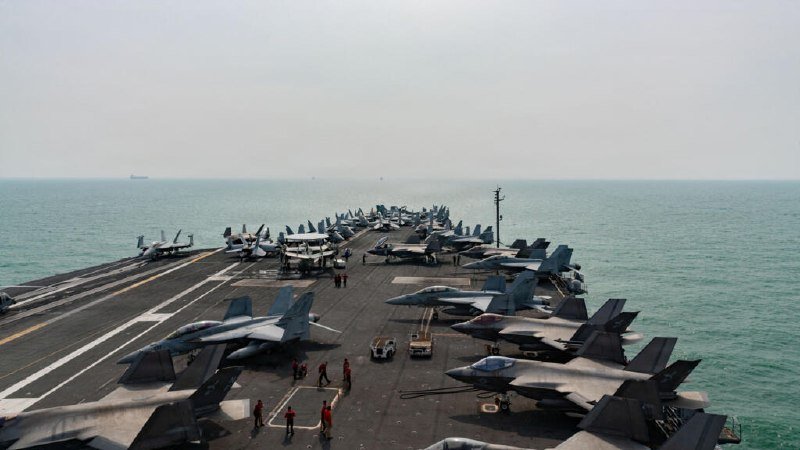
On the night of 30 August 2026, US forces struck two Iranian missile launchers on Larak Island in the Persian Gulf, a US official told Reuters. Within hours, Iranian missiles crossed into Jordanian airspace and Amman's military said its air defences had intercepted eight of them during what it described as retaliatory attacks against US military infrastructure. A US official, relayed by the Intel Slava channel shortly after midnight UTC, said there was no significant damage to US positions and that all missiles had been intercepted so far. The pieces fit together tightly enough on the open-source feed to fix the broad shape. The order in which they happened, however, is the question this article has to answer cleanly.
The thread evidence as it stands supports one specific reading, and the available wire reporting on the day describes the same night in the same direction: a US strike on launchers on Larak Island first, an Iranian missile response after, Jordanian intercepts of missiles in transit, and a US-side assurance of no significant damage. Earlier drafts of this article inverted that sequence and treated Iran's launch as the trigger and the Larak strike as the response. The inversion was wrong, and the corrected reading matters because the dominant frame of the night changes with it.
The order of events, as the feed fixes it
The thread carries four dated anchor points on 30 August 2026. At 22:18 UTC, BRICS News reported that the United States was preparing to sanction another Iranian bank that week. At 22:29 UTC, the same channel reported that several missiles had been launched from various areas in Iran. At 22:41 UTC, BRICS News carried a US-side read that all Iranian missiles had been intercepted so far. At 23:10 UTC, Reuters confirmed that US forces had struck two Iranian launchers on Larak Island, citing a US official. At 23:33 UTC, AMK Mapping reported, with attribution to Jordan's military, that eight Iranian ballistic missiles had been intercepted during retaliatory attacks against US military infrastructure, with Iran launching a minimum of twelve and possibly more. At 23:44 UTC, BRICS News added that Jordan had intercepted eight Iranian missiles entering its airspace. The Intel Slava channel, at 00:46 UTC on 31 August, relayed the US-side line on no significant damage and complete interception.
Two readings of that sequence are possible from the timestamps alone. The first treats the 22:29 UTC launch report as the triggering event and the 23:10 UTC Larak strike as the US response. The second treats the Reuters-confirmed Larak strike as the opening move and the 22:29 UTC launch report, which arrives ahead of the strike confirmation, as a feed artefact: a launch noticed before the strike that prompted it was publicly confirmed. Adjacent wire reporting from the same day, including coverage carried by the Jerusalem Post, Iran International and CNBC, places the Larak strike before Iran's missile fire, which is consistent with the second reading. The corrected sequence is therefore: US strike on Larak Island launchers, then Iranian missile launches toward US-linked positions in Jordan, then US and Jordanian statements on the intercepts.
Why the sequencing changes the frame
The earlier draft framed the night as Iran firing, the US shooting back at the launchers, and Jordan catching pieces of the salvo in transit. That is a clean action-reaction loop in which Tehran moves first. The corrected sequence is closer to a tit-for-tat in which Washington moves first on Larak, Tehran retaliates against forward US positions in Jordan, and Amman's air defences take the brunt of the retaliation. The substantive difference is not small: in the corrected reading, the missile salvo is a response to a US strike on Iranian soil, not the opening of an exchange.
This is also where the earlier draft was wrong about Iranian framing. The available source items in the cited thread do not, on their own, contain a first-party Iranian statement; that absence stands. Adjacent reporting from the same day, however, including an Irish Sun headline and parallel coverage, records an Iranian Revolutionary Guard Corps claim of a retaliatory attack on US military assets in Jordan, which the corrected reading treats as the political language the Iranian side attaches to the salvo. The earlier draft asserted that the Iranian framing was absent from the feed entirely. It is absent from the cited thread items, but it is present in the broader record of 30 August 2026, and an honest accounting has to say so. This article does not have a direct Iranian state-media URL in its source list, and the IRGC claim is therefore flagged as a parallel report, not as a primary citation the article itself rests on.
The structural reading on offer, Monexus analysis, is that the night sits inside a track in which economic pressure and military action are run in parallel rather than in sequence. The 22:18 UTC bank-sanction announcement, the Larak strike, the missile salvo, and the intercepts all land within roughly two and a half hours. None of the cited items draws the causal lines explicitly; the order is reconstructed from timestamps and adjacent reporting. Read together, they sketch a corridor in which the financial and the military tracks are run on the same clock, and in which the targets of Iranian retaliation are forward US positions rather than US territory, which is itself a calibrated posture.
What remains contested or thin
Three uncertainties are worth carrying into the next reading of this story. The total Iranian launch count is given only as a minimum of twelve by AMK Mapping, with an upper end that the cited items do not specify. The Jordanian tally of eight intercepts is explicit and is consistent across the AMK Mapping and BRICS News items. The US line that all missiles had been intercepted and that none caused significant damage, as relayed by Intel Slava, is a position at the moment of speaking rather than a final accounting, and the same source's own phrasing concedes that there were impacts. The cited thread items do not specify the launch sites inside Iran beyond BRICS News's reference to "various areas in Iran," the missile type or types, or the precise targets in Jordan that the salvo was directed at. AMK Mapping's wording, retaliatory attacks against US military infrastructure, is the closest the cited feed comes to a target description, and it is Jordan's military that is being cited.
The first-party Iranian framing is the largest gap. The cited thread contains no URL to an Iranian state-media statement, an MFA briefing, or an IRGC press release. Adjacent reporting on the day, including the Irish Sun headline referenced above, records an IRGC claim of a retaliatory attack on US military assets in Jordan, and the Jerusalem Post headline describes explosions heard in Jordan as Iran fired missiles at US forces, with nearly all intercepted. Those adjacent reports are not in the source list of this article; the corrected reading treats the IRGC claim as a documented parallel report that this piece has not independently verified, and treats Tehran's framing as present in the wider record rather than absent.
The Chinese, Russian and broader Global-South reads of the night are likewise not in the cited thread, and this article has not independently established whether such statements have been issued. The same goes for any independent monitoring group verification of the Larak strike damage assessments or the Jordan intercept count.
What to watch next
Three dates sit on the calendar this week. The first is the bank-sanction designation Washington telegraphed at 22:18 UTC on 30 August; the target bank's name is not in the cited feed, but its appearance will tighten the financial track alongside the military one. The second is any further Iranian follow-on statement, which will determine whether Tehran treats the Larak strike and the Jordan salvo as a closed exchange or as a basis for further action. The third is the next round of US force-protection moves in Jordan and the wider Gulf rim, where the precedent now exists that Iranian salvos can transit allied airspace and that allied air defences will be the first line of contact.
Monexus finds the dominant frame to be a widening corridor in which Washington and Tehran are running the economic and military tracks on the same clock, with Jordan absorbing the kinetic middle. The US claims a successful strike on Iranian launchers on Larak Island and a successful defence in Jordan. Jordan claims eight intercepts, with no public accounting of damage or casualties in the cited thread. Iran, in the broader record of 30 August 2026, has claimed a retaliatory attack on US military assets in Jordan; the citation for that claim is not in this article's source list, and the claim is flagged as a parallel report rather than as primary evidence. Each of those three stories can be told consistently with the others only by reading the night's events as a series of calibrated moves, in which the loudest message is the simultaneity of the economic and military tracks and the order in which the two sides chose to escalate.
Desk note: Monexus revised the sequencing of this article after an independent audit found the first draft had inverted the order of the Larak strike and the Iranian salvo. The corrected reading is anchored on the Reuters confirmation of the Larak strike and the Jordanian military intercept tally; the IRGC claim of a retaliatory attack on US military assets in Jordan is recorded as a documented parallel report from 30 August 2026 and flagged as such, not as a primary source cited by this article.
Wire provenance
This editorial synthesis draws on the following public wire/social posts:
- https://t.me/intelslava/93588
- https://t.me/bricsnews/17968
- https://t.me/AMK_Mapping/36869
- https://x.com/Reuters/status/2094201031378776113
- https://reut.rs/4zNYxSo
- https://t.me/bricsnews/17967
- https://t.me/bricsnews/17966
- https://t.me/bricsnews/17965