Strait of Hormuz just became the oil market's problem again
US forces struck two Iranian launchers on Larak Island late on 30 August. Oil jumped more than 2%. Tehran's Revolutionary Guards have vowed a response. The Strait's margin of safety just got thinner.
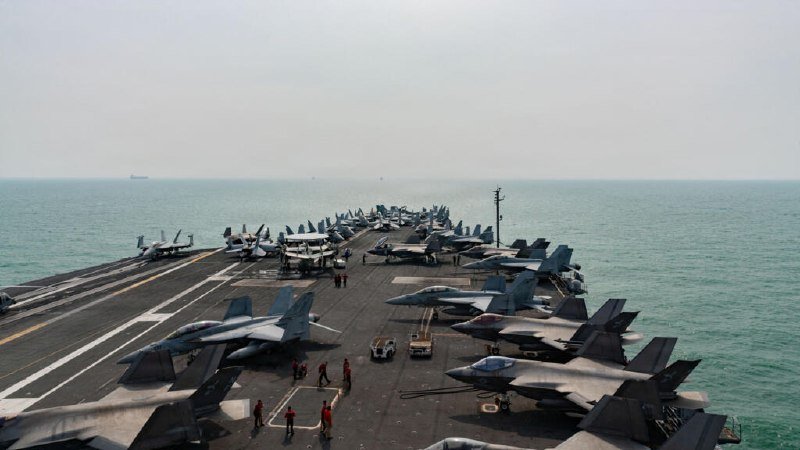
Brent crude climbed more than 2% in early Asian trade on 31 August after a US official confirmed that American forces had struck two Iranian launchers on Larak Island, the small Persian Gulf outpost off Iran's southern coast that sits astride the main shipping lane into the Strait of Hormuz. Iran's Revolutionary Guards said within hours that a response would follow. The market reaction tells the story: when launchers appear on a rock in the middle of the world's most sensitive energy chokepoint, the price of cargo leaving the Gulf moves before any caption can.
This is what escalation looks like at the operational level. Two launchers destroyed is a tactical pinprick. Two launchers appearing on an island from which the Strait of Hormuz's narrow southern approaches can be flanked is a strategic question the market is now pricing in real time. Reuters' oil-markets desk put the move in plain terms: prices climbed on the strike, and the Guards' vow of retaliation kept the bid alive.
What the sources actually say
Reuters' overnight wire, timestamped 23:10 UTC on 30 August, is the spine of the public record. It reports a US official confirming that US forces had struck two Iranian launchers on Larak Island, an island under Iranian administration in the Strait of Hormuz's southern approach. Reuters' tickers ran in close succession: first the strike, then the market move of more than 2% in crude, then the Guards' public vow of a response. The Iranian statement, carried on Iranian state-linked channels, frames the action as an attack on Iranian territory and reserves the right to respond. The available source items do not specify the launcher type, the ordnance used, or the casualties, if any, on the Iranian side.
Monexus analysis: the sequencing matters more than the weapons. The Reuters package gave the market roughly twenty minutes between the strike report and the price move, and a further window before Tehran's formal reply. That timing is what lets traders price the event. A different order of statements would have produced a different intraday chart.
The why of Larak
Larak is not a famous island. It does not need to be. It sits in the Strait of Hormuz's southern approach, just off Bandar Abbas, facing Oman's Musandam peninsula across the shipping lane that carries a significant share of seaborne crude. Any launcher positioned there covers inbound and outbound traffic to Iran's principal oil-export terminal on Kharg Island, and a chunk of traffic heading to and from the UAE's Fujairah terminal. The operational value of two fixed launchers is the value of plausible disruption to that flow, not the value of the launchers as ordnance.
Counter-narrative worth naming: the Iranian framing, as relayed through state-linked channels, casts the strike as aggression on Iranian soil, an extension of an Israeli-American campaign rather than a discrete US action. The US framing, per the same Reuters package, treats the launchers as a defensive response to a developing threat. Both can be partly true. Neither resolves what happens next, which is the Guards' stated intent to escalate.
What the oil tape is telling you
A more than 2% move in Brent on a regional strike, with the structure of the Strait as the obvious tail risk, is not a shock. The interesting question is whether the move closes. Bids on Middle East benchmarks during Asian hours tend to fade if traders read the event as contained; they hold if traders read it as the leading edge of a series. Reuters' second tick, dated 23:45 UTC, captured a market still firm. Investing.com's wrap-up page framed the same move in market-facing language: oil climbed after US strikes on Iranian launchers on Larak Island. Neither source item points yet to a confirmed follow-on strike, Iranian retaliation, or a Hormuz transit disruption. The available source items do not specify the official US or Iranian readout beyond what has already been published.
Monexus assessment: the higher-quality read is that the tape is pricing the option, not the event. Traders are paying to remain long through the next 48 to 72 hours because they do not yet know whether the Guards' vow of a response is performative or kinetic. Forecast, flagged as forecast: expect continued two-way volatility through the close of 31 August, with intraday moves tied to Tehran's statements rather than to new US reporting.
What this is, structurally
Strip the incident of its particulars and a familiar pattern is doing the work. A regional actor stages assets near a transit chokepoint. A larger external actor removes those assets. The chokepoint's traffic responds. The regional actor frames the removal as aggression on its soil and announces a response. The larger external actor frames its action as defensive. The energy market reprices insurance on the corridor until the next data point arrives. This is how maritime escalation has been sequenced for decades in the Gulf. The location changes. The arithmetic does not.
The stakes, named plainly: Iran regains the deterrent value of its forward-postured systems only if it replaces them orcredibly threatens to. The United States preserves freedom of navigation through a corridor on which its own Gulf allies depend, but pays a diplomatic cost every time it strikes Iranian-administered territory in daylight. Asian importers, European refiners, and the global tanker market pay the difference. Energy prices are the visible tax; shipping insurance, the slower, larger one. None of this is in the Reuters wires yet, because none of it has happened yet. The next 72 hours will determine which of these become news.
Monexus framed this around the operational logic of the strike and the market's reading of it, rather than the political theatre around it. The wire led with what was hit and by whom; we foregrounded why this island, why now, and what the oil tape is and is not telling you.
Wire provenance
This editorial synthesis draws on the following public wire/social posts:
- https://reut.rs/4zNYxSo
- https://reut.rs/4qOhwsf
- https://reut.rs/46CDPHL
- https://www.investing.com/news/commodities-news/oil-jumps-more-than-2-after-us-attack-on-irans-larak-island-4882075
- https://www.investing.com/news/commodities-news/oil-prices-climb-after-us-strikes-iranian-launchers-on-larak-island-4882083
- https://reut.rs/4zNYxSo
- https://reut.rs/4qOhwsf
- https://reut.rs/46CDPHL
- https://www.investing.com/news/commodities-news/oil-jumps-more-than-2-after-us-attack-on-irans-larak-island-4882075
- https://www.investing.com/news/commodities-news/oil-prices-climb-after-us-strikes-iranian-launchers-on-larak-island-4882083