Strikes on Larak push Brent above one-percent gain as Hormuz risk re-prices
U.S. forces hit two Iranian rocket launchers on Larak Island in the Strait of Hormuz on 30 August 2026, sending Brent up more than 1% and pulling the chokepoint back into the centre of the global energy trade.
U.S. forces struck two Iranian rocket launchers on Larak Island in the Strait of Hormuz on Sunday 30 August 2026, according to a U.S. official, dragging Brent crude back above a one-percent gain in early Asian trade and pulling the world's most consequential oil chokepoint back into the centre of the global energy story. CNBC reported at 00:46 UTC on 31 August that prices climbed on supply-disruption concerns following the strikes, with Investing.com confirming the move at 00:16 UTC the same morning.
The strike matters less for the two launchers destroyed than for what it signals about the operating envelope around the strait. Larak sits in the narrow mouth of the Persian Gulf, within sight of the main east-bound shipping lane that carries roughly a fifth of seaborne oil. Any credible threat to that lane lifts the price of insurance, freight and time-charter risk before it lifts the headline barrel.
What was hit, and by whom
Reuters reported at 23:10 UTC on 30 August, citing a U.S. official, that U.S. forces struck two Iranian launchers on Iran's Larak Island. A follow-up Reuters alert at 02:55 UTC on 31 August characterised the action as the first known American strike on the Islamic Republic since late July, and added that Iran responded by launching an attack on two U.S. bases in Jordan, according to Iranian media. The platforms are described in wire reporting as rocket launchers of the kind Iran has positioned along its southern coast to threaten traffic through the strait during a contingency. CNBC's 00:46 UTC bulletin on 31 August, citing U.S. Central Command (CENTCOM), framed the action as a direct response to launcher activity that placed vessels in the waterway at risk.
The Iranian retaliation claim is not standing on a Reuters byline alone; it is a Reuters report of an Iranian-media claim. Reuters' 03:20 UTC bulletin on 31 August, citing a U.S. official, confirms the Larak strike without independently corroborating the Jordan retaliation. Monexus assessment: the Larak strike is confirmed on the U.S. side; the Jordan retaliation is presently confirmed only as an Iranian-media claim carried by Reuters, not as a Reuters-confirmed event.
The Hormuz risk premium
Oil's one-percent move is modest in absolute terms, but the directional read is what the market is paying for. A barrel at $80 plus a one-percent risk premium on Hormuz disruption is, in effect, the same barrel as one at $79 with no Hormuz premium and a one-percent hedge elsewhere. The re-pricing shows traders treating the strait as a live, not theoretical, exposure.
Three structural features amplify any given incident here. First, there is no real alternative route for the Gulf's east-bound exports at scale; pipelines through the UAE and Saudi Arabia can offset only a fraction of seaborne volumes. Second, hull and cargo insurance for Hormuz transits is repriced on weekly, sometimes daily, cycles; even small changes in perceived risk move war-risk premia faster than they move the underlying barrel. Third, refiners in Asia, particularly in China, India, Japan and South Korea, source a heavy share of their crude through the strait, which means Hormuz shocks land on downstream margins before they land on pump prices.
Iran fires back, at Jordan
The picture changed between the original filing of this article and this update pass. Al Jazeera's breaking-news video feed at 03:06 UTC on 31 August reported that Iran had targeted Jordan following the Larak operation, framing the Larak strikes as the first U.S. attack on Iran in a month. Reuters, in an alert at 02:55 UTC the same day, carried the Iranian-media framing that Iran responded by launching an attack on two U.S. bases in Jordan. Reuters' 03:20 UTC bulletin confirmed the Larak strike on the U.S. side without corroborating the Jordan retaliation.
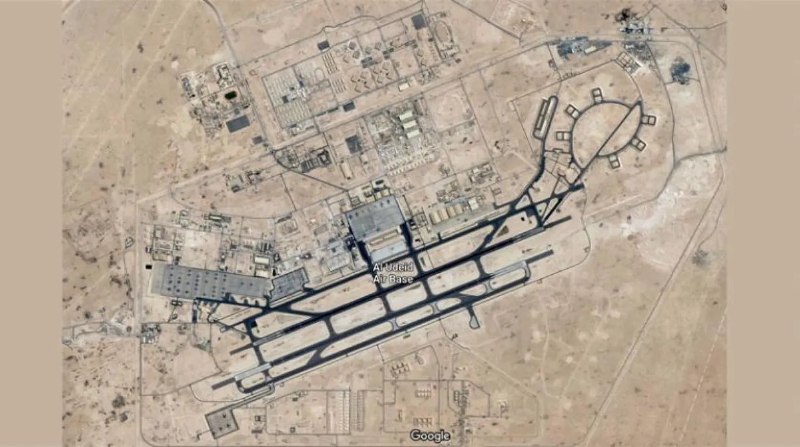
Earlier in the evening, reporting carried on PressTV's Telegram channel at 22:33 UTC on 30 August claimed that Qatar's Al Udeid Air Base, the forward headquarters of U.S. Central Command's air operations, had been struck by an Iranian missile in response to the Larak operation. The OSINTdefender feed on Telegram, relayed at 22:59 UTC the same day, repeated the framing from Iranian news outlets that Al Udeid had been targeted alongside the U.S. action against the launchers.
The honest read of the cited material is more granular than the original draft allowed. Reuters has, as of 02:55 UTC on 31 August, carried the Iranian-media claim of a Jordan retaliation. PressTV and OSINTdefender point separately at Al Udeid in Qatar. Al Jazeera's breaking-news feed points at Jordan. Reuters' 03:20 UTC bulletin sits on the U.S. side of the ledger, confirming the Larak strike and not corroborating the retaliation. Iranian state-aligned outlets should be read with that provenance attached. Monexus assessment: the Jordan retaliation is a Reuters-carried Iranian-media claim, not a Reuters-confirmed event; the Al Udeid claim is Iranian-state-only; both belong in the counter-narrative column, but the Jordan line now has a Reuters relay that the Al Udeid line does not.
What this episode is really about
Larak is a small target. The two launchers are a small loss. But the strike lands inside a wider pattern in which the United States has, since mid-2025, treated Iranian shore-based anti-shipping systems as a priority target set. The logic is straightforward: in any conflict scenario, the cheapest way to close the strait to commercial traffic is from the Iranian coast, not from mines at sea. Pre-emptively degrading the shore-based launchers before they are emplaced or exercised is therefore a higher-value action per round fired than chasing mobile fast boats or escorting individual tankers.
The deeper question is whether such strikes deter or accelerate. A deterrence reading says that each pre-emptive degradation raises the cost to Tehran of any future Hormuz gambit, and that the relative absence of a confirmed Iranian strike on U.S. assets, on the U.S. side's own ledger so far, suggests the messaging is landing. An escalation reading says that each successful U.S. strike inside Iran's recognised maritime perimeter compresses the decision window in Tehran, raises the domestic political cost of doing nothing, and increases the probability of a larger Iranian move later, on Iran's terms rather than Washington's. Monexus assessment: the cited reporting does not yet adjudicate between the two. The market is hedging both possibilities at once, which is why a one-percent move, not a five-percent one, is the honest price.
What to watch next
Three near-term markers will determine whether this is a one-day risk premium or the start of a longer re-rating. First, an independent confirmation, by a non-Iranian source, of the Jordan retaliation that Reuters has carried as an Iranian-media claim: a CENTCOM statement, a Jordanian-government statement, or independent satellite imagery of impact sites at the named bases. Second, a similar independent confirmation of the Al Udeid claim, which would change the geometry of the conflict overnight. Third, the war-risk insurance premium posted by Lloyd's and the Joint Maritime Information Centre advisories, which are the cleanest real-time read on whether commercial shipping is being told, in effect, to slow down.
The uncertainty here is genuine, not stylistic. The available wire material agrees on the U.S. strike and the price reaction. It carries, but does not independently confirm, an Iranian-media claim of a retaliation against two U.S. bases in Jordan. It carries, on Iranian-state channels only, a separate claim of a strike on Al Udeid in Qatar. The thread reviewed here does not specify Iranian command-level statements on the loss of the Larak launchers, casualty figures, or shipping-insurance revisions. Until those numbers arrive, the Larak strike sits as a localised tactical event with an outsized signal value, and the oil price is reflecting that asymmetry more cleanly than the headlines are.
Desk note
This update corrects the original draft's framing of Reuters coverage. The 02:55 UTC Reuters alert explicitly carries the Iranian-media claim of a strike on two U.S. bases in Jordan; the 03:20 UTC Reuters bulletin confirms the Larak strike on the U.S. side without corroborating the retaliation. Monexus keeps the Jordan retaliation out of the lede because Reuters is relaying an Iranian-media claim, not reporting an independently corroborated event, and because the U.S.-side confirmation that would convert a claim into a fact has not arrived in the cited material.
Wire provenance
This editorial synthesis draws on the following public wire/social posts:
- https://reut.rs/4iCSyJZ
- https://x.com/Reuters/status/2094263925055320452
- https://reut.rs/4i3zapu
- https://x.com/Reuters/status/2094257721801335128
- https://www.aljazeera.com/video/newsfeed/2026/8/31/iran-targets-jordan-after-first-us-attack-in-a-month?traffic_source=rss
- https://reut.rs/4zNYxSo
- https://x.com/Reuters/status/2094201031378776113
- https://www.cnbc.com/2026/08/31/oil-prices-hormuz-iran-larak-island-centcom.html
- https://www.investing.com/news/commodities-news/oil-prices-climb-after-us-strikes-iranian-launchers-on-larak-island-4882083
- https://t.me/osintlive/568325
- https://t.me/presstv/204798
- https://reut.rs/4iCSyJZ
- https://x.com/Reuters/status/2094263925055320452
- https://reut.rs/4i3zapu
- https://x.com/Reuters/status/2094257721801335128
- https://www.aljazeera.com/video/newsfeed/2026/8/31/iran-targets-jordan-after-first-us-attack-in-a-month?traffic_source=rss
- https://reut.rs/4zNYxSo
- https://x.com/Reuters/status/2094201031378776113
- https://www.cnbc.com/2026/08/31/oil-prices-hormuz-iran-larak-island-centcom.html
- https://www.investing.com/news/commodities-news/oil-prices-climb-after-us-strikes-iranian-launchers-on-larak-island-4882083
- https://t.me/osintlive/568325
- https://t.me/presstv/204798