Three accounts collide over a tanker in the Strait of Hormuz
Three posts published within 96 minutes offered sharply different descriptions of a tanker incident in the Strait of Hormuz. The available evidence does not settle the vessel’s identity, what happened, or who was responsible.
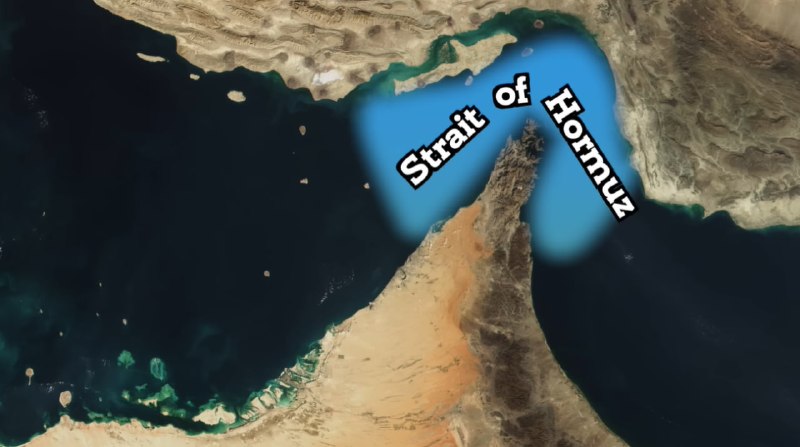
At 23:12:51 UTC on 31 August 2026, the Telegram channel Insider Paper posted a headline saying that a tanker had been hit by “3 unknown projectiles” in the Strait of Hormuz and attributed the wording to a UK maritime agency. The post did not provide a vessel name or independently reproduce the agency’s underlying bulletin in the supplied source item.
That version collided with two earlier posts. BRICS News wrote on Telegram at 23:02:16 UTC that a tanker had been “attacked and struck” in the same waterway. A Polymarket post on X at 21:36 UTC went further, saying that Iranian media had announced that Iranian forces had stopped a Saudi oil tanker in the strait. The timing makes the contrast important: all three posts were published within 96 minutes, but they describe incompatible sequences of action.
The immediate question is not merely who was right. It is whether these are three accounts of one incident, or compressed descriptions of separate events. Monexus analysis: the available posts do not establish a single chain of events. One attributes a projectile-strike headline to a UK maritime agency, one says only that a tanker was attacked and struck, and one relays a claim of an Iranian stoppage involving a Saudi tanker. Attribution remains unresolved.
Three versions, three emphases
The Polymarket post was the earliest of the three. Its wording, “Iranian media announces,” makes clear that the account is a relay of reporting attributed to Iranian media. It does not identify the Iranian outlet, the underlying report, the tanker, or the evidence offered for the claim. The post therefore establishes what Polymarket said Iranian media announced, not that the stoppage independently occurred.
The BRICS News post followed 86 minutes and 16 seconds later. Its headline, “Tanker attacked and struck in the Strait of Hormuz,” supplies an action but no stated actor. The phrase is consistent with the broad incident reported in the Insider Paper headline, but it does not add projectile details, a vessel identity, or responsibility.
Insider Paper came next, 10 minutes and 35 seconds after the BRICS News post. Its headline went beyond the earlier wording by saying the tanker was hit by “3 unknown projectiles” and identifying a UK maritime agency as the source of that formulation. The supplied item does not specify which agency was meant, and it does not reproduce a broader advisory containing casualty, damage, location, or responsibility details.
The alternative reading is straightforward: the posts may be describing different stages or aspects of one episode, with later accounts adding information omitted by earlier ones. They may also be using “stopped,” “attacked,” and “struck” loosely for the same event. Neither explanation can be selected from the three headlines alone.
What the posts do not establish
The source items do not identify the tanker by name or provide an IMO number. They do not specify its owner, operator, cargo, destination, or precise position within the strait. They also do not provide casualty or damage figures. Those omissions limit the factual comparison: the posts can establish the language each outlet used, but not the full circumstances behind it.
The three versions also diverge on the central attribution. The Polymarket post attributes an alleged stoppage to Iranian forces. The BRICS News headline names no actor. The Insider Paper headline attributes its projectile count to a UK maritime agency but does not assign responsibility for the alleged projectiles. On the evidence supplied, no actor is established as having carried out an attack.
Monexus assessment: the safest reading is to keep the claims separate. The Polymarket post records a claim about Iranian forces; the BRICS News post records an unattributed attack-and-strike headline; and the Insider Paper post records a headline attributing a three-projectile account to a UK maritime agency. Conflating them would create certainty that the source material does not support.
A contest over the first account
The order of publication gives the Polymarket post temporal priority in this source set, but not evidentiary priority. A later report can confirm, correct, or merely repeat an earlier claim. Here, the later posts do not expressly cite the Polymarket post, and the supplied material does not establish whether they drew from the same underlying incident report.
That distinction matters because the first public description can shape the political interpretation before vessel details are available. Monexus analysis: the sequence suggests an information contest, not a settled attribution. The earliest item presents an Iranian action through a secondary social-media account; the next presents an unattacked event in broader language; the last presents a UK-agency-attributed projectile account. The evidence does not show whether the versions were coordinated, independent, or reactive.
A further caution concerns the provenance of the posts. The Polymarket item is explicitly a summary of an Iranian-media announcement, while the other two are headlines from Telegram channels. The source set does not include the original UK maritime agency notice, the referenced Iranian media report, vessel-tracking data, or statements from a named owner or flag authority. It would therefore be wrong to treat any of the three posts as a complete incident record.
The narrow conclusion
The consequential fact is that a tanker incident in the Strait of Hormuz was described in sharply different ways between 21:36 and 23:12:51 UTC on 31 August 2026. The strongest support is for the existence of competing public descriptions, not for any one description of what happened. The supplied evidence supports neither an Iranian attribution nor a definitive three-projectile finding as an independently verified event.
The stakes are straightforward. If the tanker was stopped by Iranian forces, the political meaning would differ from an unattributed projectile strike. If the same vessel was later reported as struck, the sequence could matter. If the posts concern more than one tanker, the apparent contradiction disappears. Those possibilities remain open because the source items do not provide the vessel identity or the underlying reports needed to connect them.
Monexus assessment: the next useful evidence would be a named vessel or IMO number, a first-party maritime notice, or a clearly identified media report naming its source. Until one of those records appears, the responsible conclusion is narrow: three posts described one waterway incident in three different ways, and the public record supplied here does not resolve the discrepancy.
Desk note: Monexus treated the three posts as provenance-bearing accounts, not as interchangeable confirmations, and limited the conclusion to what their wording and timestamps establish.
Wire provenance
This editorial synthesis draws on the following public wire/social posts:
- https://t.me/insiderpaper/44276
- https://t.co/NeW7LpjcBq
- https://t.me/bricsnews/18002
- https://x.com/Polymarket/status/2094539767341830640