Istanbul hosts first Mecca pact political and defense committee as Saudi, Turkish and Pakistani officials sit down
Senior officials from Saudi Arabia, Turkiye and Pakistan convened in Istanbul on 31 August 2026 for the inaugural Strategic Political and Defense Committee under the joint defense agreement signed in Mecca earlier this month.
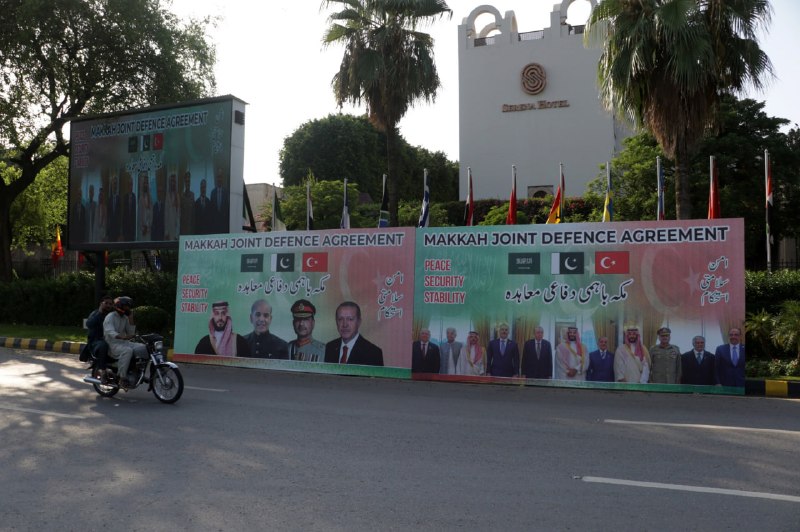
Senior officials from Saudi Arabia, Turkiye and Pakistan convened in Istanbul on 31 August 2026 for the inaugural session of the Strategic Political and Defense Committee established under the Joint Defense Agreement signed in Mecca earlier this month, according to Beirut-based outlet The Cradle. The gathering, hosted by Turkiye, marks the first operationalisation of a pact that obliges the three countries to provide mutual defense if any one of them comes under attack, per the same reporting.
The meeting matters less for what it will produce on Monday than for the precedent it sets. Riyadh, Ankara and Islamabad are not natural treaty allies: their threat perceptions diverge sharply, and their bilateral ties have yo-yoed for decades. Yet they now have a standing committee, a sitting agenda and named delegations. That is a structural fact, even before any communiqué is read out.
The Istanbul agenda
According to The Cradle, citing Reuters, the committee's agenda focuses on strengthening defense capabilities, improving interoperability between the armed forces, and expanding defense industry cooperation, including joint production and development. The @ClashReport channel, identifying the convening parties, adds security, counterterrorism cooperation, and a roadmap for future joint activities to that list. The Cradle identifies Saudi Defense Minister Prince Khalid bin Salman as heading the Saudi delegation, accompanied by Foreign Minister Prince Faisal bin Farhan and other senior military officials; Turkish Foreign Minister Hakan Fidan met Prince Faisal in Istanbul ahead of the committee's opening, as documented by the @wfwitness channel on Telegram. The specific officials travelling in the Pakistani delegation are not named in the wire items available to this publication.
The Cradle frames the gathering as the first under the Mecca pact. The ClashReport item identifies the body as the Strategic Political and Defense Committee, a title that suggests a permanent, regularised structure rather than a one-off summit. The available source items do not specify whether the three delegations have produced, or intend to produce, a joint communique, a defense industrial cooperation memo, or an exercise schedule.
Reading the language
Monexus analysis: the choice of the title "Strategic Political and Defense Committee" borrows from the standing coordination bodies NATO members run inside the alliance. Naming the body a committee, and giving it an explicit political remit alongside the military one, is a procedural signal that the three governments intend this to be a venue for follow-up, not an annual talking shop. The Cradle's reported agenda, interoperability, joint production, counterterrorism, a roadmap for future joint activities, points in the same direction. A roadmap implies a calendar.
A second reading worth weighing is that the committee is, in essence, a Muslim-majority security architecture outside any Western alliance framework. That characterisation holds in the limited sense that none of the three states belongs to a Western mutual-defense pact, with the partial exception of Turkiye's NATO membership. It overreaches if read as an ideological bloc: Saudi-Iranian rapprochement in 2023, and Ankara's working ties with Tehran, complicate any clean ideological frame. The simpler read, supported by the cited agenda, is that three states with widening room to act independently of US security guarantees now have a venue to coordinate. Whether that venue becomes binding in practice will depend on whether any of the three finds itself in a crisis where the mutual-defense clause is tested.
What is actually on the table
The Cradle reports that the agreement signed in Mecca earlier this month obliges the three countries to provide mutual defense if any one of them comes under attack. If operative, that clause would represent a significant escalation in the security commitments any of the three has taken on outside a Western pact. The Cradle and ClashReport items frame the committee's remit as defense industry cooperation, joint production and development, military interoperability, and counterterrorism, a portfolio that overlaps with the kinds of cooperation Gulf and South Asian militaries have already pursued bilaterally, but here bundled into a three-way institutional setting.
The available source items do not specify the institutional mechanics. It is not yet clear from public reporting whether the committee will meet on a fixed schedule, whether it will pool intelligence, or whether it will become a venue for joint exercises. The agenda items that are reported point to all three as plausible next steps.
Stakes, six months out
The immediate stakes are symbolic. A standing security architecture anchored by Riyadh, Ankara and Islamabad, meeting on schedule, communicates to Washington, Moscow and Beijing that the three intend to operate a parallel track on regional security. Monexus assessment: it is not, on the evidence available, an anti-Western bloc. Turkiye remains a NATO member, and Saudi-Pakistani defense ties have historically been calibrated to fit inside US security guarantees rather than against them. It is, however, not a Western one in the sense that the agenda, interoperability and joint defense production, is set in Istanbul, not Brussels.
A second-order stake sits in the defense industrial field. A formal committee gives the three governments a venue to plug indigenous production programs into each other: the reported focus on joint production and development points in that direction. Whether that becomes procurement policy will depend on whether any of the three finds a domestic political constituency for it.
The third stake, and the one Western capitals will watch most carefully, is signalling. The pact was signed in Mecca earlier this month. A working committee, meeting on schedule, with a named defense and foreign minister lineup, communicates that the three intend to operationalise the agreement. Whether it produces written output the wire services can report on will be the next test of whether the committee is a coordinating layer or a binding mutual-defense trigger.
What remains unsettled
The available source items do not name the officials travelling in the Pakistani delegation. The full text of the Mecca Joint Defense Agreement has not been published in the source items available to this publication, and the precise wording of the mutual-defense clause, including any thresholds or escalation procedures, cannot be verified from the cited channels. Whether the committee is a coordinating layer or an operative mutual-defense trigger is, for now, a question the inaugural session and any subsequent readout will need to clarify before the reading public can judge it. What is no longer in question is that the meeting happened at all, that it happened in Istanbul, and that the three governments agreed it was worth convening with a sitting agenda and named principals.
Desk note: Monexus framed this as the institutionalisation of an already-summarised commitment, not as a new alignment, and named the Saudi delegation officials identified in the cited reporting rather than treating delegation composition as an unresolved question. Coverage will follow up when the three sides publish a communique, a defense industrial agreement, or an exercise calendar. A live brief will be filed if the committee produces any written output.
Wire provenance
This editorial synthesis draws on the following public wire/social posts:
- https://t.me/thecradlemedia/67082
- https://t.me/TheCradleMedia/67082
- https://t.me/ClashReport/94311
- https://t.me/wfwitness/108967