Trump's AI video of Kharg Island blowup lands before any reported strike
President Trump posted an AI-generated clip showing Iran's Kharg Island being destroyed hours before any confirmed strike, prompting a market wobble and a Democratic demand for transparency.
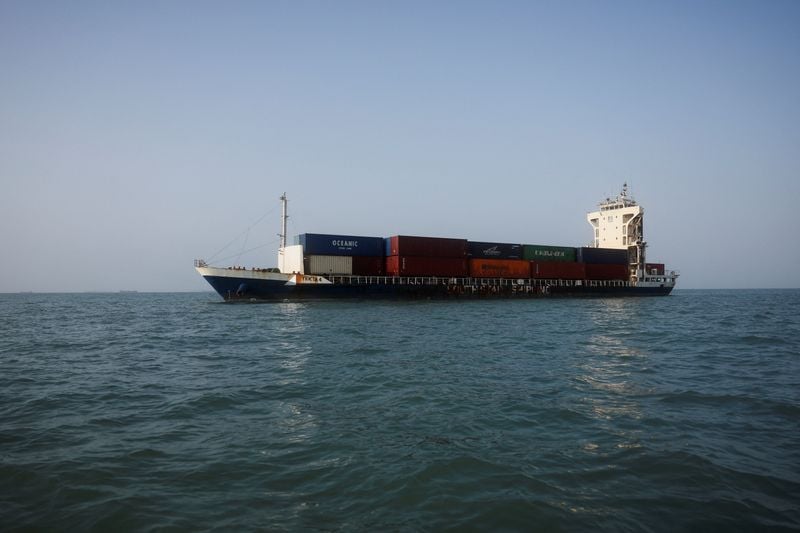
At 05:20 UTC on 31 August 2026, a short AI-generated clip of Iran's Kharg Island erupting in flames appeared on President Donald Trump's social media, accompanied by the caption "Kharg Island being blown to smithereens!!!" The post landed roughly twenty minutes before a follow-up message at 05:41 UTC, also from Trump's account, framing the footage as a response to "last night's events in Iran" and branding the visual itself an "AI attack." No US strike on the island had been reported by wire services, the Pentagon, or Iranian state media at the moment the video posted.
The sequence marks a new phase in how the United States communicates escalation with Tehran: the threat has moved ahead of the event, and the visual is the message. That inversion carries weight because Kharg Island handles the overwhelming majority of Iran's crude exports. A successful strike on its loading infrastructure would not be a tactical footnote; it would be an economic tremor felt across Brent and WTI, the Strait of Hormuz, and every Gulf logistics contract downstream. The clip was posted as if that tremor had already happened.
The video and the absence behind it
The footage itself is unmistakably synthetic. The skyline is AI-stylised; the explosions do not correspond to any reported impact pattern; the caption leans on the rhetorical intensity of "smithereens" rather than any operational claim. By 05:42 UTC, the financial-press aggregator Investing.com had already filed a story under the headline "Trump posts AI video of Iran's Kharg in 'smithereens', no evidence of attack," flagging that no strike had been independently corroborated and noting the explicit AI provenance of the clip. The headline choice itself documents the gap between the visual and the operational record.
This publication's assessment is that the post is best read as calibrated signalling rather than operational disclosure. The earlier posts of the morning, clustered between 05:20 and 06:59 UTC and relayed by channels including Clash Report and English-language aggregator accounts, package the clip inside a wider frame about US domestic politics: Trump accusing Democrats of wanting "our country to lose the war against Iran," a framing that pre-supposes an active war the public record has not yet confirmed. The structure of the messaging, in other words, runs threat, then partisan frame, then visual, in that sequence.
Why Kharg, and why now
Kharg Island sits in the northern Persian Gulf, roughly 25 kilometres off the Iranian coast, and operates the single-point moorings through which the bulk of Iran's crude-export volumes are loaded. Damage to its terminal and storage facilities would not only set back Iran's export capacity for months; it would compress the diplomatic bandwidth of every Gulf importer, every Asian buyer under sanctions exposure, and every European government now scrambling for non-Russian alternatives. The selection of Kharg as the visual subject, rather than, say, a Revolutionary Guards command bunker, is therefore not random. It tells the market what the threshold looks like.
That is precisely why the gap between the video and the event matters. Past US-Iran confrontations, including the January 2020 strike that killed Quds Force commander Qasem Soleimani and the more contained exchanges of 2019 in the Strait of Hormuz, were accompanied by operational confirmation from US Central Command, Pentagon briefings, and on-the-ground reporting within hours. The 31 August 2026 sequence inverts that pattern: the threat comes first, dressed as if it has already happened, and the burden of disproving it falls on the press.
The political envelope around the clip
The posts of 05:32 and 06:59 UTC, relaying Trump's claim that "we are winning easily," situate the AI video inside a domestic political frame aimed at the Democratic leadership in Congress. That envelope matters for at least two reasons. First, it tells Democratic critics that any demand for war-powers accountability will be met with a counter-narrative of "losing." Second, it forces neutral readers and allied foreign ministries to triangulate between three competing signals: the visual threat, the partisan frame, and the operational silence.
In Monexus's reading, the architecture of the posts suggests an attempt to pre-load the political terrain before any actual strike, so that if one comes, the baseline is already set. This is a recognisable move inside the broader pattern of platform-native escalation: the message goes out, the platform amplifies it, and the press is left to play catch-up against an event that has been narrated before it occurred.
What remains unresolved
The 31 August morning posts, as relayed through the available channels, do not specify whether any US military action against Kharg has been ordered, deferred, or merely simulated. The cited posts contain no Pentagon confirmation, no Iranian counter-strike claim, and no US-allied government statement, and this article has not independently established whether an operation is imminent, already in motion, or imagined for messaging purposes. Multiple competing reads remain plausible: that the video is preemptive signalling ahead of a planned strike; that it is a negotiating lever; or that it is a pressure tactic aimed at the Democratic caucus.
The market read at the time of writing, measured by the speed at which financial-press wires framed the clip as an "unconfirmed" provocation, suggests the signalling value is highest precisely because the event has not happened. The clock that matters next is the next 48 to 72 hours. Watch for an operational Pentagon read-out, an Iranian state-media acknowledgement, and any second post that either confirms or walks back the visual. Until then, the video is the event, and that is a posture worth taking seriously precisely because it is unusual.
, Desk note: Monexus treated the 31 August AI clip as signalling rather than confirmation, in contrast to the more breathless aggregator coverage that ran the footage without flagging the operational absence. We lead on the time-stamped sequence of posts and the explicit "AI attack" provenance disclosed by the original publisher.
Wire provenance
This editorial synthesis draws on the following public wire/social posts:
- https://www.investing.com/news/stock-market-news/trump-posts-ai-video-of-irans-kharg-in-smithereens-no-evidence-of-attack-4882150
- https://t.me/englishabuali/78503
- https://t.me/englishabuali/78510
- https://t.me/ClashReport/94282
- https://t.me/ClashReport/94287