Three hours in a Las Vegas jury box: Keffe D found guilty in Tupac murder
A jury in Las Vegas took under three hours to convict Duane "Keffe D" Davis of first-degree murder for orchestrating the 1996 killing of Tupac Shakur, ending nearly three decades without a conviction in the case.
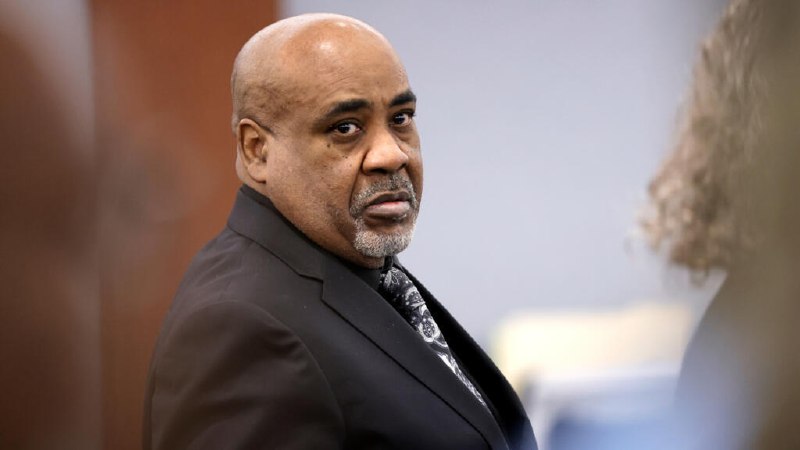
A jury in Las Vegas returned a first-degree murder verdict against Duane "Keffe D" Davis on 1 September 2026, convicting him of orchestrating the 1996 killing of rapper Tupac Shakur. France 24 reported that the panel reached its decision in under three hours, a compressed deliberation for a case that has lingered in American popular memory for nearly thirty years. Deutsche Welle separately placed the deliberation at "less than three hours."
The verdict closes the only successful prosecution arising from the killing. France 24's write-up described Davis as "the first person convicted" in the case, a characterisation that effectively ends the era in which Shakur's death sat among the highest-profile American killings of the 1990s without a courtroom resolution. The wire posts confirm the charge, the speed of the jury and Davis's role under the prosecution's theory. They do not specify the precise sentence, the sentencing date, the identity of any co-conspirators named at trial, or whether Davis took the stand.
What the jury found
Davis was convicted of first-degree murder, according to wire posts logged in the minutes after the verdict landed. The Open Source Intel Telegram channel, contributing the post under the handle @AZ_Intel_, framed the charge specifically: Davis "of first-degree murder for orchestrating the 1996 killing of rapper Tupac Shakur." France 24 used the same characterisation, describing him as found guilty of "orchestrating" the killing and calling him "the first person convicted."
The verdict alerts moved through multiple aggregators in near-real-time. The Spectator Index pushed a same-minute BREAKING alert through osintlive; Disclose.tv posted a parallel JUST IN confirmation that framed Davis as guilty of first-degree murder. The convergence of the France 24 write-up and the two aggregator posts, separated by minutes, is the basis on which the verdict is reported below; no contrary outcome appears in the supplied thread.
A compressed deliberation on a long-running case
The unusual feature of the verdict, as documented in the supplied wire coverage, is the speed. Two independent outlets, France 24 and Deutsche Welle, both clocked the jury's deliberation at under three hours. For a cold case of this profile, with the cultural and evidentiary baggage that the Tupac killing carries, a same-day verdict of this kind is the sort of result that draws its own commentary from trial watchers long accustomed to mistrials and hung panels in adjacent cases.
Monexus analysis: read against the wire framing of Davis as "the first person convicted" in the case, the brevity of the deliberation suggests the panel did not need long to settle the central question the prosecution put to it. What that central question was, in trial-stage specificity, the supplied wire coverage does not detail. The aggregator posts treat the verdict as a discrete Las Vegas courtroom event; the France 24 and Deutsche Welle write-ups give it more context. None of the four outlets in the supplied thread lay out the prosecution's theory of orchestration in trial-day terms.
What the sources do not specify
The available source items confirm the verdict, the charge, the speed of the deliberation, and Davis's role under the prosecution's theory of orchestration. They do not specify the precise sentence Davis now faces, the date of sentencing, the identity of any co-conspirators who may have been named at trial, the jurors' composition, or whether Davis took the stand in his own defence. The wire posts are also silent on whether the jury was instructed on any lesser-included offences, and on which aggravating factors, if any, the prosecution argued.
Nevada sentencing ranges for a first-degree murder conviction and the specific evidentiary details of the trial record are likewise outside the supplied thread. Those questions will shape the next round of coverage.
A thirty-year evidentiary loop closing
For decades, Shakur's killing has occupied a distinctive place in American crime memory, alongside other unresolved killings of the same era. The supplied wire coverage describes the case as one that had yielded no prior conviction; France 24 frames Davis as "the first person convicted." The jury's verdict, returned quickly on 1 September 2026, closed that loop. The unusual compression of the deliberation is the punctuation; the absence of any prior conviction in three decades is the news the verdict is being read against.
Monexus assessment: the reading worth sitting with is structural. A justice system that, on 1 September 2026, can return a first-degree murder verdict in under three hours for a 1996 killing that France 24 notes generated no prior conviction, sits inside a longer pattern in which high-profile American cases from the mid-1990s have moved from cultural artefact to courtroom file at very different speeds. The supplied thread evidence does not, on its own, support a broader claim about which cases clear that gap and which do not; it does support the narrower observation that this one cleared it, and cleared it quickly, in the wire framing on record.
How Monexus framed this vs the wire: France 24 and Deutsche Welle carried the verdict as a discrete Las Vegas courtroom event, with France 24 emphasising Davis's status as the first person convicted and the unusual compression of the deliberation. Monexus treats it as the closing of a thirty-year evidentiary loop, foregrounding the supplied-thread-only evidence: the charge, the deliberation time and the "first person convicted" framing that the wire used to anchor the story.
Wire provenance
This editorial synthesis draws on the following public wire/social posts:
- https://www.france24.com/en/americas/20260901-duane-keffe-d-davis-found-guilty-in-tupac-shakur-murder
- https://www.dw.com/en/tupac-shakur-murder-trial-duane-keffe-d-davis-guilty/a-78581756?maca=en-rss-en-all-1573-rdf
- https://t.me/france24_en/18435
- https://t.me/osintlive/568610
- https://t.me/osintlive/568614
- https://t.me/osintlive/568609
- https://www.france24.com/en/americas/20260901-duane-keffe-d-davis-found-guilty-in-tupac-shakur-murder
- https://www.dw.com/en/tupac-shakur-murder-trial-duane-keffe-d-davis-guilty/a-78581756?maca=en-rss-en-all-1573-rdf
- https://t.me/france24_en/18435
- https://t.me/osintlive/568610
- https://t.me/osintlive/568614
- https://t.me/osintlive/568609