Russia's late-August strike on Kyiv, and a fire in Latvia no one is connecting yet
On 31 August 2026 a Telegram monitor logged a Russian missile salvo on Kyiv and, minutes later, a separate fire at an energy depot in Rezekne, Latvia. The available evidence is thin on both counts, but the timing is the story the wire cycle is unlikely to assemble on its own.
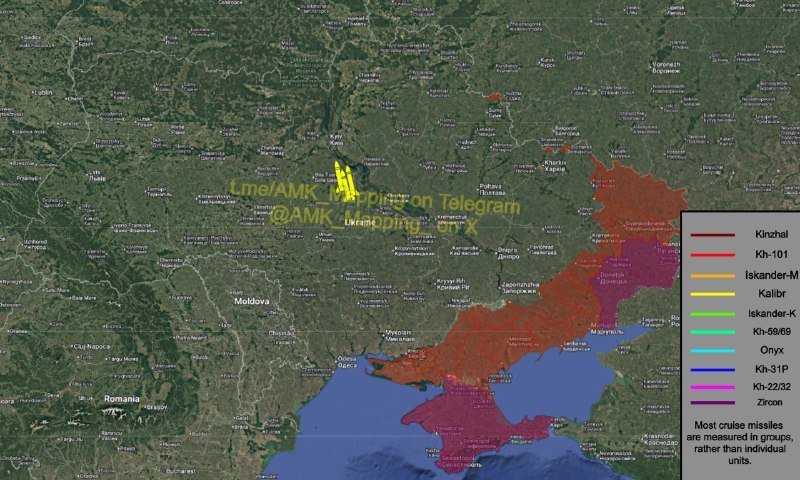
At 23:26 UTC on 31 August 2026, a single real-time Telegram channel logged the first report of a missile strike in progress in Kyiv, with the monitor judging that the salvo likely targeted the TEC-5 thermal generation plant. By 23:29 UTC, the same monitor reported two Zircon launches toward the capital. By 23:31 UTC, it logged further explosions and read them as additional ballistic missiles. At 23:33 UTC it counted five blasts and wrote that at least one Zircon had struck Kyiv, with a second judged likely. At 23:35 UTC it reported continued explosions around Brovary, east of the capital, and by 23:47 UTC it noted that no missiles were then over Kyiv but warned that the threat of repeated launches remained. At 23:59 UTC, the same channel reported a separate, unexplained fire at an oil or gas depot in Rezekne, Latvia, described as near the Russian border. The cause was flagged as unconfirmed at the time of posting. Source: WFWitness on Telegram, in eight sequential posts spanning the half-hour.
Read those timestamps as a sequence and a structural argument falls out. One event was a documented missile strike on a Ukrainian thermal generation target, reported in real time by an open-source monitor; the available source items do not specify a confirmed hit on TEC-5, only the monitor's read that the salvo likely targeted it. The other was an energy depot fire on NATO's eastern border, cause unconfirmed. Monexus analysis: the simultaneity is the story, because NATO planners are paid to read patterns, and a pattern is what the timestamps describe. What they do not yet describe is attribution for the Latvian fire.
The Kyiv salvo, as the monitor saw it
The composition of the salvo, as the channel described it, is worth listing plainly. Two Zircons launched toward the capital at 23:29 UTC. Kalibr cruise missiles crossing the Kyiv region from the south by 23:27 UTC. Repeated explosions counted to five by 23:33 UTC, with the monitor's read that at least one Zircon struck Kyiv and a second probably did. Continued blasts around Brovary two minutes later. By 23:47 UTC the monitor's assessment was that no fresh missiles were over the city, with the threat of repeat launches still in place. Monexus analysis: the mixture of a hypersonic ballistic type and a subsonic sea-launched cruise type fired from a different azimuth, within the same minute-by-minute window, is consistent with a package designed to arrive from multiple vectors at once. That is a structural observation about what the timestamps describe, not a confirmed read on operational intent.
The monitor's early report named TEC-5 as the likely target. The available source items do not specify damage at TEC-5, do not specify a confirmed hit on any specific site, and do not specify casualties. The monitor's post is a judgment of targeting, not a confirmation of impact. First-party reporting on what the strike actually hit has not appeared in the source items Monexus reviewed.
The Rezekne fire, and the part the wire cycle is unlikely to assemble
The Rezekne fire is the half of this story with the least evidence and the most consequence if it hardens. The available source items do not specify whether the depot was struck by a weapon, sabotaged, suffered an electrical fault, or burned for any other reason. What they do specify is that a fire at an energy site on NATO's eastern border was reported in the same minute-by-minute window as a Russian missile strike on a Ukrainian energy target. Monexus analysis: the optics matter even if attribution does not arrive. Alliance planners in Brussels, Riga, and Washington read these patterns for signal. The signal here is that two energy sites on the alliance's eastern flank were burning, or apparently burning, within the same half-hour, with one event firmly attributed and the other explicitly unconfirmed. The available source items do not specify a connection, and this publication has not independently established one. The simultaneity is the part of the story the wire cycle, which tends to file these as two unrelated items, is unlikely to assemble on its own.
What the available evidence does not specify
Three points where the source items are thin, and where any honest read of the situation has to admit it.
First, the Latvian fire. Cause unconfirmed, attribution absent, no Latvian state authority cited in the source items, no operator named, no drone or projectile type identified. The available source items do not specify whether Latvian emergency services had responded, whether Riga had issued a statement, or whether any NATO body had commented.
Second, the Kyiv strike's outcome. The source items do not specify casualties, damage assessment, or which sites were confirmed hit. The TEC-5 reference in the monitor's first post is a read on likely targeting, not a confirmed impact. Any first-party Ukrainian reporting on damage has not appeared in the source items Monexus reviewed.
Third, the strategic interpretation. Whether the salvo reflects an escalation, a steady-state tempo, or a calibration ahead of a particular political moment is a judgment the available evidence cannot settle. Monexus analysis: the honest read is that the evidence supports a pattern observation, not a motive claim.
What to watch in September
Three things, labelled as this publication's expectations rather than as forecasts of fact. First, confirmation of damage at TEC-5 or any other Ukrainian generation site hit on 31 August, in first-party Ukrainian reporting or wire coverage in the next 72 hours. Second, the Latvian state security service's read on the Rezekne fire; if attribution emerges, it will reset the Baltic security conversation faster than any NATO communique. Third, whether NATO's eastern air policing posture shifts in response to the 31 August sequence. The structural stakes, on the available evidence, are that two energy sites on the alliance's eastern flank were reported as burning or struck within the same half-hour, with attribution confirmed on one side and explicitly unconfirmed on the other. That is what the timestamps describe. What it means is the part the evidence cannot yet settle.
Desk note: where wire coverage of the 31 August strike is likely to lead on confirmed damage and casualty counts in the first 24 hours, Monexus framed the Kyiv and Rezekne posts as a single time-stamped sequence and labelled the pattern reading as analysis. The available source items do not specify attribution for the Latvian fire, do not specify confirmed damage at TEC-5, and do not specify casualties. The characterisation of Rezekne's distance from the Russian border, and any prior-week incidents in Lithuania or Poland, are not supported by the source items and have not been included.
Wire provenance
This editorial synthesis draws on the following public wire/social posts:
- https://t.me/wfwitness/109078
- https://t.me/wfwitness/109079
- https://t.me/wfwitness/109081
- https://t.me/wfwitness/109082
- https://t.me/wfwitness/109083
- https://t.me/wfwitness/109084
- https://t.me/wfwitness/109085
- https://t.me/wfwitness/109086