US strikes Iranian targets near the Strait of Hormuz as Trump warns of escalation
On 1 September 2026, US President Trump posted to Truth Social that the US was striking Iranian targets near the Strait of Hormuz, framing the operation as retaliation for an alleged Iranian sea-mine attempt in the chokepoint and an Iranian missile attack on a US base in Jordan. In a subsequent Fox News interview, he warned that any Iranian response would draw a larger follow-on strike and that Iran could be "totally wiped out."
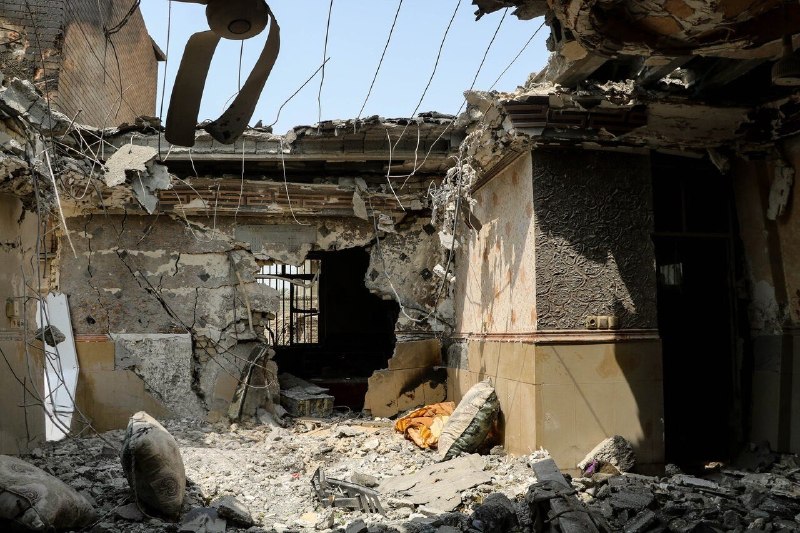
At 17:28 UTC on 1 September 2026, US President Donald Trump posted to Truth Social that "the United States is, as we speak, striking Iranian Targets near the Strait of Hormuz," describing the operation as "large and powerful" and tying it to what he called an Iranian "failed attempt at adding sea mines" in the chokepoint. The post was first relayed on the cited Telegram channels between 17:28 UTC and 17:51 UTC, with the wfwitness channel carrying it at 17:28 UTC, Middle East Spectator at 17:44 UTC, and OSINTdefender and RN Intel at 17:51 UTC. In the same post, Trump warned that any Iranian retaliation would be answered by a strike at "a much harder and higher level," with an even larger package "waiting in the wings." A later Fox News interview, relayed by Telegram channels including englishabuali and wfwitness between 18:31 UTC and 18:32 UTC, extended the threat: Trump said Iran could be "totally wiped out" if it responded. The announcements moved markets before they moved diplomats, the canonical pattern of an escalation that is itself the message.
The strikes, as described by the president in his own posts and interviews, are framed as retaliation for two distinct events: an alleged Iranian attempt to lay sea mines in the Strait of Hormuz, and an earlier Iranian missile attack on a US military base in Jordan that Trump said involved eight missiles, which he characterised as "all successfully knocked down." One relay of the Fox News interview, on wfwitness at 18:32 UTC, additionally cited "strikes targeting radar systems in southwestern Iran near the Strait of Hormuz," a detail that, if accurate, sharpens the operational picture beyond the generic "Iranian Targets" language of the original post. The targeting descriptor matters: chokepoint-adjacent radar infrastructure is precisely what would shape Iranian coastal surveillance and any future mining or fast-boat operation in the waterway.
What was said, and in what order
The sequence matters, and the available source items show a single Truth Social post containing both the strikes announcement and the escalation clause, not two separate messages. The post was first relayed on the cited Telegram channels between 17:28 UTC and 17:51 UTC on 1 September 2026. By 18:06 UTC, footage that wfwitness described as "allegedly" showing a failed ballistic missile launch from Khomein, Iran, was circulating, with the missile reportedly falling back on its launch area. By 18:31 UTC, Trump had moved to a Fox News camera; the interview, as relayed by englishabuali and wfwitness, introduced material not in the Truth Social post, including the "totally wiped out" formulation and the radar-systems reference, rather than simply repeating the escalation clause.
The pattern is the news. The strikes themselves, as reported, are large but bounded by the president's own description; the escalation clause, embedded in the same post, is what gives the announcement its weight. Monexus reading: the operation is calibrated to set a price on Iranian retaliation, and the price is another, larger operation. The diplomatic implications are slower than the market response, but they are already in motion; the available source items do not record any first-person Iranian government response, and this article has not independently established whether Iran's mission to the United Nations, the Iranian foreign ministry, or any third-party capital has issued a statement in the hours since the strikes.
The Hormuz frame
The choice of "near the Strait of Hormuz" as the targeting descriptor is not incidental. Monexus analysis: the waterway is one of the world's principal energy chokepoints, and any sustained military operation in or near it does not merely affect Iran's navy; it rewrites the daily economics of every shipping desk in Singapore, Rotterdam, and Fujairah. Trump's framing in his own posts couples the strikes to a "failed attempt at adding sea mines" to the strait, which if accurate would itself constitute a hostile act against international commercial sea lanes under any standard reading of the law of naval warfare. The cited "radar systems" detail from one relay sharpens this further: disabling coastal surveillance assets is the kind of preparatory strike one would expect before a wider chokepoint campaign, not after a discrete retaliation.
A competing read is worth airing: that the "sea mines" language is operational cover for a pre-planned strike that was triggered by an earlier, separate incident, namely the reported eight-missile attack on a US base in Jordan. Under that reading, the Hormuz framing is rhetorical scaffolding for an escalation whose true origin lies elsewhere. Monexus assessment: the two events are not mutually exclusive, but the order of disclosure, with Hormuz foregrounded and Jordan mentioned second, suggests the chokepoint message is the one Washington most wants Tehran, and the oil market, to read first.
What the source items do and do not specify
The available source items, drawn from OSINT Telegram channels and the president's own social-media posts and interview, do not specify several facts that will determine the next forty-eight hours. They do not record any first-person Iranian government response beyond what Iranian state media may have posted in the hours after the strikes; the cited posts contain no Iranian MFA briefing, no IRGC statement, and no Iranian UN-mission reaction, and this article has not independently established whether such statements have now been issued. They do not specify whether the Strait of Hormuz remains open to commercial traffic, whether any naval convoy has been diverted, or whether the US Fifth Fleet has altered its posture. The phrase "totally wiped out," reported by wfwitness and englishabuali as part of a Fox News interview, has not been independently corroborated against a transcript in the source items, and the precise wording should be treated as the channels' rendering until verified against a Fox News clip.
One detail that does appear in a cited relay is worth flagging rather than glossing: the reference to "strikes targeting radar systems in southwestern Iran near the Strait of Hormuz." That narrows the operation's likely shape compared with the generic "Iranian Targets" of the original post, and it is consistent with the chokepoint frame the president himself chose to lead with. Monexus assessment: treat the radar-systems detail as a single-channel claim pending corroboration, but note that it does not contradict the presidential framing; it sharpens it.
The uncertainty is not a margin note. It is the story. The next seventy-two hours will be read off three dials: whether Tehran retaliates, whether the strait remains commercially navigable, and whether the escalation clause in the president's post is tested. Two of those three are, for now, in Iranian hands.
How Monexus framed this: the wire has led on the chokepoint frame and the escalation clause; we have led on the same, with the explicit caveat that the available source material is the president's own posts and the channels that relayed them, and we have corrected the chronology so that the strikes announcement and the escalator clause are read as parts of a single Truth Social post, with the Fox News interview treated as a separate appearance that introduced new material, not a repetition.
Wire provenance
This editorial synthesis draws on the following public wire/social posts:
- https://t.me/Middle_East_Spectator/36176
- https://t.me/osintlive/568828
- https://t.me/osintlive/568831
- https://t.me/osintlive/568839
- https://t.me/rnintel/65969
- https://t.me/englishabuali/78614
- https://t.me/englishabuali/78616
- https://t.me/wfwitness/109218
- https://t.me/wfwitness/109237
- https://t.me/wfwitness/109247
Follow the event.
These dated source records provide context. They do not retrospectively verify this archive article.
Separate what the nuclear watchdog reported from what it could not determine after the June 2025 strikes.
- https://t.me/Middle_East_Spectator/36176
- https://t.me/osintlive/568828
- https://t.me/osintlive/568831
- https://t.me/osintlive/568839
- https://t.me/rnintel/65969
- https://t.me/englishabuali/78614
- https://t.me/englishabuali/78616
- https://t.me/wfwitness/109218
- https://t.me/wfwitness/109237
- https://t.me/wfwitness/109247