US strikes IRGC targets near Strait of Hormuz as shipping attacks reopen the corridor
President Trump announced "large and powerful" strikes on Iranian targets near the Strait of Hormuz on 1 September 2026, with US Central Command framing the operation as retaliation for renewed attacks on commercial shipping in the strait.
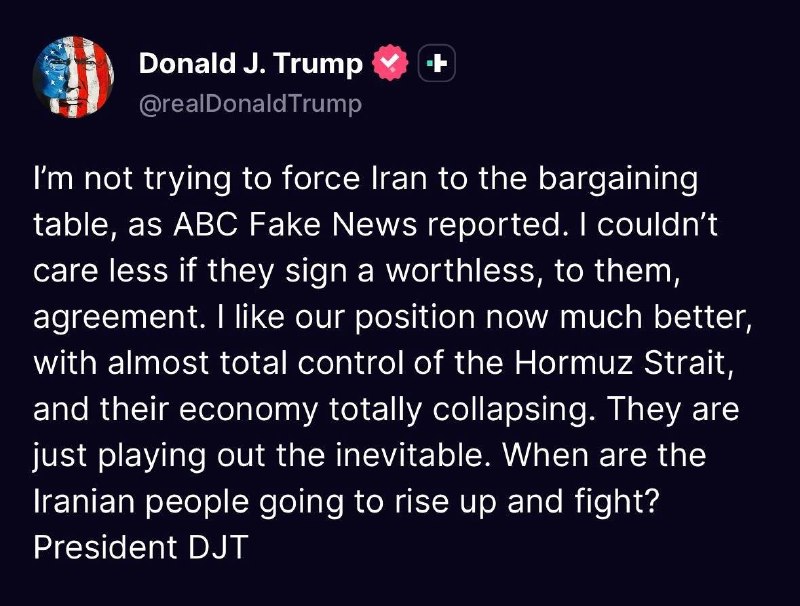
Smoke rose over shipping lanes at the western end of the Persian Gulf on the afternoon of 1 September 2026, after President Donald Trump announced that US forces had begun "large and powerful" strikes against Iranian targets near the Strait of Hormuz. US Central Command confirmed the operation later the same day, framing it as retaliation for a fresh wave of attacks on commercial tankers transiting the strait. Reporting from Deutsche Welle and accounts circulating on X placed the exchanges in the broader context of a renewed flare-up between Washington and Tehran.
The reopening of a kinetic front on one of the world's most consequential energy corridors pulls tanker traffic back into uncertainty only weeks after shipping had begun to normalise. Monexus assessment: the operation reflects a deliberate escalation decision in Washington. The choice was to answer mining attempts and small-boat attacks not with naval escorts and additional sanctions, but with air strikes on the Iranian side of the waterway. The strategic bet is that degrading IRGC coastal infrastructure faster than Tehran can rebuild it is cheaper than absorbing another round of shipping losses. The bet's downside is geographic: any sustained fight inside the strait pulls the global oil price with it.
What was struck, and by whom
According to Deutsche Welle's live coverage, explosions were reported around the Strait of Hormuz, including at an airport in southern Iran that local witnesses said was hit during the initial wave. Trump publicly justified the operation as retaliation for what he described as Iranian attempts to mine the strait, language that framed the action as defensive rather than escalatory. Investing.com's coverage used the formulation "US retaliates against IRGC in Iran after Strait of Hormuz attacks," a phrasing that puts the responsibility chain in the same order as the US framing: tanker attacks first, strikes second.
CNBC, citing US Central Command, reported the strikes as a direct response to renewed attacks on shipping in the strait. An account circulated on X by the channel SprinterPress characterised the same sequence as a "renewed US-Iran exchange of strikes after a month-long hiatus," framing the events as a return to an active cycle rather than a one-off. The available source items do not specify the precise inventory of targets hit, the number of aircraft involved in the US operation, or the casualty count on the Iranian side, and this article has not independently established those figures.
The shipping context
The proximate cause, as carried by every Western wire in the thread, was a fresh round of attacks on vessels in the strait. CNBC's reporting places Centcom's confirmation of that sequence explicitly. The response was sized to put the IRGC's coastal anti-ship and mining capability at risk rather than to project a symbolic pinprick. Monexus analysis: the operation reads as an attempt to set a higher cost on the next round of tanker attacks by raising the risk that they will be answered from the air. Whether that deterrent holds depends on whether Tehran concludes that the next round will be answered by something larger still.
Reading the two narratives
The US framing, as carried by Centcom via CNBC and by the President's own statement on X via Unusual Whales, treats the strikes as a lawful response to ongoing attacks on civilian shipping. The framing is internally coherent: commercial vessels were hit, US forces were authorised to defend them, the response was calibrated to the infrastructure enabling the attacks. It is the framing most likely to be repeated by Western wire copy in the days ahead.
A counter-framing circulated on X via the channel SprinterPress, which amplified a post by the user Persianserene1, argued the opposite reading: that Iran was pushing for escalation, that the United States had been trying to avoid it, and that the night's strike had walked into a trap. The post is one user's interpretation, not a documented policy position. Both readings point to the same underlying sequence of events but assign the direction of travel in opposite directions. Monexus assessment: the interpretive disagreement matters because it tells you whether the next move is more strikes or a back-channel.
Independent reporting carried by Deutsche Welle describes the exchange as US and Tehran "trading fire" in the new flare-up. The DW characterisation does not specify the targets of any Iranian return fire or attribute such reporting to Iranian state-linked channels; the available source items do not specify those details, and this article has not independently established them.
What to watch next
Three signals will determine whether 1 September becomes a discrete event or the start of a longer campaign. The first is whether commercial traffic through the strait continues to move at close to normal volumes over the next 48 to 72 hours. Monexus expectation: tanker owners and insurers have likely priced the corridor's risk premium into war-risk surcharges already, so sustained near-normal traffic would suggest the market has judged the strike to be containable. A sudden withdrawal of tanker tonnage would mean the market has priced in a wider conflict.
The second is the scale and geography of any Iranian response. A symmetric response against shipping keeps the corridor as the battlefield. A strike against a US base in the Gulf, or against an Israeli target, widens the geography and pulls in actors who have so far stayed on the periphery. The third is whether the diplomatic track that has run intermittently since the spring produces any visible output over the next week. A visible exchange of messages, even denials of contact, would indicate that both governments still want an off-ramp. Silence would indicate the opposite.
Monexus framed this piece against the Western-wire line, which emphasises the tanker attacks as the trigger and the strikes as a calibrated response. The available source items do not specify the precise inventory of targets hit, the number of aircraft involved, the casualty count on the Iranian side, or the specific targets of any Iranian return fire. The DW liveblog characterises both sides as "trading fire" without specifying the targets of that exchange or attributing reporting on Iranian retaliation to Iranian state-linked channels; this article has not independently established those details.
Wire provenance
This editorial synthesis draws on the following public wire/social posts:
- https://www.cnbc.com/2026/09/01/us-strikes-iran-after-new-hormuz-strait-shipping-attacks-centcom.html
- https://www.investing.com/news/economy-news/us-retaliates-against-irgc-in-iran-after-strait-of-hormuz-attacks-4884409
- https://www.dw.com/en/iran-war-us-tehran-trade-fire-in-new-flare-up/live-78656656?maca=en-rss-en-all-1573-rdf
- https://x.com/unusual_whales/status/2094862101139398906
- https://x.com/SprinterPress/status/2094897086139334988
- https://x.com/SprinterPress/status/2094891732898820521
- https://www.cnbc.com/2026/09/01/us-strikes-iran-after-new-hormuz-strait-shipping-attacks-centcom.html
- https://www.investing.com/news/economy-news/us-retaliates-against-irgc-in-iran-after-strait-of-hormuz-attacks-4884409
- https://www.dw.com/en/iran-war-us-tehran-trade-fire-in-new-flare-up/live-78656656?maca=en-rss-en-all-1573-rdf
- https://x.com/unusual_whales/status/2094862101139398906
- https://x.com/SprinterPress/status/2094897086139334988
- https://x.com/SprinterPress/status/2094891732898820521