Bessent names airlines, shipping and digital assets as the next Iran-sanctions frontier
Treasury Secretary Scott Bessent told Fox News on 2 September 2026 that Ukrainian strikes on Russian refining are driving a global energy shock, a day after he named airlines, shipping and digital assets as Washington's next Iran-sanctions frontier.
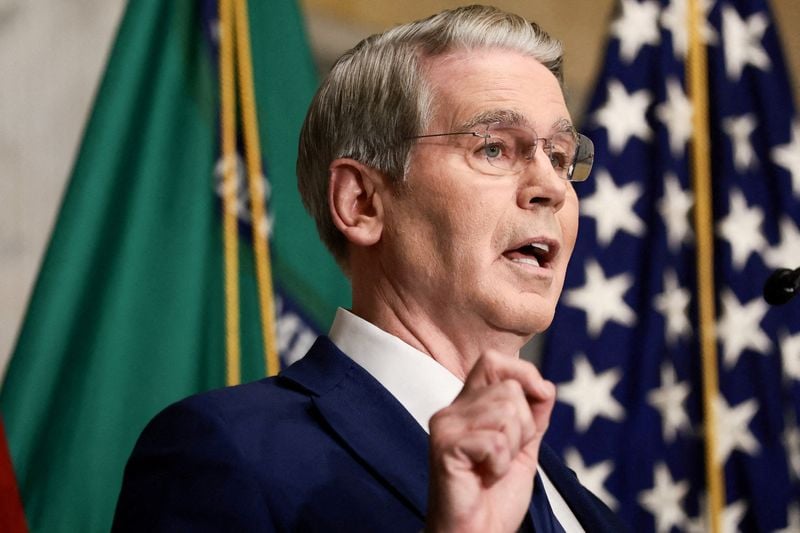
On 2 September 2026, US Treasury Secretary Scott Bessent told Fox News that Ukrainian strikes on Russian energy and refining capacity are driving a global "energy shock," remarks relayed at 12:54 UTC by the Telegram channel noel_reports, at 12:53 UTC by DDGeopolitics, and at 12:39 UTC by Kyiv Post's official Telegram channel. The comments, delivered less than 24 hours after Bessent identified airlines, maritime carriers and digital-asset intermediaries as the next Iran-sanctions pressure points, frame two of Washington's most active economic-warfare files as a single commodity story.
Monexus assessment: what is new is the explicit linkage. Bessent's pitch on 2 September is that the world is no longer dealing with localised supply disruptions but with a regime shift in the price floor of refined products, and that Ukrainian attacks on Russian energy and refining are now large enough to move the global benchmark. The combined message, read alongside his 1 September Iran briefing, points to a Treasury prepared to treat physical refining disruption and financial-plumbing disruption as complementary fronts rather than separate dossiers.
A widening perimeter
The aviation, maritime and digital-asset categories Bessent named on 1 September are the three sectors Treasury has signalled it will target next on Iran. The signal to non-US carriers is straightforward: routing Iranian crude, ferrying Iranian cargo, leasing planes or ships to Iranian operators, or refuelling sanctioned vessels can each become a designation trigger. The digital-asset leg is the most novel of the three. Public blockchains let Iranian counterparties settle cross-border in stablecoins and other tokens without using a US-bank correspondent. Treasury's stated bet is that on-chain analytics, paired with new designation authority, can reach the entities that touch those flows. Bessent's own framing on 1 September, relayed by the Telegram channel Open Source Intel, was that "malicious actors will be removed systematically," with airlines, shipping and digital assets named as the three categories. The available source items do not specify whether Treasury characterises these authorities as pre-existing and dormant, newly drafted, or a hybrid; the characterisation is the Treasury Secretary's, and Monexus reports it as such rather than as an established legal fact.
The Ukrainian energy dimension now layered on top suggests a complementary logic. If physical oil flows are already being throttled at the refining stage by Kyiv's strikes, then the financial plumbing that lets buyers pay for the residual barrels becomes the next seam to seal. The Cradle's Telegram channel quoted Bessent on 2 September as arguing that the Strait of Hormuz will become "worthless" within two years as overland pipelines carry the region's oil. The available source items do not specify a throughput-share figure for existing overland routes, so any arithmetic about capacity substitution sits outside what can be verified today.
The market reads it as a tightening
Investors did not wait for a designation list to react. Investing.com's economy desk reported at 09:00 UTC on 2 September that US stock-index futures were subdued while oil and Treasury yields rose on the Iran headlines. A separate Investing.com markets wrap at 07:29 UTC framed the session as defined by "Iran, Fed data and 5% yields." Bessent's midday briefing on the Ukraine-driven energy shock amplified the move. The cross-asset read is plain: more sanctions enforcement on the maritime and digital-asset seams, plus a credible refining-capacity tail risk out of Russia, means a higher term premium on energy, a higher discount rate on duration, and a chill on the names most exposed to aviation and shipping flows through the Gulf and the Black Sea.
The signal inside Bessent's "energy shock" diagnosis is also telling. Bessent paired Iran and Russia in his 1 September remarks, with the Telegram channel Open Source Intel carrying a warning to counterparties to stay away from both. For a European or Asian carrier weighing an Iranian overflight, or a refiner calculating its next Urals cargo, the calculation is no longer about whether a particular shipment is sanctioned; it is about whether the relationship is. Bessent's 2 September remarks, by naming Ukrainian strikes as the proximate driver of the shock, effectively argue that the two theatres are feeding the same price.
Bessent's framing, not the market's verdict
Monexus analysis: the cleanest reading of Bessent's two-day sequence is that Treasury is preparing legal scaffolding for a multi-front designation campaign, not against any one country. Iran is already under sweeping measures; Russia is already under sweeping measures; what changes now is the willingness to name specific industries and intermediaries. The structural pattern matches the post-2022 Russia playbook: OFAC builds authority, names a sector, then designates individual firms one at a time to maximise deterrent effect. The counter-reading is that Bessent is posturing ahead of possible diplomatic tracks on both files, and that the new authorities are as much negotiating leverage as enforcement tools. Both can be true at once.
The "energy shock" framing is Bessent's diagnosis, not a verified market state. Russian refining utilisation has been a moving target through 2026 as Ukrainian long-range strikes have taken capacity offline in increments; whether the cumulative effect now meets the bar of a global shock is the kind of question that the IEA, EIA and Argus monthly refining-utilisation figures will answer over the next reporting cycle, not a single Fox News interview. Treating Bessent's framing as established fact rather than as the Treasury Secretary's own characterisation would overstate what the data currently supports.
The counter-position from Moscow, Tehran and a widening circle of non-aligned capitals is that these authorities extraterritorialise US law and force third countries to enforce Washington's policy choices, and that Bessent's "energy shock" diagnosis is itself an exercise in narrative control: attributing price pressure to Ukrainian agency rather than to the sanctions architecture that constrains Iran's exports and Russia's customers. That argument has won traction from Beijing to Brasília, and it shapes why the digital-asset leg in particular is being watched so closely: stablecoin and tokenised-dollar rails are the most plausible commercial alternative to the correspondent banking system, and Treasury's decision to police them signals that even non-bank rails are not out of bounds. A genuinely multipolar financial and energy architecture would, by definition, contest both reaches. The contest is now open.
What to watch next
Three concrete data points will tell investors whether Bessent's "energy shock" framing and his Iran designation scaffolding are operative or performative. First, the first non-US designation under the aviation or maritime leg on Iran, with the test case most likely a Greek, Turkish, Indian or UAE-based operator. Second, the first digital-asset designation tied to Iranian flows, which would establish whether Treasury treats exchanges, token issuers or mixers as the easier targets; the available source items do not specify which of those sub-categories Treasury considers within reach, so that remains an open operational question. Third, the refining-margin print: Bessent said on 2 September, per the noel_reports and DDGeopolitics posts, that Ukrainian strikes on Russian refining are large enough to constitute a global shock; the monthly IEA and EIA figures over the next two reporting cycles will show whether that diagnosis holds in the data. Until those milestones land, the market will price the rhetoric as a tail risk, not a baseline.
Monexus treats Bessent's two-day sequence as a Treasury signal about enforcement priorities across Iran and Russia, not as a forecast of imminent designations or of a particular Brent print. The available wire reporting does not yet name specific firms targeted under the new aviation, maritime or digital-asset authorities, the source items do not specify the legal pedigree of those authorities, and the refining-throughput data needed to verify the "energy shock" diagnosis has not yet been published.
Wire provenance
This editorial synthesis draws on the following public wire/social posts:
- https://t.me/noel_reports/52085
- https://t.me/DDGeopolitics/192439
- https://t.me/Kyivpost_official/39342
- https://t.me/ClashReport/94702
- https://t.me/ClashReport/94700
- https://t.me/osintlive/569159
- https://t.me/osintlive/569160
- https://t.me/osintlive/569135
- https://t.me/thecradlemedia/67247
- https://www.investing.com/news/economy-news/us-treasury-eyes-airlines-maritime-and-digital-assets-for-iran-sanctions-93CH-4885993
- https://www.investing.com/news/commodities-news/us-eyes-airlines-digital-assets-as-iranrelated-targets-bessent-says-4886083
- https://www.investing.com/news/economy-news/us-stock-index-futures-subdued-as-oil-treasury-yields-rise-on-iran-tensions-4885553
- https://www.investing.com/news/economy-news/iran-fed-data-and-5-yields--whats-moving-markets-4885414
- https://t.me/noel_reports/52085
- https://t.me/DDGeopolitics/192439
- https://t.me/Kyivpost_official/39342
- https://t.me/ClashReport/94702
- https://t.me/ClashReport/94700
- https://t.me/osintlive/569159
- https://t.me/osintlive/569160
- https://t.me/osintlive/569135
- https://t.me/thecradlemedia/67247
- https://www.investing.com/news/economy-news/us-treasury-eyes-airlines-maritime-and-digital-assets-for-iran-sanctions-93CH-4885993
- https://www.investing.com/news/commodities-news/us-eyes-airlines-digital-assets-as-iranrelated-targets-bessent-says-4886083
- https://www.investing.com/news/economy-news/us-stock-index-futures-subdued-as-oil-treasury-yields-rise-on-iran-tensions-4885553
- https://www.investing.com/news/economy-news/iran-fed-data-and-5-yields--whats-moving-markets-4885414