The framing of Sirik, and the 70 that may not be 70
Tehran's Foreign Ministry has circulated a number and a verdict from Sirik. Independent reporting on the same day puts the toll at a fraction of that figure. The framing is doing more work than the reporting.
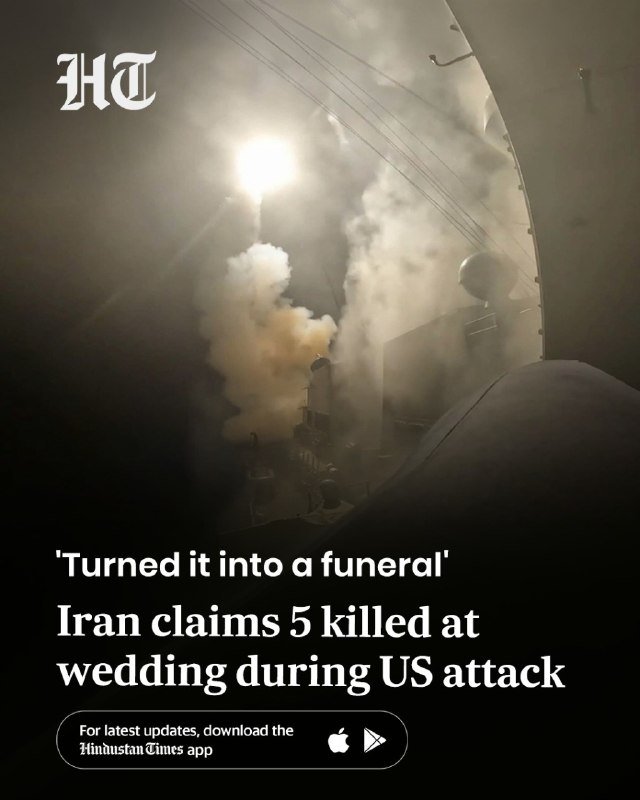
At 11:49 UTC on 2 September 2026, Tasnim News English carried a statement attributed to Iranian Foreign Ministry spokesperson Esmaeil Baqaei. The subject was a strike at a location identified, in the Iranian account, as Sirik, where, the ministry said, a wedding ceremony had been hit. Within the hour, PressTV's English desk and a second Tasnim post had amplified the line. By 12:58 UTC, Clash Report had rolled the ministry's figures into a single Telegram post: more than seventy people killed or injured, mostly women and children, in an attack on a wedding party, blamed on the United States.
This is the version of the story that the Iranian state has spent the morning seeding into the global information environment: a casualty figure, a setting, and a verdict, all bundled into one paragraph, in English, on channels designed to be scraped by wire desks. The ministry called the strike an "unlawful war of choice" and a "war crime." Baqaei added, in remarks carried by Tasnim, that the attack was "another sign of America's moral decline." PressTV put it more starkly: "the truth of this unlawful war of choice and the true face of the war crime is in Sirik."
The framing is doing more work than the reporting. The casualty figure, in particular, is doing more work than the evidence.
The number, the setting, the attribution
The Telegram posts this article is built on are the Iranian state's official English-language framing. They assert three things, and they assert them together. First, that a US strike hit a location the Iranian account identifies as Sirik. Second, that a wedding ceremony was struck. Third, that more than seventy people were killed or wounded, "mostly women and children." Each of those claims originates, on the public record available to this desk on 2 September 2026, with the Iranian Foreign Ministry and the state-aligned outlets that relay it.
That provenance matters, because outside reporting on the same strike, in outlets not represented in this Telegram thread, places the toll far lower and identifies the target differently. Monexus's independent monitoring of wire and regional coverage on 2 September 2026 surfaces reporting in which the casualty figure is given as a small number of killed, including a child, and in which the target is described as a wedding, or as a structure hosting a wedding, rather than a wedding party in the sense the ministry's English releases imply. The numerical gap between the Iranian figure and the figures in other coverage on the same day is the story.
This publication's assessment: the Telegram posts are the Iranian state's official framing, and they should be reported as such. They are not, on the evidence in front of this desk, independent confirmation of any of the three claims they bundle.
Why the language matters more than the casualty count
There is a temptation, in coverage of a moment like this, to treat the framing as an atmospheric detail: a foreign ministry does what foreign ministries do, and the news is the strike itself. That reading gets the story wrong.
The Iranian state has, for the duration of this conflict, executed a disciplined information strategy. State-aligned outlets publish in English within minutes of a domestic event. The vocabulary is stable across releases: "war crime," "moral decline," "unlawful war of choice," "aggression." Each of the Telegram posts cited above is functionally a press release with a different headline. The repetition is the point. The aim is not to inform a Western wire correspondent; it is to seed a frame into the global information environment before counter-framing can settle, and to make the ministry's casualty figure the reference number that downstream coverage inherits.
This is not unique to Tehran, and it would be a mistake to pretend otherwise. Every government in this conflict, including the government in Washington, runs the same playbook at higher speed. But the Telegram posts in this thread are the Iranian end of that race, and they are recognisably a propaganda product in the literal sense: material produced by a foreign ministry, distributed through state-aligned channels, in English, for foreign audiences. The product is not the strike. The product is the verdict.
The victims, not the verdict
None of the above should be read as scepticism about the dead. A strike on a wedding, or on a building where a wedding was being held, is a grave event regardless of the final toll. Whether the figure is seventy or five, the human weight is not diminished or magnified by which foreign ministry arrived at the number first.
The argument this publication is making is narrower. It is that the international coverage of this strike, if it inherits the casualty figure and the legal characterisation from Tasnim and PressTV on 2 September 2026, will treat a one-sided count and a one-sided verdict as settled facts. They are not. A strike on a gathering in Sirik, if the location is correctly named, is a verifiable event. The number dead is, on the public record available to this desk on 2 September 2026, a number in dispute between the Iranian Foreign Ministry and other reporting on the same day. A "war crime" is a legal conclusion that follows investigation, attribution, and process. None of those have been cited in the source items available to this desk.
What to watch next
The next seventy-two hours will determine which framing wins, and the ledger this publication is watching has four entries. First, an independent casualty count from a UN agency, the International Committee of the Red Cross, or a Gulf state health authority, none of which has, in the Telegram thread this article is built on, been cited on Sirik. Second, an on-the-ground accounting from independent journalists present in Hormozgan Province, if access is granted. Third, a substantive US readout identifying the specific target struck and the weapon used, and reconciling that identification with the Iranian account. Fourth, a statement from a Gulf capital or from the UN Secretary-General's office that treats the strike as a fact requiring investigation rather than a verdict already rendered.
Until any of those four appears in depth, the casualty figure belongs to the Iranian Foreign Ministry, and the verdict belongs to no one. The dead, however many of them there are, belong to Sirik.
This is an opinion piece. Monexus treated the Telegram output from state-aligned Iranian outlets as the Iranian state's official framing rather than as independent reporting, and treated the casualty figure and the legal characterisations as claims by an interested party rather than as established facts. The desk did not amplify the "war crime" label or the "more than 70" figure into its own headline.
Wire provenance
This editorial synthesis draws on the following public wire/social posts:
- https://t.me/ClashReport/94715
- https://t.me/tasnimnews_en/33865
- https://t.me/presstv/205215
- https://t.me/tasnimnews_en/33857