Trump tells reporters US is ready to strike Iran again, on a day he also weighs in on the Sussexes
On 2 September 2026, President Donald Trump said the US was ready to attack Iran again 'any time we want' after strikes the previous day hit targets on Iran's southern coast, the same day he criticised Prince Harry and Meghan from the White House podium.
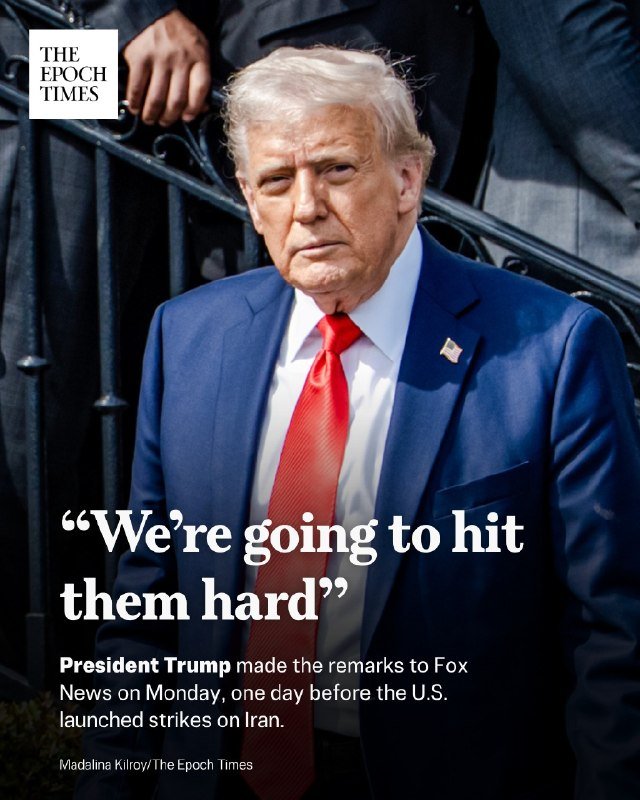
President Donald Trump told reporters at the White House on 2 September 2026 that the United States was ready to strike Iran again at will, hours after fresh American operations hit targets along Iran's southern coast and Iranian forces fired at US bases in the region. "We're prepared to do another one any time we want," Trump said, according to a Middle East Eye post of the same day. A separate Reuters video post carried his earlier characterisation that renewed strikes "would not last too long" after US forces "targeted Iran's southern coast," and that Iran had returned fire at US positions.
The threat was the central message. Its open-ended phrasing, a presidential commitment that future strikes will follow on Washington's timetable rather than in reaction to a specific provocation, is what gives the remarks their weight. On the same day, in a separate appearance, Trump also weighed in on a non-military story: he said he was "happy" Prince Harry and Meghan had returned to Britain and criticised the couple's treatment of the royal family during their time in the United States, telling reporters he was "not a fan" of the Sussexes.
What the strikes hit, and what the reporting supports
The Middle East Eye post on Trump's strike remarks puts the Iranian death toll from US operations across the country at "at least 19 Iranians." Reuters' video feed on the strike phase names "Iran's southern coast" as the target set. Al Jazeera's video feed adds two further specifics from Trump: that US forces destroyed a "mine-laying rocket," and that Washington now saw "everything" Iran did.
A mine-laying rocket is, by function, a denial-of-sea-control weapon, the kind of asset that threatens shipping through the Strait of Hormuz rather than population centres. The southern-coast framing fits that scope: a littoral action against the infrastructure Iran would use to threaten Gulf tanker traffic, rather than a strike on hardened inland military targets. The available reporting does not specify which facilities were struck, nor whether the Iranian retaliation at US bases caused casualties on either side. The Middle East Eye post attributes the "at least 19" figure to US strikes on Iran without naming the institution that compiled the count; that figure should be read as the figure cited in Trump's reported remarks rather than as an independently verified toll.
The threat that doesn't end
What distinguishes this statement from a normal post-strike communiqué is the open-ended phrasing. Presidents typically describe completed operations in the past tense. Trump described the next one in the conditional: "any time we want." That formulation does two things. It raises the cost for Tehran of any future maritime provocation, by signalling that the threshold for an American response is set in Washington rather than in the Strait. And it raises the cost for Washington's Gulf partners, who now have to price in the possibility of repeated escalation cycles on their territory without the diplomatic runway that a defined end state would normally provide.
Monexus analysis: the structural reading is that the administration is substituting operational tempo for negotiation. Where a previous cycle might have ended with an ultimatum and a back-channel, this one ends with a metronome. The risk is that metronomic strikes erode the coalition discipline that has, until now, kept Gulf states publicly aligned with the US posture, because Saudi Arabia and the UAE have tolerated American operations on their soil when each operation had a defined end. Open-ended commitment tests that tolerance. The benefit, from Washington's vantage, is that an adversary cannot time a recovery cycle between American blows.
Monexus assessment: the most natural read of Iran's response on the day, on the limited reporting available here, is that Iranian forces chose to fire at US bases during the exchange. That fact refutes any framing of the conflict as one-sided. The thread evidence does not include a same-day Iranian foreign ministry statement, and this article has not independently established whether one was issued; readers seeking the Iranian government's official framing on 2 September 2026 should consult Iranian state outlets directly.
What the second appearance was
Trump's comments on the Sussexes came in a different setting on the same day. The Guardian's report places the Sussex remarks during a question-and-answer session following a press conference with travel executives, not in the availability where he discussed the strikes on Iran. The two are therefore not a single "mixed-register" performance but two separate appearances on the same White House day. Reuters' 21:40 UTC post carried the line that Trump was "happy" the couple had returned to Britain. The South China Morning Post's 21:52 UTC Telegram post added the "not a fan" quote. The Guardian added that Trump praised the late Queen and King Charles while saying the Duke and Duchess had treated the royal family "with great disrespect."
Monexus analysis: the sequencing matters for what it reveals about White House communications, even if the two appearances were separate. A president who treats a travel-industry press conference as a venue for royal-family commentary, on a day his military has struck a foreign country, is making two distinct decisions: that the Sussexes are a useful topic for his domestic audience, and that the diplomatic cost of mixing registers is one he is willing to pay. Neither decision requires a single shared microphone.
What is, and isn't, established
The Iran strike threat and the Sussex comments are linked only by date and by being spoken by the same man on the same day. The thread evidence does not establish that the two sets of remarks were part of a coordinated communications plan. It does establish that the threat of further strikes is the substantive policy output of the day, and that the Sussex remarks are a separate, smaller story that ran in parallel.
What remains genuinely contested, on the record available here, is the Iranian casualty figure. The "at least 19" number circulates through Middle East Eye's coverage of Trump's remarks; it is not independently verified in the thread by a UN agency, the International Committee of the Red Cross, or an Iranian government release. Readers should treat that figure as the number cited by Trump, not as a confirmed toll. The same caveat applies to the scope of Iran's reported retaliation: Reuters reports that Iran fired at US bases in the region, but the thread does not specify which bases, how many rounds, or whether any were intercepted.
The next two indicators worth watching are narrow. First, an Iranian foreign ministry readout on the strikes. Second, a CENTCOM or White House statement that names the targets hit on the southern coast and the weapons used. Until those land, the open-ended threat remains a posture, and the southern-coast framing remains a description rather than a target list.
Desk note: Monexus led on the Iran strike threat as the day's substantive policy output, kept the Sussex material in a clearly separate section rather than a unified availability, treated the "at least 19" casualty figure as a Trump-cited number rather than an independently verified toll, and labelled its structural readings as Monexus analysis or assessment rather than as entailed by the cited reporting.
Wire provenance
This editorial synthesis draws on the following public wire/social posts:
- https://www.aljazeera.com/video/newsfeed/2026/9/2/09-02-trump-soundbite-iran-clip?traffic_source=rss
- https://x.com/Reuters/status/2095257959353786390
- https://x.com/MiddleEastEye/status/2095253381572890968
- https://x.com/Reuters/status/2095265509319365078
- https://t.me/SCMPNews/110148
- https://www.theguardian.com/us-news/2026/sep/02/trump-meghan-harry
- https://www.aljazeera.com/video/newsfeed/2026/9/2/09-02-trump-soundbite-iran-clip?traffic_source=rss
- https://x.com/Reuters/status/2095257959353786390
- https://x.com/MiddleEastEye/status/2095253381572890968
- https://x.com/Reuters/status/2095265509319365078
- https://t.me/SCMPNews/110148
- https://www.theguardian.com/us-news/2026/sep/02/trump-meghan-harry