US and Iran trade strikes as oil edges up and the IAEA presses for site access
A fresh round of US strikes on Iran and a reciprocal exchange overnight pushed Brent up roughly 1% by 02:01 UTC, while the IAEA renewed demands for access to Iranian nuclear sites.
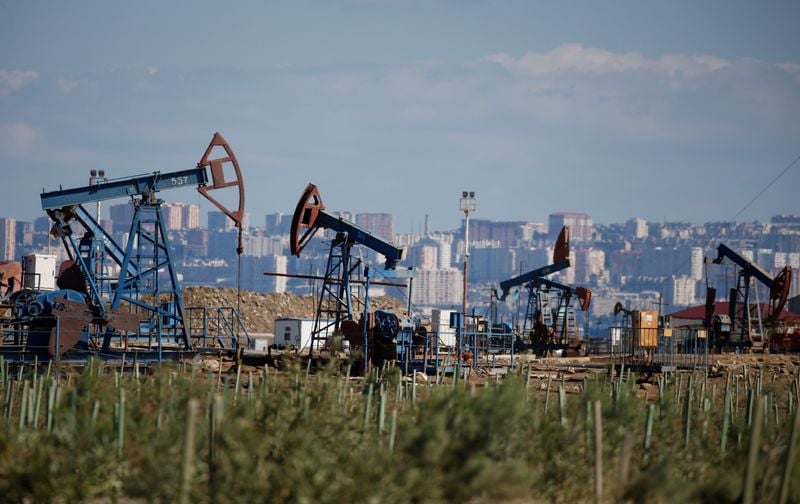
At 02:40 UTC on 2 September 2026, the United States military said it had completed its latest wave of strikes on Iran, capping a night in which the two countries traded attacks and a tentative lull in open warfare visibly ended. Brent crude rose nearly 1% in Asian trade as traders repriced the risk of disruption to Gulf shipping, and US equity futures opened muted as Wall Street parsed the combination of renewed Middle East hostilities and Federal Reserve rate anxiety.
The episode crystallises a question both governments have spent two years pretending they could defer: whether the arrangement under which Iran's nuclear programme is partially frozen, partially monitored and partially opaque can survive a return to direct fire. The honest answer, on this evidence, is that it cannot.
A night of cross-strikes
Reporting from Reuters, published at 03:00 UTC, frames the sequence as an exchange rather than a one-sided action: the US completed a new wave of strikes, and Iran returned fire. The same newsroom logged the US military's strike completion at 02:40 UTC. Investing.com's commodities desk, citing the same wire, put the immediate market reaction in numbers: oil up nearly 1% as US and Iran traded fresh strikes, a move large enough to register in Asian benchmarks but small enough to suggest traders still believe the escalation is bounded.
The Reuters report describes a lull that "appears over." The language matters. For most of the past year, the operative read inside Gulf capitals and Western energy desks had been that both Washington and Tehran preferred shadow operations, proxy pressure and sanctions enforcement to direct military contact. The events of 1–2 September puncture that read. The pattern is no longer proxy-versus-proxy; it is fire-against-fire.
The available reporting does not specify the targets struck on either side, the weapons used, or any casualty figures. The US framing, as relayed by Reuters, emphasises completion of a pre-announced wave. Iranian state-aligned channels have historically contested the damage assessment of such waves; on this evidence, both sides have incentive to claim success and both have incentive to underplay losses.
Markets price a familiar risk, again
The price action tells its own story, and it is a familiar one. Oil futures rose on the headline, then settled into a narrower band as the session progressed. The directional move is what traders call a risk premium re-pricing, not a supply shock: there is no reported disruption to loading at Gulf terminals, no closure of the Strait of Hormuz in the wire copy, and no insurance market commentary in the thread.
US equity futures, by contrast, opened muted rather than sharply lower. That is consistent with a market that has lived through previous escalation cycles and has learned that the marginal strike on a non-oil target does not, by itself, break the S&P 500. The combination of rate-jitter worry and Iran worry is the operative frame in the futures market, not Iran worry alone. Investing.com's pre-open note at 00:14 UTC made the pairing explicit.
The structural reading here is straightforward: Gulf energy infrastructure is no longer priced as untouchable, and the marginal cost of capital for regional producers, insurers and refiners has a new, recurring increment attached to it. That increment is small in calm weeks and large in active ones, and the events of the last 24 hours push the indicator toward active.
The IAEA returns to the foreground
At 05:07 UTC, Al Jazeera English reported that the International Atomic Energy Agency has called for renewed access to Iranian nuclear sites, citing proliferation concerns. The timing is not coincidental. A return to direct military action between the United States and Iran puts the inspection file back at the centre of the diplomatic agenda, because the political case for strikes rests on what inspectors can or cannot verify, and the political case against escalation rests on whether verification is still possible.
The IAEA's access question is the technical hinge of the entire standoff. Without inspectors on the ground at declared facilities, the agency cannot attest to the civilian nature of Iran's declared stockpile, and Western governments cannot, in good faith, defer to the agency as an arbiter. With inspectors inside, strikes become a different diplomatic proposition, because the civilian-versus-military question is no longer unilateral.
The available reporting does not specify which sites the IAEA is seeking access to, whether Iran has issued any response, or whether the request is connected to specific findings. It is enough, for now, to note that the agency has chosen this moment to put the access question back into public view, and that the choice of moment is itself a piece of signalling.
What this round is, and what it is not
The plausible counter-read is that this is a calibrated exchange designed to relieve domestic political pressure on both sides without producing strategic rupture. The US completes a wave; Iran fires back symbolically; oil rises, but not sharply; the IAEA makes noise; and the world reabsorbs a new normal. There is historical precedent for that pattern in US-Iran confrontations from 2019 to 2024.
The dominant framing, on the evidence, holds more weight: each completed wave makes the next one easier to order, and each reciprocal strike narrows the political space in which either government can claim it does not want war. The Reuters phrase, "a lull in war appears over," is closer to the structural truth. The lull ended; what replaces it is harder to characterise, but it is no longer a lull.
For oil-importing economies in Asia and Africa, the practical takeaway is to watch the next 48–72 hours of IAEA communiqués and tanker tracking data. Monexus analysis: a confirmed halt of inspections, combined with a third wave of strikes, would move Brent into a different regime than the one currently priced. A renewed Iranian agreement to admit inspectors, combined with a de-escalatory US statement, would compress the premium back. The next data point that matters is whether the IAEA receives a substantive answer, not another headline.
Desk note: Monexus framed this as a return to direct fire rather than a fresh war, leaning on Reuters' characterisation and the IAEA's own signalling. Where wire copy specifies neither targets nor casualties, the article says so rather than fill the gap.
Wire provenance
This editorial synthesis draws on the following public wire/social posts:
- https://x.com/Reuters/status/2094983877915758914
- https://x.com/Reuters/status/2094978675200385460
- https://www.investing.com/news/commodities-news/us-military-says-it-completed-latest-wave-of-strikes-on-iran-4885259
- https://www.investing.com/news/commodities-news/oil-up-nearly-1-as-us-and-iran-trade-fresh-strikes-4885234
- https://www.investing.com/news/stock-market-news/us-futures-muted-as-markets-parse-rate-jitters-more-iran-strikes-4885211
- https://t.me/aljazeeraglobal/140330
- https://x.com/Reuters/status/2094983877915758914
- https://x.com/Reuters/status/2094978675200385460
- https://www.investing.com/news/commodities-news/us-military-says-it-completed-latest-wave-of-strikes-on-iran-4885259
- https://www.investing.com/news/commodities-news/oil-up-nearly-1-as-us-and-iran-trade-fresh-strikes-4885234
- https://www.investing.com/news/stock-market-news/us-futures-muted-as-markets-parse-rate-jitters-more-iran-strikes-4885211
- https://t.me/aljazeeraglobal/140330