Norway arrests Russian vessel in Arctic to enforce $4.22bn Naftogaz claim
A Norwegian court orders the arrest of the Professor Molchanov off the Svalbard archipelago to back a $4.22bn award Ukraine says Russia refuses to honour; Moscow calls the move piracy.
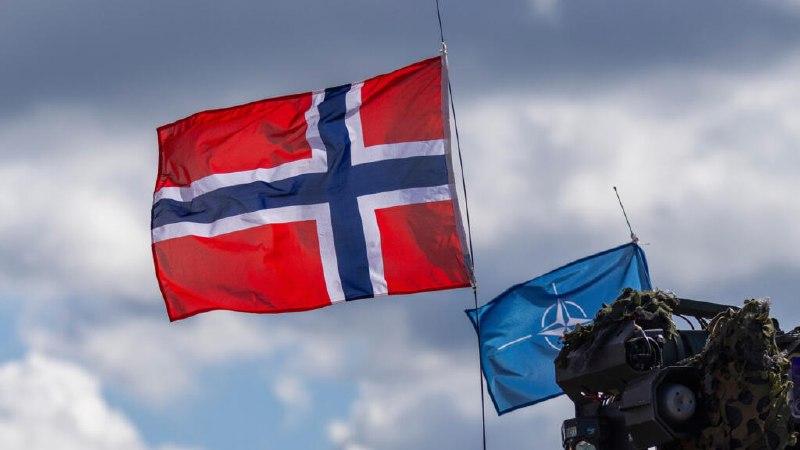
A Norwegian court ordered the arrest on 3 September 2026 of the Russian-flagged vessel Professor Molchanov off the Svalbard archipelago, acting on a Ukrainian petition to enforce a $4.22 billion arbitration award that Kyiv says Moscow has refused to honour. The detention marks the first publicly disclosed maritime enforcement action tied to the long-running Naftogaz claim, and brings a years-old legal paper dispute into the contested waters of the High North.
The move is the latest, and most physical, episode in a slow-motion enforcement campaign that has tracked Russian state assets across Western jurisdictions since the full-scale invasion of Ukraine. It also exposes a tension at the heart of Norway's Arctic posture: a NATO frontline state with deep economic links to Moscow is now the venue for a politically charged arrest carried out in the name of a Ukrainian state creditor, in waters adjacent to one of the most heavily militarised stretches of European coastline.
What the order rests on
The underlying dispute goes back to assets Naftogaz says it lost in Crimea; Russia seized the company's holdings there in 2014, and an arbitration proceeding later awarded Naftogaz roughly $4.22 billion in damages plus interest, according to France 24. Russia has not paid. Ukraine and its state companies have since chased the debt through the courts of multiple Western jurisdictions, hunting for attachable Russian property.
Seizing a hull at sea is not a default enforcement tool. It is what a creditor does when other routes have stalled, and it suggests Naftogaz's lawyers have run out of easier targets inside Norway's jurisdiction. France 24 reports that the Norwegian action follows a petition from Naftogaz's lawyers; Al Jazeera identifies the vessel as the Professor Molchanov and locates the arrest in Arctic waters off Svalbard. The available source items do not specify the exact legal instrument Norway's court invoked, the bond Naftogaz may have posted, or the precise identity of the ship's operator beyond its Russian flag.
Moscow's framing, and why it matters
Russia's response was immediate and sharp. According to Al Jazeera, Moscow characterised the detention as an act of piracy, a charge that carries rhetorical weight in a country that spent decades invoking anti-piracy language against Western naval operations in other theatres. The Russian framing does three things at once: it rejects the legitimacy of the underlying award, asserts that a NATO member has abused its maritime authority for political ends, and signals that any future Norwegian-flagged vessel in Russian waters could face reciprocal treatment.
The Norwegian government confirmed the seizure; the available reporting does not specify the precise statute cited, the size of any bond posted, or how Oslo intends to handle the diplomatic blowback. Maritime enforcement of foreign arbitral awards is a niche corner of admiralty law, and the legal craftsmanship of the order will be pored over by Russian counsel and by every other state considering whether to host similar petitions. The available source items do not specify whether Norway has named the legal basis for the arrest in granular detail, leaving room for both legal commentary and political point-scoring in the days ahead.
The High North as enforcement theatre
The geography is not incidental. The Barents Sea and the waters around Svalbard have become one of the most militarised stretches of European coastline since 2022, with NATO members boosting patrols and Russia hardening its Northern Sea Route posture. Putting a Russian vessel under arrest in the Svalbard maritime zone, rather than in the North Sea or the Baltic, sends a signal aimed at Moscow's Arctic operators as much as at its diplomats. Local Norwegian reporting cited by Al Jazeera's headline describes the ship as a Russian Svalbard liner, a characterisation that emphasises its role servicing the Russian settlements around Longyearbyen rather than open-ocean research; the source items do not resolve that ambiguity about the vessel's routine function.
The deeper pattern is one this publication has tracked before: as kinetic conflict grinds on, the long legal tail of pre-2022 commercial disputes is being dragged into the open. Awards granted in arbitral chambers years ago are being converted, slowly and unevenly, into detentions, frozen accounts, and now arrested hulls. Ukraine's creditors are not the only ones using the tactic; Polish, Lithuanian, and Estonian authorities have moved against Russian-linked property in similar ways, and the precedent travels.
What to watch next
Three dates will define the near-term trajectory. First, any Norwegian court ruling upholding or releasing the Professor Molchanov, which will clarify whether Oslo's legal scaffolding can bear the weight Moscow will try to put on it. Second, Russia's reciprocal response, whether a symbolic detention of a Norwegian-flagged vessel or an escalation in Arctic fisheries inspections. Third, the next move from Naftogaz's lawyers, who now have a tested template for turning abstract arbitration into physical control of Russian state-linked property.
The case also forces a question that Western legal systems have largely avoided answering in public: at what point does a state-owned claimant's collection effort against another state's assets become indistinguishable from sanctions enforcement by other means? Ukraine's lawyers frame this as a private creditor recovering a debt. Moscow frames it as piracy. The truth, as is often the case, is doing real work in the gap between those two characterisations.
The available source items do not specify the exact legal instrument Norway invoked, the bond Naftogaz may have posted, or the vessel's routine role before the arrest. Those details, along with any Russian counter-move, will determine whether this is a precedent or a one-off.
Desk note: Monexus treated this as a legal-enforcement story with a foreign-policy backdrop, not the other way round. The Russia-Ukraine conflict compass applies on framing: Ukraine is the invaded party and the claimant enforcing a recognised award; Russian state-aligned characterisations of the seizure appear as counter-claim with explicit caveat, not as the dominant frame.
Wire provenance
This editorial synthesis draws on the following public wire/social posts:
- https://f24.my/C8Yb.g
- https://www.france24.com/en/europe/20260903-norway-seizes-russian-ship-to-enforce-4-22-billion-ukrainian-arbitration-claim
- https://www.aljazeera.com/news/2026/9/3/norway-seizes-russian-ship-in-arctic-over-crimea-compensation-claim?traffic_source=rss
- https://t.me/france24_en/18468