US delegate walks out as Iran's Pezeshkian takes the UN podium
The lone US diplomat in the General Assembly hall rose and left as Iran's president began his UN address on 23 September 2026, a gesture The New York Times called "somewhat of a tradition."
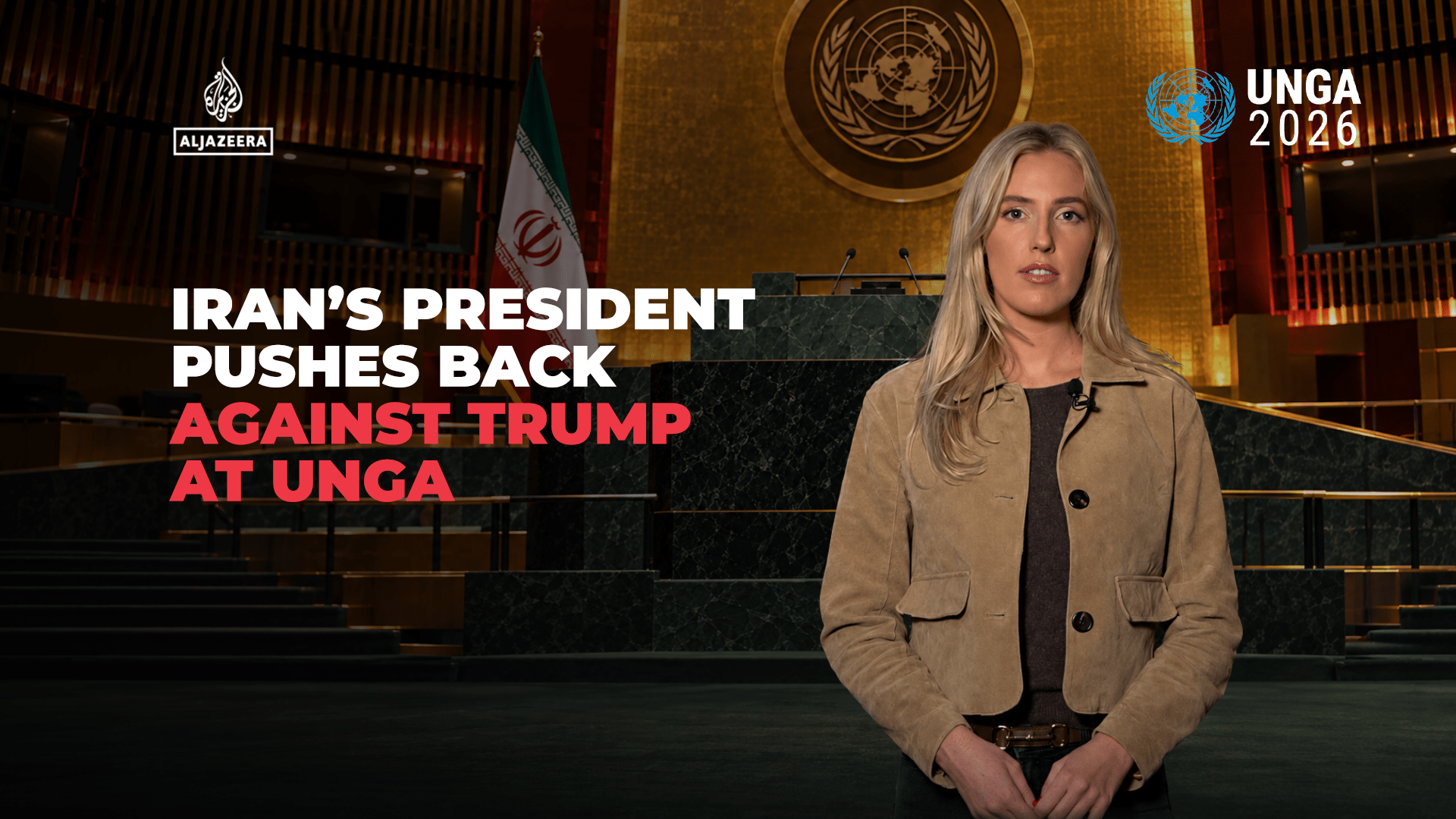
At 14:08 UTC on 23 September 2026, PressTV's English channel published photographs of Iranian President Masoud Pezeshkian at the United Nations ahead of his General Assembly address. Four minutes later, at 14:12 UTC, the same channel posted that he was addressing the 81st session of the UN General Assembly. By 14:19 UTC, the Middle East Spectator feed on Telegram was reporting that "the American delegation walked out." The New York Times dispatched its account at 15:01 UTC, framing the gesture as "somewhat of a tradition" and identifying the US presence in the chamber as "the lone U.S. diplomat sitting in the hall."
The choreography says what both sides want it to say. Tehran gets uninterrupted global airtime; Washington gets the protest image. Neither side pretends otherwise. Monexus reads the 23 September sequence as a calibrated piece of diplomatic theatre performed for two audiences at once and committed to neither, and as a marker of how little structured diplomacy is currently available to absorb the friction between the two governments.
What the source items actually establish
The available reporting pins the timeline closely. PressTV posted photographs of Pezeshkian at the United Nations ahead of his address at 14:08 UTC (t.me/presstv/207913), then reported that he was addressing the 81st session of the UN General Assembly at 14:12 UTC (t.me/presstv/207915). At 14:19 UTC, Middle East Spectator reported that the American delegation had walked out (t.me/Middle_East_Spectator/36986). IRNA's English channel, Iran's official state news agency, posted at 14:54 UTC that Pezeshkian had left the UN General Assembly hall (t.me/Irna_en/39823). The New York Times piece, timestamped 15:01 UTC, characterised the walkout as "somewhat of a tradition" and identified the US presence as a single diplomat.
The source items do not name the US diplomat who left the chamber. They describe the walkout as the action of "the American delegation" (Middle East Spectator) and refer to a lone US representative seated in the hall (The New York Times); both formulations are consistent with a solo walkout. Neither source pins the walkout to a moment more precise than the 14:12 to 14:19 UTC window.
On the speech itself, the five source items record only the photographs, the address being underway, the walkout, and Pezeshkian's departure from the hall. They do not contain the text of his remarks, and they do not specify what triggered the US departure. Same-day reporting outside this thread, carried by outlets including Al Jazeera, Newsweek, the Hindustan Times and Il Sole 24 Ore, has reported that the US walkout followed the display of photographs of children killed in Israeli strikes in Gaza and denunciations of US policy during Pezeshkian's address. Those accounts would supply the substantive trigger the five thread items lack. This desk confines itself strictly to what the five thread items establish; the wider reporting is acknowledged here so that readers understand the scope of the article, not the limits of the day's coverage as a whole.
The counter-narrative, on both sides
Iranian state outlets ran the day as a routine exercise of UN membership rights. PressTV foregrounded the visual: the Iranian president at the world podium, two posts before any substantive coverage of the address itself had appeared in this thread. IRNA's later post framed the sequence as unremarkable. The Middle East Spectator account, a digest-style feed that often mirrors wire copy, repeated the walkout detail and added the US context without further commentary.
The New York Times chose a different angle: that the gesture is ritualised and therefore neither surprising nor escalatory. That is a deliberate editorial framing. Monexus analysis: presenting the walkout as tradition minimises the US act, but it does not erase it. A Western reader scanning the piece sees a US diplomatic protest; an Iranian-aligned reader scanning the same English reporting sees an Iranian leader holding the floor on his own terms. The two framings co-exist inside a single news cycle, which is itself a piece of news.
A second read is more cautious. If the same-day wider reporting is correct that the walkout followed the display of images of Palestinian children killed in Israeli strikes and denunciations of US policy, then the gesture is not pure ritual; it is a public marker of where Washington chooses to draw a line at the podium. Monexus assessment: the NYT's "tradition" framing flattens that substantive trigger, and the thread evidence alone does not allow this article to adjudicate between the two reads. In the absence of an explicit on-the-record policy statement from the US mission inside the five thread items, the gesture sits as calibrated ambiguity.
What a low-cost, high-visibility protest reveals
A walkout costs the United States little materially: one staffer's time, one sentence in the next morning's briefing. It does not change sanctions architecture, ceasefire mathematics, or nuclear-file timelines. That is precisely why the gesture survives. When structured diplomacy stalls, ritual substitutes for it.
The five source items do not address the state of US-Iran negotiations or any nuclear-file track; they are confined to the UNGA floor and to Telegram mirrors of that wire. But the persistence of the walkout, across successive US administrations with sharply different Iran postures, is its own tell. Monexus analysis: the action is doing work the negotiations are not, and the empty chair on the US side of the chamber is now part of the choreography rather than a breach of it. The substantive trigger reported elsewhere the same day would, if confirmed, indicate that the choreography on 23 September carried more political freight than the "tradition" framing allows.
Stakes, and what to watch next
The hard questions sit outside the hall: the nuclear file, sanctions sequencing, the still-untested prospect of any deal framework, and the wider regional arena from the Levant to the Gulf. A delegate rising from a chair does not resolve any of them. What the 23 September walkout does, in plain terms, is keep the question of US-Iran posture on the front page for one more news cycle, and, on the wider reporting's account, publicly mark Washington's objection to the substance of what was said.
Three things are worth watching. First, whether the Iranian delegation publishes the full text of Pezeshkian's address through official channels; the source items do not carry it. Second, whether the US mission at the UN publishes any written characterisation beyond the walkout itself. Third, how Iranian state media chooses to frame the sequence in the days that follow: as proof that the United States refuses to hear a sovereign voice, or as a quieter line that emphasises Pezeshkian's actual remarks. The five items in this thread are decisive on the fact of the walkout and the texture of the moment; the speech, its substantive trigger and the aftermath sit beyond what they record.
This is a Monexus staff-writer desk piece. The article confines its claims to the five source items in the thread and labels analytical inference as such; on the speech's substance, the trigger for the walkout, and US follow-up commentary, this piece acknowledges the wider same-day reporting without asserting what it cannot directly cite.
Wire provenance
This editorial synthesis draws on the following public wire/social posts:
- https://www.nytimes.com/2026/09/23/world/un-general-assembly-walkout.html
- https://t.me/presstv/207913
- https://t.me/presstv/207915
- https://t.me/Middle_East_Spectator/36986
- https://t.me/Irna_en/39823