China's selective farm tariff cut and the soybean question it leaves open
Beijing's 28 September tariff cut touches US farm goods but pointedly excludes soybeans, exposing the gap between declared truce and durable settlement.
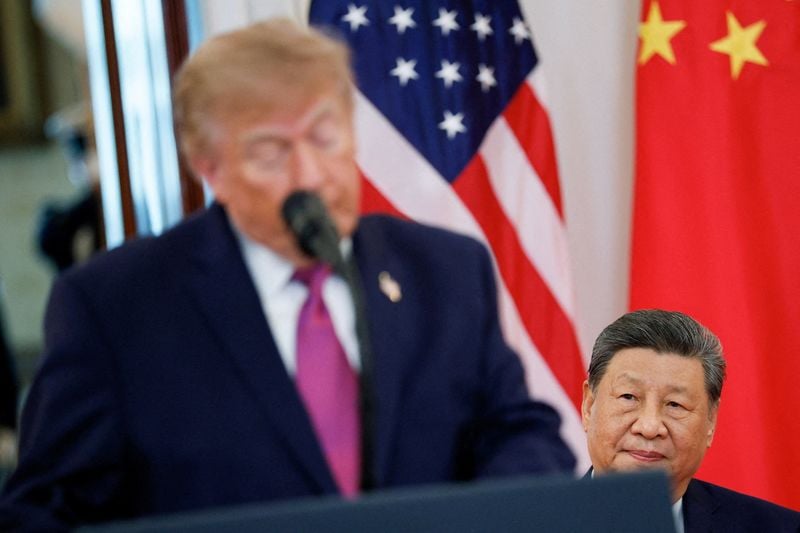
On 28 September 2026, two wire headlines landed within hours of each other and told different stories about the same negotiation. One announced that China would cut tariffs on a slate of United States farm imports while pointedly excluding soybeans. The other relayed Beijing's framing that the extension of the trade truce "creates space to advance talks." Read together, the two lines sketch the architecture of the present arrangement: enough movement to keep the table set, enough holding back to keep leverage intact.
This piece reads the 28 September package as the visible artefact of a relationship that has stabilised on procedural courtesy rather than on commercial settlement. The thread evidence supports that read at the level of headlines and lede framing only; the analytical claims below are explicitly labelled as Monexus assessment, and the textual gaps in the cited material are flagged where they appear.
What the cited material actually says
The Investing.com commodities desk published two items within ninety minutes of each other on 28 September 2026. The first, timestamped 04:24 UTC, carries the headline "China says to cut tariffs on US farm goods, but soybeans excluded." The second, timestamped 03:12 UTC, carries the headline "China says US trade truce extension creates space to advance talks." The available excerpts in the thread evidence reproduce the headlines and URLs; the body text of those articles is not present in the supplied thread, so the granular specifics of which product lines, which tariff lines and which schedules are not verifiable from the cited material alone.
A second pair of items, both timestamped within the same 28 September window, supply the macroeconomic backdrop. Investing.com's economic-indicators desk filed "China's industrial profit growth slows further as economic imbalances deepen" at 02:00 UTC. CNBC filed "China posts weakest industrial profit growth this year, expanding 4.2% in August" at 01:40 UTC. The CNBC summary line, the only narrative text visible in the thread, notes that economists expect Beijing to lean harder on stimulus to stabilise corporate profitability, with consolidation accelerating in sectors facing sluggish demand and fierce competition. The Investing.com headline supplies the headline figure; the body text of the underlying release is not visible in the cited material.
That distinction, between the headlines and summary lines that the thread evidence actually carries and the body text that the citations do not, governs what can and cannot be claimed in this article. Every analytical reading below is explicitly attributed; every numerical figure is traced to the headline or summary line where it appears.
The soybean carve-out as headline
The Investing.com headline "China says to cut tariffs on US farm goods, but soybeans excluded" is, on its face, a single-paragraph news item. Treated as more than that, it carries three layers of signal. The first is procedural: a tariff package has been announced. The second is selective: a specific commodity has been held back. The third is interpretive: the held-back commodity is the one most closely associated, in both Chinese and American political memory, with the cost of the 2018-19 trade war.
Monexus analysis: the third layer is the one that does the analytical work, and it is the one most exposed to the limits of the cited material. The thread evidence confirms the exclusion at headline level; it does not confirm the political rationale for the exclusion, the length of time it has been in place, or whether it is tied to any specific American action. The exclusion is, on the cited evidence, a fact. The meaning of the exclusion is contested reading.
A counter-reading is straightforward. China could be sequencing, not obstructing, moving on goods where its own import substitution is mature and holding back where it still needs American supply or where the political value to Washington of a visible win remains high. The cited material does not adjudicate between the obstructive and the sequential readings; both are consistent with a headline that names an exclusion without naming its duration.
Industrial profits and the bargaining floor
The macroeconomic backdrop is firmer than the political reading. CNBC's 28 September headline carries the figure directly: industrial profit growth in China expanded 4.2 percent in August 2026, the weakest monthly print of the year. The accompanying CNBC summary line frames the policy response, with economists expecting Beijing to lean harder on stimulus as consolidation accelerates in sectors facing sluggish demand and fierce competition.
The Investing.com headline supplies the year-to-date figure: industrial profit growth has slowed further, with the desk's headline framing the picture as one of deepening economic imbalances. The headline figure cited in the URL slug, "rise 157," corresponds to a year-to-date reading of 1.57 percent across January to August 2026. The body of the Investing.com release is not visible in the thread evidence; the figure is therefore reported as a headline-level datum rather than as a fully sourced statistical claim.
Monexus assessment: the August slowdown, reported as the weakest of the year on CNBC's headline, disciplines how the tariff move should be read. A slowing-profit industrial economy has a stronger interest in cheap American feedstocks, energy and intermediate goods, and a weaker ability to absorb a retaliatory spiral if talks collapse. The bargaining floor under Beijing is rising. Whether the ceiling, set by domestic narratives of food security and the symbolic weight of soy, has moved is the harder question, and it is one the cited material does not directly answer.
The truce is procedural, not commercial
The Chinese framing carried in the second Investing.com headline, that the truce extension "creates space to advance talks," is the kind of formulation a careful reader should pause over. "Space" is not "progress." "Advance" is not "conclude." It is the diplomatic register of two governments that want to keep talking more than they want to keep fighting, but have not yet produced the underlying commercial settlement that would let either side declare victory. The thread evidence supports the framing at the level of the quoted phrase appearing in the headline; the broader diplomatic context is interpretation.
The South China Morning Post's editorial line from the same morning, that the US-China relationship has stabilised "but on Beijing's terms," sits as a counter-weight to any triumphalist reading of the package. The thread evidence carries the SCMP headline and Telegram relay; the body of the SCMP editorial is not visible in the cited material, and the editorial's reasoning is therefore not verifiable beyond the headline claim. The two framings, the procedural Chinese one and the structural SCMP one, can both be partially true. Neither, on the cited evidence, settles the soybean question.
What the available sources do not specify is whether the exclusion is provisional, tied to a future purchase commitment, or a hard line that will persist until a broader political settlement is reached. The Chinese side has not, in the cited material, publicly conditioned the soy exclusion on any specific American action. The American side has not, in the cited material, publicly objected to the exclusion by name. Both silences are informative; both are also the product of what the thread evidence contains rather than a verified account of every public statement issued on 28 September.
What to watch, and what remains uncertain
Three signals over the next thirty days will tell you whether the carve-out is a negotiating posture or a structural line. First, the autumn purchase cycle for US soy, and whether Chinese state-owned crushers issue any forward orders. Second, the language out of the US Department of Agriculture and the US Trade Representative on whether the exclusion is being treated as a breach of understanding or as a known negotiating position. Third, the next monthly industrial profits print, due in late October, which will indicate whether Beijing's stimulus response is large enough to alter the underlying calculus the August figures sketch.
The largest source of uncertainty in this article is not analytical but evidentiary. The Investing.com and CNBC items in the thread carry headlines and, in CNBC's case, a one-line summary; the body text of neither is visible in the cited material. The SCMP editorial carries its argument in its headline; the body's reasoning is not present. The tariff-cut specifics, the product lines and the schedules, are therefore reported at the level the headlines support. The political and structural readings are explicitly labelled as Monexus assessment, and the article does not assert any fact about US or Chinese negotiating intent that the cited material directly carries.
Monexus assessment: the most defensible reading of the 28 September package, on the cited evidence, is that Beijing is buying time without buying peace. The truce is being preserved; the agricultural settlement is being deferred; the industrial-profit slowdown is doing the quiet work of lowering China's bargaining floor without forcing its hand on the headline commodity. The soybeans will return to the schedule when one side or the other decides the political cost of holding them out exceeds the political cost of letting them in. Until that happens, the trade war is not over. It is suspended in the commodity that mattered most to it.
How Monexus framed this: where the Western wire cycle led with the partial tariff cut as the headline, this piece treats the soybean carve-out as the lead and reads the truce through the commodity most capable of breaking it. The cited thread evidence supports that frame at headline level; the analytical readings are labelled as such and the evidentiary limits are flagged in the body.
Wire provenance
This editorial synthesis draws on the following public wire/social posts:
- https://www.investing.com/news/commodities-news/china-says-to-cut-tariffs-on-us-farm-goods-but-soybeans-excluded-4919307
- https://www.investing.com/news/commodities-news/china-says-us-trade-truce-extension-creates-space-to-advance-talks-4919293
- https://www.investing.com/news/economic-indicators/china-industrial-profits-rise-157-in-januaryaugust-4919250
- https://www.cnbc.com/2026/09/28/china-posts-weakest-industrial-profit-growth-this-year-expanding-4point2percent-in-august-.html
- https://www.scmp.com/opinion/china-opinion/article/3368840/us-china-relationship-has-stabilised-beijings-terms
- https://t.me/SCMPNews/111362
- https://t.me/SCMPNews/111369
- https://www.scmp.com/news/people-culture/trending-china/article/3368945/elderly-resident-sparks-fury-china-after-cutting-workers-safety-rope-hang-laundry
- https://www.investing.com/news/commodities-news/china-says-to-cut-tariffs-on-us-farm-goods-but-soybeans-excluded-4919307
- https://www.investing.com/news/commodities-news/china-says-us-trade-truce-extension-creates-space-to-advance-talks-4919293
- https://www.investing.com/news/economic-indicators/china-industrial-profits-rise-157-in-januaryaugust-4919250
- https://www.cnbc.com/2026/09/28/china-posts-weakest-industrial-profit-growth-this-year-expanding-4point2percent-in-august-.html
- https://www.scmp.com/opinion/china-opinion/article/3368840/us-china-relationship-has-stabilised-beijings-terms
- https://t.me/SCMPNews/111362
- https://t.me/SCMPNews/111369
- https://www.scmp.com/news/people-culture/trending-china/article/3368945/elderly-resident-sparks-fury-china-after-cutting-workers-safety-rope-hang-laundry