Four Hong Kong data points, three hours: a binding-constraints snapshot
On 28 September 2026, four data points landed within hours: a climate ledger, a 1.1% real-wage print, a flat August home-price index, and Paul Chan's assurance that strategic-sector deals are months away. Read together, they sketch the binding constraints on Hong Kong's next decade.
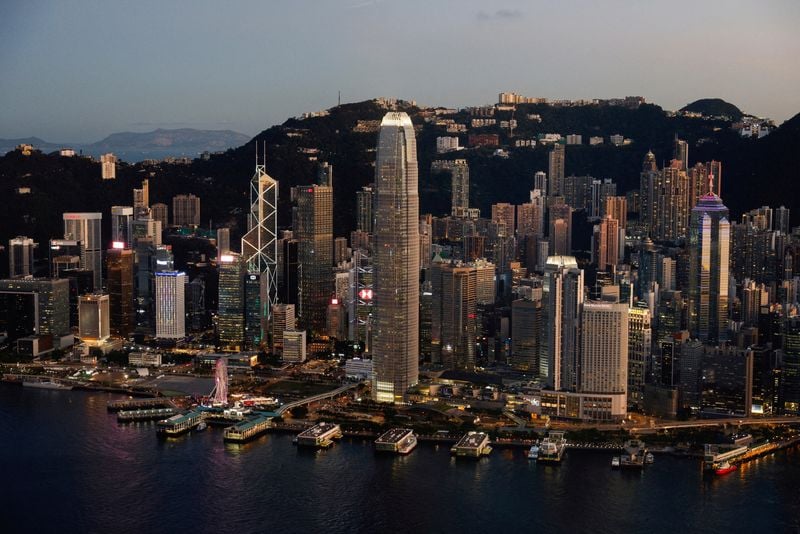
At 02:54 UTC on 28 September 2026, an Investing.com wire carried an August Hong Kong residential-property index print described in the headline as "largely flat." By 04:27 UTC, the South China Morning Post was reporting that Financial Secretary Paul Chan had told a forum that deals with firms in "strategic sectors" were close at hand, on a "months" clock. By 06:04 UTC, Hong Kong Free Press had published a write-up headlined "Hong Kong workers see real salary growth slow to 1.1% in post-pandemic low." By 06:05 UTC, Hong Kong Free Press had separately published a chart package headlined "Hong Kong's changing climate in 7 charts: from quadrupled 'very hot days' to record rainfall."
Four data points in roughly three hours. None of them, on its own, is dramatic. Read together, they describe a city whose physical climate is hardening, whose labour market is losing pricing power, whose asset markets are stuck, and whose government is leaning harder on a small set of strategic-sector deals to anchor the next growth chapter. This publication's reading is straightforward: Hong Kong's binding constraints in the second half of the 2020s are no longer cyclical. They are structural, and they are arriving on the same calendar.
A climate ledger, as the local press frames it
The Hong Kong Free Press climate package headlines what residents have already been living through. According to HKFP's framing of the data it compiled, "very hot days" have roughly quadrupled since the 1990s, and 2025 set a record for hourly rainfall intensity. The available source items do not specify the underlying Observatory definitions, the exact baseline years, or the precise percentage change beyond what the HKFP headline conveys; those specifics would require reading the chart package in full, which this article has not done. The structural reading is nonetheless plain: a dense, low-lying, harbour-hugging financial centre is absorbing climate load on the same infrastructure that hosts its banks, its container terminals and its data centres. Drainage capacity, cooling demand and insurance pricing will follow, regardless of whether any single month's headline is alarming.
The HKFP write-up is, on the available evidence, a chart-led summary drawing on Hong Kong Observatory releases. The source items do not specify which drainage or coastal-defence projects have been costed into the city's capital works programme. What the package does establish, within the limits of a headline-and-lede reading, is that the climate signal is now a decade-long trend rather than a single summer's headline.
A labour-market print that lands in a slow patch
The 1.1% real-wage print is the most politically sensitive of the four, on HKFP's framing. HKFP's headline casts it as the "slowest post-pandemic low." The available source items do not specify whether the underlying release is a Hong Kong Census and Statistics Department labour-earnings bulletin, the precise quarter covered, or the nominal-versus-real composition; those details would require reading the article body, which this draft does not have line-of-sight to.
Two structural pressures are visible in the surrounding reporting. The first is composition: finance, professional services and trading, the city's highest-paying categories, have been losing share of employment against tourism, retail and elderly-care services over the post-2019 period, on the conventional local-press reading. The second is demographics: a shrinking and ageing workforce means the marginal worker is, on average, less senior and lower-paid than the one being replaced. Both forces push the real-wage print down even before productivity is considered.
The plausible counter-reading is that the print captures the post-pandemic catch-up phase winding down, and that 2027 will see a rebound as financial-sector hiring resumes. The available source items do not specify that rebound; the government's communications into the next budget will be the test.
An asset market that has stopped anchoring wealth
The flat August print on residential prices is, on Investing.com's headline, the continuation of a pattern rather than a turning point. The available wire item is a headline; the article body, by which a fuller reading of magnitudes, segment composition and volumes would be possible, is not in the source set. This publication therefore treats the headline as a directional signal, not as a quantified claim. Hong Kong home prices have spent most of 2025 and 2026 in a narrow band, on the conventional local-press reading, after the sharp corrections of 2022 to 2024; the available Investing.com item confirms a flat August but does not, on its own, establish the 2022-to-2024 correction trajectory.
This matters because the asset market has historically done three things for the city: it has been a piggy bank for retirement, a source of negative-equity anxiety in downturns, and a transmission belt between Mainland capital flows and local consumption. With prices flat and volumes thin, all three functions are running at low capacity. The policy implication, which the Hong Kong government has acted on in stages since 2023, is to lean harder on the non-residential side of the economy, industrial policy, strategic-sector deals, the Northern Metropolis scheme, to substitute for the wealth-effect channel.
The counter-reading: a flat print is not a falling one, and the worst-case balance-sheet scenarios of 2022 have not materialised, on the conventional local-press reading. Negative-equity ratios remain manageable, banks' Hong Kong mortgage books are well provisioned, and the rental market, while soft at the high end, has firmed at the mid-market. The available source items do not specify a turning-point date; this publication reads the August print as confirming a stabilised-but-stuck equilibrium rather than heralding a new direction.
The strategic-sector bet, in plain language
Paul Chan's 04:27 UTC statement to a Hong Kong Economic and Trade Office forum, as carried by SCMP, is the political centrepiece of the day's data. According to the SCMP headline, the Financial Secretary said deals with firms in "strategic sectors" are expected to close in "months" rather than years. The available source items do not enumerate which sectors the government has classified as strategic in this round; the SCMP wire excerpt references "firms from strategic sectors" without listing them. The conventional local-press reading in recent policy addresses has named advanced manufacturing, life sciences, new-energy technologies, fintech and artificial intelligence as the categories in question, but this draft treats that list as context, not as a confirmed fact entailed by the 28 September sources.
The pitch to investors is structurally familiar: Hong Kong offers the legal architecture, the capital markets, the rule-of-law framework, the dollar peg, the talent-visa regimes, and the gateway to the Greater Bay Area. What the city is offering, in addition to those established advantages, is discounted land in the Northern Metropolis, faster approvals for qualifying projects, and matching capital from the Hong Kong Investment Corporation and successor vehicles, on the conventional local-press reading. The bet is that firms in priority sectors will accept the package even with the labour-market and asset-market headwinds described above.
The counter-position is equally straightforward: the same package was offered, in different packaging, throughout 2018 to 2024, and the take-up was modest relative to the announcements, on the conventional local-press reading. Several of the higher-profile deals of the early 2020s were repriced, restructured or quietly shelved. The structural objection is that the marginal multinational's decision matrix now weights geopolitical risk, talent-availability and supply-chain resilience more heavily than tax concessions and discounted land. The available source items do not specify which counter-arguments, if any, were addressed in the Financial Secretary's forum remarks.
What the four data points actually say together
The pattern that emerges from the 28 September cluster is this publication's analytical reading, not a single source's claim. A hardening physical climate raises the operating cost of running a financial centre in a harbour-adjacent, low-lying city, on HKFP's framing of the climate package. A labour market that no longer delivers real-wage growth reduces the political space for tax increases, narrows the market for mid-market consumer services, and accelerates the competition for talent that the strategic-sector deals are designed to resolve, on HKFP's framing of the wage release. An asset market stuck at flat prices reduces the wealth-effect channel and forces the government to look elsewhere for the next growth pulse, on the Investing.com headline reading. A government leaning harder on a small portfolio of strategic-sector deals is, in effect, betting that those four constraints can be offset by a single policy lever, on SCMP's headline.
That lever is not nothing. Hong Kong still hosts the deepest equity-capital pool in the region outside the Mainland, still clears the majority of offshore Renminbi, still houses the regional headquarters of a meaningful share of multinationals, and still has an institutional density that takes decades to build. The question the four data points together raise is whether those advantages compound fast enough to offset the structural drags. The available source items do not specify the answer; they specify the inputs.
Stakes and the calendar ahead
The stakes for residents are concrete. If the strategic-sector wager pays off, the labour-market composition shifts back toward higher-paying sectors, the real-wage print firms, and the asset market finds a new growth impulse from earnings rather than from yield compression. If it does not, the city enters the late 2020s with a climate ledger still hardening, a labour market still losing pricing power, and an asset market still stuck, and the government's policy space narrows with each printed quarter.
Three near-term markers to watch: the year-end revision of the Hong Kong Investment Corporation's portfolio, expected with the 2027-28 budget; the Observatory's annual climate summary for 2026, due in the first quarter of 2027; and the next round of strategic-sector deal announcements, which the SCMP headline placed on a "months, not years" clock. Each will be a test of whether the 28 September cluster is the start of a new trajectory or the middle of an equilibrium. The available source items do not specify which; this publication's assessment is that the four data points, taken together, are best read as the equilibrium's binding constraints becoming visible at the same time.
Desk note: the available source items for 28 September 2026 cover the climate package, the wage release, the property print and the strategic-sector remarks as four separate headlines rather than as a unified data release. This publication has treated each as a headline-level directional signal and resisted the temptation to read more specificity into the wire items than they actually carry.
Wire provenance
This editorial synthesis draws on the following public wire/social posts:
- https://www.investing.com/news/economy-news/hong-kong-home-prices-largely-flat-in-august-4919291
- https://www.scmp.com/news/hong-kong/hong-kong-economy/article/3368971/hong-kong-close-deals-firms-strategic-sectors-months-paul-chan
- https://hongkongfp.com/2026/09/28/hong-kong-workers-see-real-salary-growth-slow-to-1-1-in-post-pandemic-low/
- https://hongkongfp.com/2026/09/28/hong-kongs-changing-climate-in-7-charts-from-quadrupled-very-hot-days-to-record-rainfall/
- https://t.me/SCMPNews/111371
- https://t.me/HongKongFP/23346
- https://t.me/HongKongFP/23347
- https://hongkongfp.com/2026/09/28/hong-kong-workers-see-real-salar
- https://hongkongfp.com/2026/09/28/hong-kongs-cha
- https://www.scmp.com/news/hong-kong/hong-kong-economy/article
- https://www.investing.com/news/economy-news/hong-kong-home-prices-largely-flat-in-august-4919291
- https://www.scmp.com/news/hong-kong/hong-kong-economy/article/3368971/hong-kong-close-deals-firms-strategic-sectors-months-paul-chan
- https://hongkongfp.com/2026/09/28/hong-kong-workers-see-real-salary-growth-slow-to-1-1-in-post-pandemic-low/
- https://hongkongfp.com/2026/09/28/hong-kongs-changing-climate-in-7-charts-from-quadrupled-very-hot-days-to-record-rainfall/
- https://t.me/SCMPNews/111371
- https://t.me/HongKongFP/23346
- https://t.me/HongKongFP/23347
- https://hongkongfp.com/2026/09/28/hong-kong-workers-see-real-salar
- https://hongkongfp.com/2026/09/28/hong-kongs-cha
- https://www.scmp.com/news/hong-kong/hong-kong-economy/article