Three pressures, one cabinet: India's monsoon shortfall, jet-fuel bill and pulses dilemma converge
A driest-in-a-decade monsoon, a 13% jet-fuel price hike and a potential duty cut on imported pulses have arrived at the same desk inside a week. Each is being framed as a separate story; together they expose the tight knot New Delhi is tying around its import bill and its rural voter.
On 1 October 2026, three largely separate Indian policy files drifted into the same week and the same news cycle. The monsoon ended as the driest in a decade. State-owned oil marketers lifted jet-fuel prices by 13% in a single revision. And Reuters-sourced reporting said the federal government was actively considering cuts to import duties on pulses to take heat out of retail prices.
The temptation in New Delhi is to treat each as its own file: agriculture, civil aviation, food policy. The more honest reading is that all three are pulling on the same rope. India is running out of cheap ways to absorb shocks to the things it does not produce enough of at home, and the consumer is increasingly the place those shocks land.
The monsoon the weather office didn't promise
India's monsoon, the four-month rainy season that waters roughly half of the country's cropped area, ended as the driest in ten years, Scroll.in said on 1 October 2026 in its Rush Hour wire. That is not, on its own, a catastrophe; India has weathered worse. But a weak monsoon does two things at once. It pushes up the prices of vegetables, pulses and fodder in the months immediately after withdrawal, and it raises the political cost of any decision that lets food inflation print visibly in the Wholesale Price Index and Consumer Price Index releases through November.
The available source items do not specify which districts were hardest hit. What they do say is that the macro signal, driest-in-a-decade, is the one New Delhi will be reading most closely when it decides whether to ease pulses duties, release buffer stocks, or hold the line and absorb the political heat.
The 13% that landed on airlines
Public-sector oil marketing companies raised jet fuel (ATF) prices by 13% in a single revision, Scroll.in reported on 1 October. That is a large move for a product that ordinarily reprices in low single digits per revision. The hike lands on an airline industry that has spent the last two years fighting fare undercutting from a new generation of low-cost carriers, and on cargo belly-hold economics that ultimately show up in the perishables aisle. A weaker monsoon raises the price of what is flown; a 13% ATF hike raises the cost of flying it.
The compounding matters. Pulses are not flown in any meaningful quantity, but fruits, vegetables and a growing share of high-value protein are. A bad monsoon and a sudden fuel re-pricing are not the same file, but they meet in the household budget.
The pulses lever
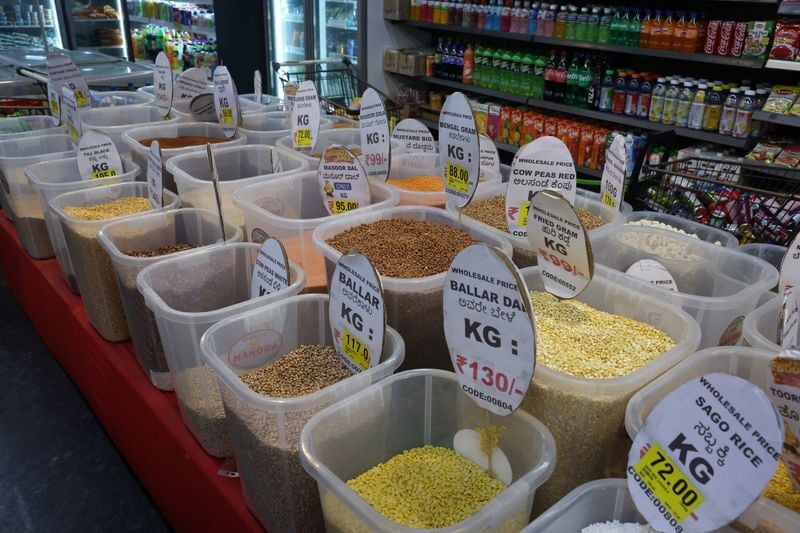
The clearest signal of how seriously the government is reading the food file is the Reuters-sourced report that New Delhi is weighing cuts to import duties on pulses to cool retail prices. Pulses, lentils, chickpeas, pigeon peas, are the politically sensitive cornerstone of the Indian protein diet. They are also the commodity India has spent fifteen years failing to produce enough of at home. Year after year, monsoon weakness or pest pressure tightens the domestic balance sheet; year after year, the answer is some combination of buffer-stock release, import quota expansion, and duty adjustment. The Reuters-sourced report framed the move as a duty cut under active consideration, not a decision.
Monexus assessment: the duty lever is the cheapest instrument on the menu for a government that does not want to be seen subsidising consumption directly. Cutting duty is fast, reversible, and shows up at the mandi within weeks. Its cost is to the exchequer and to the long-standing signalling that India is building domestic pulse self-sufficiency. If the cut comes, expect it to be temporary, narrowly scoped to the most consumed varieties, and paired with a story about supporting consumers during a difficult agricultural year.
What this is really about
Read the three stories together and the pattern is hard to miss. India is entering a quarter in which (a) the food file is tightening because the monsoon underperformed, (b) the energy file is tightening because state refiners have decided to pass through cost, and (c) the consumer is the place both tightenings meet. The government's only fast-moving levers are on the border, duty cuts, quota changes, stock release, because the slow-moving levers (irrigation coverage, domestic pulse yields, refining capacity) cannot be turned in time for the November inflation print.
That is the politics of it, too. State elections and the wider electoral cycle have a way of making governments more willing to use the border as a relief valve and less willing to ask the consumer to absorb a monsoon and a fuel re-pricing in the same quarter. The available source items do not specify the size of any duty cut being weighed, the varieties that would be covered, or the timing of a decision. That detail will arrive or it won't.
Stakes and what to watch
Three things will tell us which way the file breaks. First, the wording of any official notification from the finance or commerce ministries on pulses duties, temporary or open-ended, narrow or broad, retroactive or forward-looking. Second, the next round of CPI release commentary from the Reserve Bank of India, which has so far held the line that the monsoon shortfall is transient and supply-side. Third, whether the ATF revision holds or is partially walked back by the state marketers in the days ahead. A 13% single-revision hike is large enough to attract political comment from airlines and from the civil aviation ministry; whether that comment arrives, and how, will indicate how long the pass-through is expected to last.
The structural read is straightforward: India's import bill for the things it cannot produce enough of is going to be a more politically visible number for the rest of this fiscal year than it has been for several. The combination of a bad monsoon and a sharp fuel re-pricing has made the consumer price of exposure for both visible in the same news cycle.
Desk note: Monexus read the three 1 October 2026 source items together as a single file, monsoon, fuel and pulses, rather than as discrete wire stories, on the view that the cabinet's room to move is the common variable.
Wire provenance
This editorial synthesis draws on the following public wire/social posts:
- https://scroll.in/latest/1096135/rush-hour-india-logs-driest-monsoon-in-decade-jet-fuel-prices-hiked-by-13-and-more
- https://scroll.in/article/1096049/as-indias-exotic-pet-trade-flourishes-abandonment-of-animals-is-an-ecological-danger
- https://t.me/scroll_in/148028
- https://t.me/scroll_in/148029
- https://www.investing.com/news/economic-indicators/india-considers-cutting-import-duties-on-pulses-to-cool-prices-sources-say-4926893
- https://scroll.in/latest/1096135/rush-hour-india-logs-driest-monsoon-in-decade-jet-fuel-prices-hiked-by-13-and-more
- https://scroll.in/article/1096049/as-indias-exotic-pet-trade-flourishes-abandonment-of-animals-is-an-ecological-danger
- https://t.me/scroll_in/148028
- https://t.me/scroll_in/148029
- https://www.investing.com/news/economic-indicators/india-considers-cutting-import-duties-on-pulses-to-cool-prices-sources-say-4926893