Tehran rolls out the Caucasus line as Armenian foreign minister visits
Iran's parliament speaker told Armenia's top diplomat on 5 October 2026 that the Caucasus must not become a 'venue for geopolitical competition between foreign powers', a line that doubles as a coded message to Washington and Ankara.
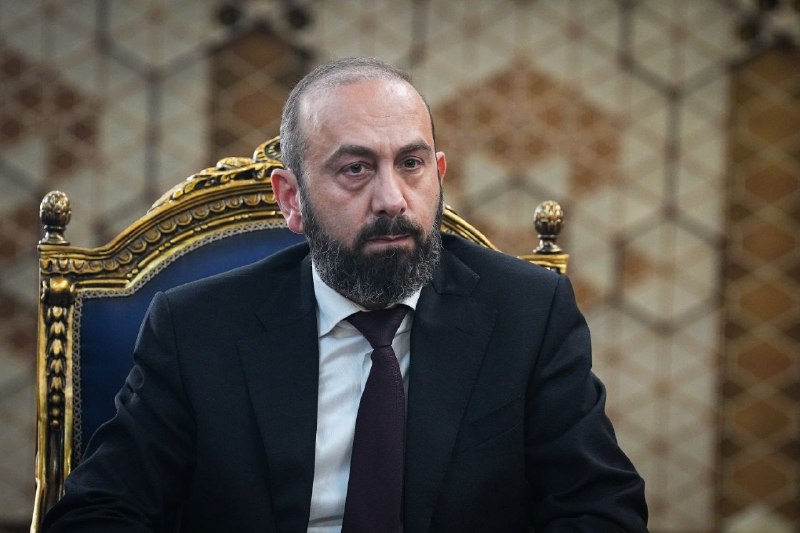
Iranian Parliament Speaker Mohammad Bagher Ghalibaf received Armenian Foreign Minister Ararat Mirzoyan in Tehran on the evening of 5 October 2026, and used the platform to draw a clear line: the South Caucasus, Ghalibaf said, must not be turned into a "venue for geopolitical competition between foreign powers." The message, relayed in near-identical phrasing by three Iranian state outlets within minutes of each other, was a direct rebuke of Washington and a quieter warning to Ankara. The available reporting does not specify a published joint statement or a signed document; the public record so far is a sequence of readouts from the Iranian side.
The framing matters. Ghalibaf is not a backbencher. As speaker of the Islamic Consultative Assembly, he is one of the senior figures in Iran's national-security chorus and a frequent channel for the Islamic Republic's diplomatic signalling. Hosting Mirzoyan in Tehran on the same day that Ghalibaf attacked US credibility in the region, and pairing that attack with a "no third-party arena" message about the Caucasus, is the kind of choreography Tehran uses when it wants a position logged in two countries' diplomatic memories at once. The substance of the Armenian response, where it appears in Iranian state media, was calibrated. Mirzoyan said Yerevan would not allow action against Iran from Armenian territory, a formulation that asserts Armenian sovereignty over its own soil and, by extension, pushes back against the idea of any external patron, including Moscow, treating Armenia as a launch pad against the Islamic Republic.
What Ghalibaf actually said
The opening line in all three Iranian readouts is the same. Ghalibaf told Mirzoyan that the Caucasus region must not become an arena for geopolitical competition between foreign powers. The phrasing is significant because it is not aimed at one actor. "Foreign powers" in Iranian diplomatic usage typically means the United States, with NATO members, Israel and Turkey as adjacent referents. The fact that Ghalibaf used the same formulation to a sitting Armenian foreign minister, in his own parliament, signals that Tehran views the South Caucasus as a contestable space rather than a settled one. Ghalibaf did not name Israel, the United States, or Turkey in the readout, which itself is a tell. Naming any one of them would have narrowed the message; the broader frame keeps all options on the table.
The second line is sharper. Ghalibaf accused the Americans of breaching their commitments regarding implementation of the memorandum of understanding, and said this had dealt another blow to their credibility in the area. The phrase "the area" is doing a lot of work. Read against the Caucasus framing, it implies that Washington has been making promises to Tehran about the South Caucasus that Washington is now failing to keep. The available reporting does not specify which memorandum of understanding Ghalibaf was referring to, or when it was signed. Monexus analysis: the most natural reading is that Ghalibaf is layering the Caucasus message on top of a separate, and still contested, track of US-Iran confidence-building. If the MOU in question relates to nuclear talks or prisoner exchanges, then Ghalibaf is signalling to Yerevan that Iran's regional posture is hardening even as bilateral diplomacy with Washington is breaking down.
The third line is the bluntest. The Americans, Ghalibaf said, did not achieve any of their military objectives against the Islamic Republic of Iran; rather, they suffered defeat. The statement was not paired, in the Iranian readouts, with any specific reference to a recent US military action. It reads as a stock formulation: Iran's political class has used similar language to describe the 12-day air war earlier in 2025 and the subsequent fighting cycle. Monexus reads the deployment here as deliberate. Talking about a US "defeat" while an Armenian foreign minister is in the room is a way of telling Yerevan, and the small club of South Caucasus observers who will read the readouts, that Tehran believes it has the upper hand in the immediate military balance and intends to negotiate accordingly.
The Armenian half of the conversation
The Armenian readouts that are publicly available in this thread come exclusively from Iranian state outlets. That is a limitation, and a significant one. Mirzoyan is reported to have told Ghalibaf that Armenia will not allow action against Iran from Armenian territory, a line that the Iranian outlets put in quotation marks and that frames Yerevan as a responsible steward of its own sovereign space. Armenian state media has not, on the basis of the items available, been added to this thread; the only sourcing for the Mirzoyan quotes is the Iranian side. The framing caveat matters: when every citation is a relay, the certainty of the primary event (who said what, in which room, with which interpreter present) drops by a step. Monexus takes the quotes as reported, while flagging that an independent Armenian readout would be the next step before treating the wording as settled.
The substantive content is still meaningful. A sitting Armenian foreign minister telling the speaker of the Iranian parliament that Yerevan will not permit its territory to be used against Iran is a position with weight, both inside Armenia and in Moscow, where the Kremlin has historically read South Caucasus politics as a direct extension of its security perimeter. Mirzoyan is, in effect, drawing a line that does not privilege any one external power. He is telling Tehran that Armenia is not a stage; he is also implicitly telling Moscow and Washington the same thing. The fact that this message was delivered in Tehran, rather than via a Yerevan press conference, is a choice. It is a choice that costs Yerevan something with its traditional security partners and earns it something with Iran. The arithmetic of that trade is one of the more interesting things to watch in the readouts that will follow.
Why the Caucasus, why now
The South Caucasus has been moving for two years. The Armenian-Azerbaijani normalisation track, the December 2023 Baku-Yerevan statement, the TRIPP corridor debate, and the persistent question of who stations what infrastructure where have all left the region politically thin-skinned. Tehran's interest is geographic. Iran shares a roughly 700-kilometre border with Armenia and a roughly 760-kilometre border with Azerbaijan. Any third-party military presence in either state, or along either border, is a direct Iranian security concern, and the Islamic Republic has said so in various forums. Ghalibaf's "no foreign arena" line is the parliamentary version of that long-standing position, and the fact that he delivered it to an Armenian foreign minister in the first week of October 2026 suggests that Tehran is not satisfied that the position is being heard.
Monexus analysis: there is a more pointed read of the timing. Ghalibaf's three messages, taken together, are a single argument. First, the Caucasus is not a free-fire zone for outside powers. Second, the United States is in breach of an unnamed MOU and has lost credibility. Third, the United States has not defeated Iran and should not expect to dictate terms in the region. Read in sequence, the argument is that Iran's position in the South Caucasus is reinforced by American weakness, and that Yerevan is a useful interlocutor for Tehran to register that view. The Armenian response, where reported, neither endorses nor rejects the American frame; it asserts Armenian agency. That is a posture, not a side. Whether it holds depends on what Moscow, Ankara and Brussels do next.
What to watch before the next readout
Three things will determine whether the Ghalibaf-Mirzoyan meeting becomes a regional marker or a routine exchange. First, the Armenian foreign ministry's own statement. If Yerevan publishes a readout that matches the Iranian quotes, Mirzoyan's "no action from Armenian territory" line is on the record in two capitals and is harder for third parties to reroute. If the Armenian readout is softer, the line stays in the Iranian frame. Second, the Azerbaijani response. Baku's read of the meeting will be the test of whether Tehran's Caucasus message is read as Iran-Armenia alignment or as a general position. Third, the next US-Iran track. Ghalibaf's reference to a breached MOU is a hook; if the diplomatic track moves in the next reporting cycle, the Caucasus line will be re-evaluated. If it does not, the Caucasus line stands on its own.
Desk note: Monexus is treating the readouts above as the Iranian side of a meeting whose primary record is, at this hour, Tehran's alone. Where Armenian or Western-wire reporting confirms the quotes, the piece will be updated. The framing leans on the structure of the readouts rather than on any single line, because single lines in relay reporting are the most common site of distortion.
Wire provenance
This editorial synthesis draws on the following public wire/social posts:
- https://t.me/tasnimnews_en/41008
- https://t.me/tasnimnews_en/41005
- https://t.me/farsna/466470
- https://t.me/farsna/466469
- https://t.me/mehrnews/419723
- https://t.me/alalamarabic/508050
- https://t.me/alalamarabic/508049
- https://t.me/alalamarabic/508048
- https://t.me/alalamarabic/508047