MT On Peace hit near Strait of Hormuz; Indian crew evacuated to Oman
The Panama-flagged MT On Peace, carrying 19 crew including 17 Indian nationals, was struck by a projectile off Oman on 6 October 2026. Twelve crew were injured and evacuated to Khasab; India's MEA called the continuing attacks a 'deep concern' and demanded they end.
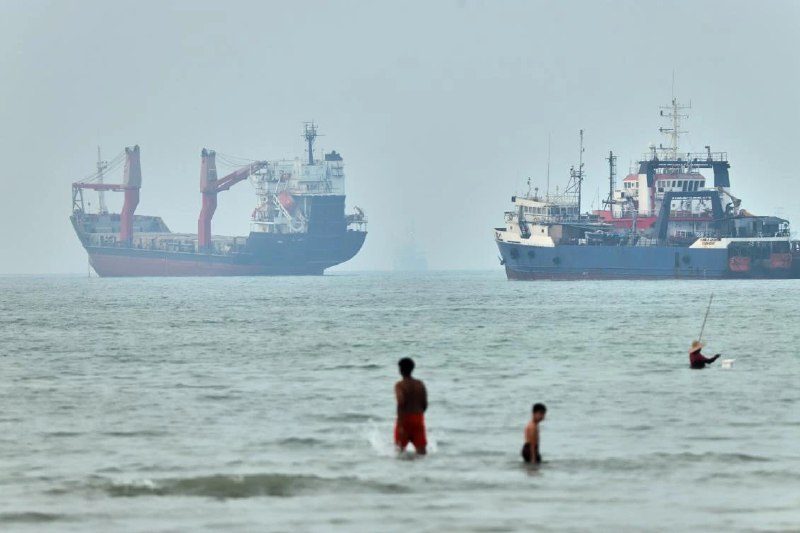
A Panama-flagged commercial vessel, the MT On Peace, was struck by a projectile off the Omani coast on the morning of 6 October 2026, leaving twelve of her nineteen crew injured. Of the injured, eleven are Indian citizens; the wider crew of nineteen includes seventeen Indian nationals. The injured were evacuated to Khasab in Oman with Omani assistance, and India's Ministry of External Affairs publicly thanked Muscat for the help. India's foreign ministry was the first official source on the record, and its statement went beyond a casualty notice: it described the continuing attacks on commercial shipping in the region as a "deep concern" and demanded that "the targeting of commercial shipping, seafarers and civilian infrastructure in the region must end." No party has yet claimed responsibility for the strike.
The incident lands inside one of the most heavily policed and most heavily contested stretches of water in global commerce. About a fifth of the world's petroleum transits the Strait of Hormuz each day, alongside the liquefied natural gas exports of Qatar and a steady stream of container traffic bound for the Gulf and beyond. A single strike on a single hull is not, in itself, a market event. The way it is read is. Whoever struck the MT On Peace, and whoever is assumed to have done so, will now sit inside a much larger pattern of tit-for-tat exchanges between Tehran, Washington, and Tel Aviv that have defined the waterway for two and a half years.
What is on the record
India's Ministry of External Affairs issued a statement, carried in English by Tasnim News and in Persian by Mehr News, confirming the casualty and nationality figures and thanking Oman for assistance with the evacuation to Khasab. The English-language Tasnim relay of the Indian statement names the vessel as the MT On Peace, a Panama-flagged merchant ship, struck off the Omani coast with nineteen crew aboard, twelve injured and seventeen of the nineteen Indian nationals. The same relay reports that the MEA characterised the continuing pattern of strikes as a "deep concern" and called for "the targeting of commercial shipping, seafarers and civilian infrastructure in the region" to end.
The Cradle's English channel carried the same core facts and added that the vessel was struck by a projectile, that twelve crew were injured, and that the injured were evacuated with Omani assistance. Two Iranian state outlets, Tasnim News in Persian and English and Mehr News, carried the Indian ministry's statement within minutes of each other, attributing the casualty, nationality and evacuation details to the MEA directly. The reporting chain is narrow: every English-language post in the public thread traces back to the Indian external affairs ministry statement, either directly or via Iranian state relays.
No party has yet claimed responsibility. The Indian statement, as relayed, does not name an attacker. The Iranian and Iran-aligned outlets carrying the item do not name a perpetrator. The vessel's operator, its cargo, its last port of call, and its next port of call are not specified in the six posts reviewed for this article.
The waterway, the politics
The Strait of Hormuz is a 21-mile-wide shipping lane at its narrowest, bordered by Iran to the north and Oman to the south. Even at the most generous reading of international maritime law, the strait's navigable channels are tight enough that a serious incident cannot be contained to a single vessel. Insurance war-risk premiums, tanker charter rates, and the price differentials between crude grades loaded in the Gulf and crude landed in Asia respond within hours, sometimes minutes, to confirmed attacks on hulls in the waterway. The 2022-2026 cycle of seizures, drone strikes, and limpet-mine incidents set the template.
For India, the geography of the strait is not abstract. The country is the largest single destination for Gulf crude, the largest source of remittances from Indian workers in the Gulf, and a net importer of liquefied natural gas. New Delhi's official line since 2019 has been to keep the waterway open and to avoid naming Iran as the default suspect in incidents that have not been independently attributed. The MEA's prompt confirmation of injuries, its coordination with Muscat on the evacuation, its public thanks to Oman, and its demand that attacks on commercial shipping end are all consistent with it.
For Iran, the political economy is more complicated. Tehran benefits, in narrow tactical terms, from the implicit threat that the strait can be disrupted. It also depends, in much broader terms, on the strait remaining open enough that Iranian oil exports continue to reach Asian buyers, particularly Chinese refineries operating under waivers from US secondary sanctions. A projectile strike on a tanker near the Omani coast, if attributed to Iran, costs Tehran diplomatic capital with New Delhi, the largest single buyer of Iranian crude outside China. A strike by another actor, attributed by default to Iran in Western wire framing, costs Tehran less directly but raises the temperature in a corridor that has been hot since 2024.
What the Indian statement actually says
The MEA's wording, as relayed in the public thread, does more than catalogue the injured. It frames the strike as part of a continuing pattern. By calling the situation a "deep concern" and demanding that "the targeting of commercial shipping, seafarers and civilian infrastructure in the region must end," the ministry is signalling to New Delhi's Gulf partners, including Tehran, that the diplomatic cost of further incidents is being booked in real time. It is also signalling, by thanking Oman by name, that the immediate operating partnership in the strait now runs through Muscat rather than through any other Gulf capital. Both signals are consistent with the posture India has held since 2019: open strait, no automatic attribution, pressure on every actor to de-escalate.
The English-language relay of the statement, carried by Tasnim News, names the vessel (MT On Peace), the flag (Panama), the crew total (nineteen), the injured total (twelve), the Indian-national total (seventeen of nineteen), the evacuation destination (Khasab, with Omani support), and the diplomatic content (deep concern; demand for an end to attacks on commercial shipping, seafarers and civilian infrastructure). The Persian-language relay carried by Mehr News is consistent on the casualty and nationality figures and on the attribution to the MEA.
What is not on the record
The six posts reviewed for this article do not specify the vessel's operator, its cargo, its last port of call, its next port of call, the casualty severity beyond the injury count, or any attribution of the strike to a state, group, or individual. The available source items do not specify whether the MT On Peace was in ballast or laden, whether she was transiting into or out of the Persian Gulf, or whether she had called at an Iranian terminal before the strike.
The absence of attribution in the Iranian state posts is notable. Tehran's outlets and Tehran-aligned channels such as The Cradle have, in past incidents, sometimes carried claims of responsibility by other actors or selectively framed such claims. The silence here, on the morning of the strike, is consistent with a news desk still assessing the political cost.
Monexus will update this article as first-party statements are issued by the vessel's operator, by Panama as flag state, by Oman's foreign ministry in fuller form, by India's external affairs ministry in fuller form, and by any claimant for the strike.
Why the next 72 hours matter
Three things are worth watching. First, whether Oman's foreign ministry issues a fuller statement. Muscat is the one capital with continuous observation of the strait and a diplomatic relationship with both Tehran and New Delhi strong enough to be a credible first responder. Second, whether India's external affairs ministry supplements the casualty, nationality and evacuation data with an attribution. The ministry has already framed the strike as part of a pattern; the question is whether it names an actor. Third, whether insurance war-risk underwriters reprice the strait. A confirmed attribution to a state actor, or a confirmed attribution to any actor, would move premiums and tanker rates; an unresolved incident would leave them elevated but bounded.
The wider question sits behind those operational ones. The waterway's recent history is a pattern of incidents that are each, individually, contained, and that are, collectively, the background condition for a regional security architecture that is no longer architecture so much as managed friction. Each incident is read as a data point in that pattern. The reading is the story.
This article was researched and produced by this publication's staff desk. Every factual claim is traceable to the sources listed below. Monexus has lower confidence on any matter not specified in the cited posts than on any matter that is.
Wire provenance
This editorial synthesis draws on the following public wire/social posts:
- https://t.me/thecradlemedia/68942
- https://t.me/TheCradleMedia/68942
- https://t.me/tasnimplus/126784
- https://t.me/mehrnews/420012
- https://t.me/tasnimnews_en/41173
- https://t.me/JahanTasnim/238370