Houthi strikes on Saudi Arabia and Aden put a fresh risk premium on Gulf crude
Yemen's Iran-aligned Houthis hit targets in Saudi Arabia and Aden on 7 October, lifting Brent at the open as traders weigh whether the latest cross-border action unwinds a recent Middle East supply recovery.
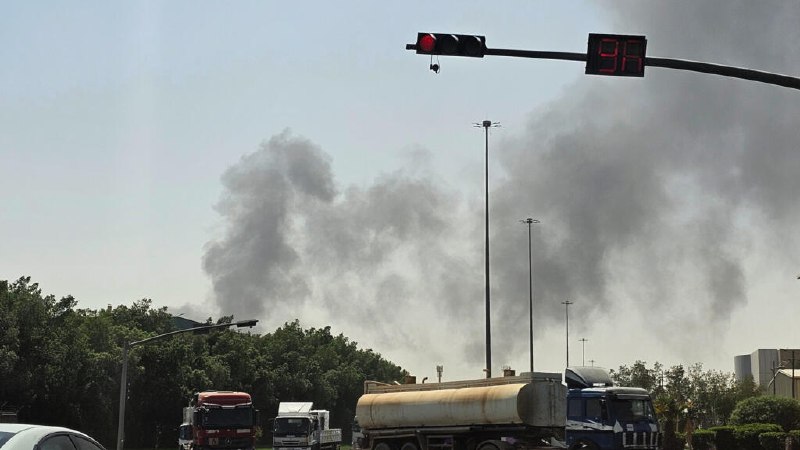
Brent opened Wednesday's session carrying a fresh risk premium, and by 02:09 UTC the move was visible in the tape. Oil was higher on reports that Yemen's Iran-aligned Houthis had struck targets inside Saudi Arabia, with traders weighing whether the round of attacks would unwind the supply recovery that had gathered pace across the Gulf over recent weeks. The benchmark's bid came even as the physical market continues to digest rising Middle East output, a tension that has become the dominant pattern in 2026 energy pricing.
The proximate trigger is straightforward, and it is being priced. A missile launched by the Houthis was intercepted north of Riyadh on Wednesday, according to the Saudi-led coalition fighting in Yemen in support of the internationally recognised government. Separately, France 24's English-language live feed reported that two missiles launched by the same group had targeted Aden international airport in southern Yemen, where that internationally recognised government is based. The combination puts the kingdom's capital, the seat of the rival government next door, and the air corridors over both back into the risk frame on the same morning. That is the kind of synchronised action that, historically, justifies an immediate, if temporary, repricing of Gulf crude.
The market then has to decide whether this is a one-day event or a regime change. The available reporting does not specify the damage, if any, from the Riyadh interception, nor whether Aden airport sustained hits beyond a missile landing in its vicinity. Those gaps matter. An intercepted projectile is a security story; a struck capital is an energy story, because the latter reshapes the insurance, routing and freight calculations that Gulf crude buyers run every morning.
The shipping corridor calculus
The structural question sitting under Wednesday's price action is whether the Bab el-Mandeb and the wider southern Red Sea are back in the risk-pricing band. For most of 2024 and 2025, container shipping rerouted around the Cape of Good Hope as Houthi strikes against commercial tonnage made the southern Red Sea uneconomic for the largest carriers. Bulk and tanker traffic patterns were slower to adjust but moved in the same direction. A round of attacks aimed at population centres and military infrastructure inside Saudi Arabia and Yemen does not, by itself, close the maritime corridor again, but it does thicken the cloud.
Monexus assessment: the reported price reaction is best read as a confidence interval tightening, not a structural shift. Traders are not pricing a Hormuz disruption; they are pricing a wider probability of escalation, which raises the option value of holding crude inventories and shows up first in the front of the curve.
The longer arc, however, is harder to dismiss. The Houthis have demonstrated a steady cadence of cross-border strikes into Saudi Arabia and the United Arab Emirates since 2016, with intensity rising during periods of regional tension and falling during negotiation phases. The Wednesday launches, on a day that France 24's English feed frames as the third anniversary of the October 7, 2023 attacks and during a period of renewed regional focus on Iran's network of armed allies, sit inside that pattern. They are a reminder that the security architecture around Gulf energy export routes is a political variable, not a fixed input.
Who is moving, and who is talking
Three actors are doing the visible work in the current reporting. The Houthi movement is conducting the strikes; the Saudi-led coalition is claiming the interception north of Riyadh; and the internationally recognised Yemeni government is on the receiving end in Aden. The Iranian state's role is implied by the alignment designation in the wire reporting, not demonstrated by the available sources on this date, and the hedging in the CNBC and France 24 framing reflects that.
The framing inside the energy press is consistent: the strikes are read as a supply-side risk because the Houthis have, in the past, signalled the ability to project force into Saudi and Emirati territory, and because the southern Red Sea and the Strait of Hormuz sit on the same strategic map. That framing is defensible on the evidence, but it is worth naming what it leaves out. There is no claim in the available reporting of an imminent attack on a Gulf oil installation, a refinery, or a tanker in transit. The risk premium being paid is for the possibility, not the event.
Counterpoint, in plain terms: a second reading is that the strikes are political signalling, timed for an anniversary that the regional press is marking explicitly, designed to demonstrate reach rather than disrupt flows, and that the energy market is over-reading them. The argument against that read is that markets are not in the business of under-pricing demonstrable capability, and that the cost of being wrong in one direction is meaningfully higher than the cost of being wrong in the other.
What the wires do not say
The supplied reporting does not specify the exact Brent move, the WTI spread to Brent, or the specific Saudi facilities, if any, that were targeted beyond the Riyadh intercept claim. It does not specify the casualty count, the damage assessment, or whether Aden airport's operations were suspended. The Houthis' own media channels are not represented in the source items for this cycle, so the movement's formal statement of responsibility is not in the record this article draws on. Iran's foreign ministry has not, in the available items, commented on the morning's events. Each of those gaps is a normal feature of the first hours of a breaking story, and the analytical discipline of the next 24 to 48 hours is to fill them without importing speculation.
For readers with a stake in the tape: the next markers to watch are the Saudi-led coalition's own midday briefing, the Houthi-aligned media channels for a formal claim, and the Brent front-month's behaviour through the European session. If the premium fades into the US open without a follow-on strike, the market is treating Wednesday as noise. If the front of the curve extends its bid, the market is treating it as a regime change in the risk dial.
The shape of the story that follows depends on those three data points, and on whether the strikes prove to have been the opening move of a sequence or a single, calendar-timed statement. Monexus will update as the picture sharpens.
Desk note: Monexus treats the Houthi cross-border strikes as a live oil-market input, not background geopolitical colour, and reads Wednesday's open as a confidence-interval adjustment rather than a structural break. The article reports only the available items and does not extrapolate beyond them.
Wire provenance
This editorial synthesis draws on the following public wire/social posts:
- https://www.cnbc.com/2026/10/07/oil-prices-today-brent-wti-hormuz.html
- https://f24.my/CCi4.g
- https://t.me/france24_fr/23461
- https://f24.my/CCi3.g
- https://t.me/france24_en/18890
Follow the event.
These dated source records provide context. They do not retrospectively verify this archive article.
Separate what the nuclear watchdog reported from what it could not determine after the June 2025 strikes.