India's three-front week: rate shock, Starlink data fight, and a peace track the war is dragging through New Delhi
Within a single trading week, New Delhi has been pulled in three directions at once: a surprise rate hike, a data-localisation fight with Starlink, and renewed attention on India's Ukraine mediation track, where the cited reporting shows Moscow is now attaching new conditions to a process New Delhi helped put on the table.
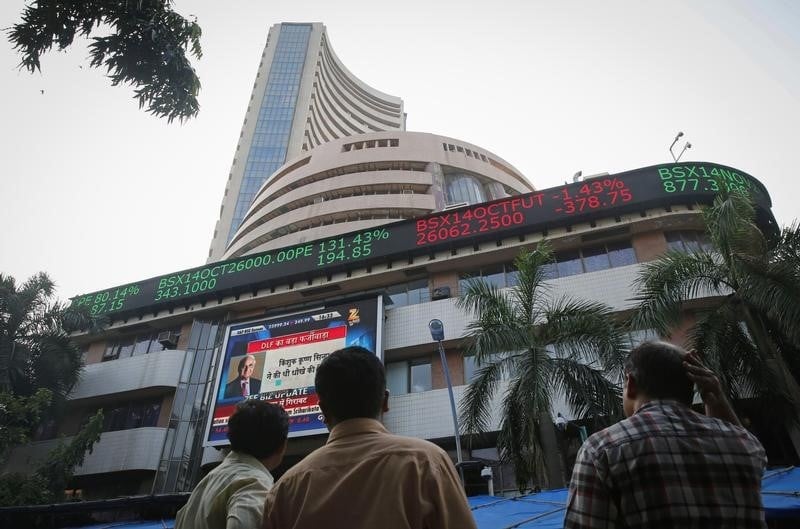
Three wires landed on 7 October 2026 from three different parts of India's policy map, and reading them together is more instructive than reading any one of them alone. At 05:45 UTC, an Investing.com dispatch reported that Indian equities slipped after the Reserve Bank of India moved rates for the first time in nearly four years. At 10:31 UTC, LiveMint reported that Starlink had told Indian regulators it already keeps Indian user data inside the country and has built the matching local infrastructure, with the company now waiting on final regulatory and security approvals before commercial service can begin. At 12:14 UTC, the Ukrainian outlet TSN, via its Telegram channel, carried the headline that the Kremlin began talking about "peace" only after India put a plan on the table, and then raised new grievances.[^1][^2][^3]
The single-day cluster is the story. A central bank that had not moved in nearly four years moved; a foreign satellite operator publicly pre-positioned itself for an Indian licence; and a third capital, Moscow, was reported to be attaching new conditions to a diplomatic exchange in which India is, by the cited Ukrainian outlet's framing, a moving party. The three files are not formally connected, but they sit on the same desk. Each is, in its own way, an attempt by New Delhi to convert market size into policy outcomes it does not have to beg for.
The rate decision
The RBI story, as the cited Investing.com wire presents it, is short on detail and long on signalling. The headline records that the policy committee hiked rates on 7 October 2026 and that Indian stocks dipped in response; it also records, by the same token, that this was the first such move in nearly four years.[^1] The cited wire does not, in the available excerpt, specify the new rate, the vote split, or the policy statement's wording. Those details will sit in the RBI's own published statement, which this article has not independently retrieved.
The market reaction described in the cited wire is the only data point the body can rest on: a measurable but contained sell-off in Indian equities on the day of the move. Beyond that, the rate file is thin in the available source material, and the rest of this section is offered as analysis of the kind of decision a hike in these circumstances typically represents, not as reported fact.
Monexus assessment. Read as analysis, the move fits a familiar pattern. A central bank that has held for an extended period and then tightens, in an environment where the currency has been a recurring topic of market commentary, is usually signalling two things at once: that it will not be the first mover to ease into external pressure, and that the cost-of-capital calculus has changed for borrowers who had been borrowing on the assumption that the pause would extend further. Both messages are for domestic audiences and external ones simultaneously. The cited wire supports the fact of the hike; it does not, in the available excerpt, support any further characterisation of motive.
Starlink, data, and the licence bottleneck
The Starlink file is reported more fully. According to the 10:31 UTC LiveMint dispatch, the company told Indian authorities that Indian user data is already being held within the country and that it has built the local ground infrastructure to match, and that the remaining step is final regulatory and security approval before commercial service can begin.[^2] The cited item frames this as a pre-emptive public filing: Starlink, in effect, arguing that the data and infrastructure objections have been satisfied and that any further delay is now a question of process, not of substance.
The structural context, again offered as analysis rather than as sourced fact, is that India has spent recent years tightening the rules under which foreign digital services can operate inside the country, with the data-residency question being one of the more contested areas. The LiveMint wire itself does not, in its available excerpt, lay out the history of that regime; the framing above is the desk's reading of why a public data-localisation filing by a US-headquartered satellite operator would land as a politically loaded move in New Delhi.
The counter-read is worth naming. A company that publicly states, on the record, that the boxes are already in the country and the bytes are already in Indian data centres is also, in the same gesture, telling the regulator that the next move is yours. That is consistent with a genuine compliance posture. It is also consistent with a public-relations posture designed to make further delay look like protection of incumbents. The cited wire does not let this article choose between the two. Both can be true at once, and the available excerpt does not specify which weight the regulator will give each.
The peace track, and what the cited material actually supports
The third file is the one with the longest reach and the thinnest sourcing, and it is also the one most easily over-read. The TSN Telegram post cited at 12:14 UTC on 7 October 2026 carries, in the available excerpt, only the headline: that the Kremlin began talking about "peace" after India circulated its own plan, and raised new grievances.[^3] The thread item does not contain, in the material available to this article, the text of the Indian proposal, the text of the Russian counter-terms, or any direct quotation from either side. The reporting in the headline is also a Ukrainian outlet's framing of a diplomatic exchange, not a primary Russian or Indian statement.
The honest reading of that headline is narrow, and it is the only one the cited material supports. A Ukrainian outlet reported, on 7 October 2026, that Moscow moved publicly into a peace-track framing in which an Indian proposal is referenced, and that Moscow attached new conditions. The cited TSN post does not, by itself, establish the timing of the Indian plan relative to the Russian statements, the content of either side's terms, or whether the exchange is new or a continuation of an earlier track. Public reporting from the days before 7 October has, separately and outside the cited thread, described Russian and Indian officials engaging on a Ukraine framework, and that prior context is part of the picture any reader will bring to the headline. This article does not have the underlying reporting in its source ledger and does not assert it as fact; it flags the limit so the reader does not.
Within those limits, two readings of the 7 October 2026 TSN headline remain plausible. The first is that New Delhi, which has kept a working channel with Moscow through the war while continuing to buy discounted Russian crude, is now the venue at which Moscow is choosing to surface new conditions, and the Indian proposal functions as the floor of that exchange. The second is that Moscow is using the Indian channel to launder positions it could not get behind Minsk, Ankara, or Beijing at various points since February 2022. The cited material does not let this article choose between them, and a serious reading has to say so. The honest statement is narrower than the headline implies: the cited post supports a Ukrainian outlet's framing of a Russian move that references an Indian plan and attaches new conditions, on 7 October 2026. The temporal and causal claims that surround it in the wider conversation are not, on the evidence in this article's source ledger, settled.
What the three files share
The through-line across the rate decision, the satellite filing, and the reported peace-track movement is the same word, used deliberately: leverage. India is simultaneously defending its currency, negotiating the terms under which a US-headquartered satellite operator sells to Indian consumers, and acting as a named reference point in a war between two states that both need it more than they publicly admit. Each file is, in its own way, an attempt to convert market size into policy outcomes New Delhi does not have to ask anyone for.
The structural risk, again in plain prose, is that the three projects compete for the same scarce resource: Indian government attention. A central bank that has just hiked will want the fiscal authority to stay disciplined. A telecom ministry that is about to certify the largest foreign satellite operator in the country will want the home ministry to keep the security file on a tight leash. A foreign ministry that has put a Ukraine framework on the table will want the prime minister's office to keep its options open without committing. None of these is impossible. None of them is free. The trade is real on each of the three desks, and the cited material gives no indication of which one New Delhi will choose to honour first if the three come into conflict.
Desk note: Monexus framed the three stories as a single trade-off rather than three separate beats, because all three cited items land on 7 October 2026 and all three are decisions about how India converts size into influence. The Starlink and RBI files are reported from Indian and Indian-wire sources; the peace-plan file relies on a Ukrainian outlet's headline summary of the diplomatic back-and-forth, and the cited TSN post does not, in the available excerpt, contain the text of either the Indian proposal or the Russian counter-terms. The peace-track section has been narrowed from the framing in an earlier draft because the cited headline alone does not establish a clean causal sequence between an Indian plan and a Russian move, and earlier public reporting on India-Russia-Ukraine engagement is outside this article's source ledger. The RBI and rupee sections are deliberately thinner than a typical macro piece would be, because the cited wire only establishes the fact of the hike and the market dip, not the policy statement or the broader macroeconomic narrative.
[^1]: Investing.com, "India stocks dip after RBI hikes rates for first time in nearly 4 yrs," 7 October 2026, 05:45 UTC. https://www.investing.com/news/stock-market-news/india-stocks-dip-after-rbi-hikes-rates-for-first-time-in-nearly-4-yrs-4935616 [^2]: LiveMint, "Starlink says it has kept India user data within the country and built local infrastructure as satellite internet providers await final regulatory and security approvals," 7 October 2026, 10:31 UTC. https://livemint.com/industry/starlink-india-launch-security-clearance-commercial-services-11791354507240.html [^3]: TSN (Telegram), "Putin's camp began talking about 'peace' after India's plan, but raised new grievances: details," 7 October 2026, 12:14 UTC. https://t.me/TSN_ua/594250
Wire provenance
This editorial synthesis draws on the following public wire/social posts:
- https://www.investing.com/news/stock-market-news/india-stocks-dip-after-rbi-hikes-rates-for-first-time-in-nearly-4-yrs-4935616
- https://livemint.com/industry/starlink-india-launch-security-clearance-commercial-services-11791354507240.html
- https://t.me/LiveMint/23051
- https://t.me/TSN_ua/594250
Follow the event.
These dated source records provide context. They do not retrospectively verify this archive article.
A dated voting record is evidence of one decision. Use the original UN record before turning it into an alignment label.
Visual explainer · historical vote of 2022-03-02 →