Israel marks three years since October 7 amid electoral shadow and renewed Gaza strikes
Commemorations in Israel on the third anniversary of the October 7 Hamas attack carried the dual weight of remembrance and an unresolved electoral cycle, as families gathered at memorial sites and renewed Gaza strikes were reported on the same day.
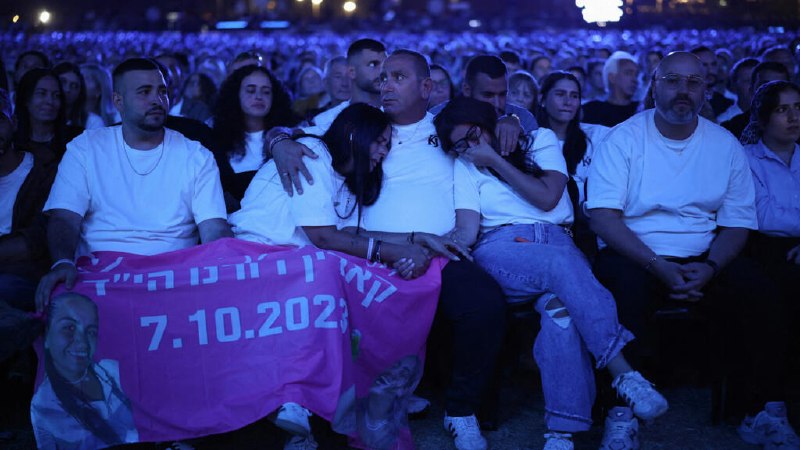
At memorial sites across Israel on 7 October 2026, families of those killed in the Hamas attack three years ago stood in silence beneath portraits of the dead, while the country's political calendar tightened around an early election that has placed the conduct of the war at the centre of the campaign. France 24's English and French services both carried the commemorations on Wednesday evening, with the English dispatch noting that the day brought "silent tributes and renewed strikes on Gaza" as political debate intensified ahead of the vote.
The anniversary has become a contested civic instrument. For the bereaved, it is a date that fixes private grief in public time. For the political class, it is a moment whose meaning is fought in real time, with rival coalitions seeking to claim stewardship of the response. The reporting from France 24 captures the collision: grief compressed into ceremonies, and grief mobilised for an electoral argument that will be decided at the ballot box rather than at the negotiating table.
A country remembers out loud
Commemorations followed a familiar choreography of the previous two anniversaries: sirens, moments of silence, the reading of names, and gatherings at the sites where the dead were killed or abducted. France 24's French-language summary described the day in terms of "nostalgia, resilience and moments of silence," with families convening at locations including sites associated with the Nova festival and the southern communities where the attack began in the morning of 7 October 2023. The same dispatch emphasised the persistent weight of the memory rather than any single political reaction.
The English-language report from France 24 added the immediate operational context: that as families gathered, Israeli strikes on Gaza continued, and that the political debate around the war sharpened within the same news cycle. The juxtaposition was not editorialising. It was a description of what aired on the same day: commemoration in Israeli cities, bombardment in Gaza, and an electoral campaign whose central question is whether the government's handling of the war has been adequate, excessive, or both.
Memory, weaponised
The political uses of October 7 are now well established. The hostages taken that day remain the most emotionally resonant symbol of unfinished business, and their families have become a constituency that no party can afford to alienate. Competing offers have been made: faster deals, more aggressive military operations, a willingness to absorb international censure, a refusal to do so. None of the offers has yet delivered either the return of all captives or the definitive end of the campaign in Gaza.
The anniversary therefore functions less as a moment of unified national reflection than as an inventory of what remains unresolved. France 24's framing of "renewed strikes" alongside the ceremonies pointed to that inventory without spelling it out: the war has not concluded, the hostages have not all returned, the civilian toll in Gaza continues, and the Israeli electorate is being asked to render a verdict on a war that is still being waged. The political debate around the commemoration is, in effect, a referendum on whether the country has been governed well in its aftermath.
What the wire did and did not carry
France 24's two dispatches of 7 October 2026 are useful precisely because they underplay rather than overreach. The English piece reports the day's events in a single, controlled paragraph; the French piece is similarly restrained, anchoring the commemoration in the affective language of "nostalgia" and "resilience" without descending into either triumphalism or moralising. Neither dispatch attempts a comprehensive casualty count, a comprehensive political analysis, or a predictive frame about the election. Both are essentially a snapshot: families at memorial sites, strikes continuing, a campaign under way.
That restraint reflects an editorial choice that mainstream wires have largely converged on for October 7 coverage: name the dead, name the bereaved, name the political dispute, and stop. The temptation to construct a grand narrative, three years on, is considerable. The wire coverage largely declines the temptation, which leaves the analytical work to follow-up reporting that the anniversary dispatches do not perform.
What remains uncertain
The available source items do not specify several details that a fuller account would require. The exact electoral calendar (the formal date of the vote, the published platforms of the principal parties, the identity of the leading candidates as of the anniversary) is not specified in the France 24 dispatches, and this article has not independently established those details from the supplied material. The casualty figures on either side of the day's strikes, the operational details of the bombardment reported by France 24, and the identity of specific hostage families who spoke publicly on the day are likewise not specified in the source items. The commemoration's exact scale, the number of memorial sites, and the formal state ceremonies are also not detailed in the dispatches reviewed here. A complete picture of the third anniversary will require reading the day's coverage across Israeli outlets including Haaretz, the Times of Israel, and the Jerusalem Post alongside the wire dispatches, and this article makes no claim to that completeness.
The political stakes, however, are clear enough from the framing of both France 24 items. Israel is holding an early election. October 7 has become the central reference point of the campaign. And the war whose opening the anniversary marks has not concluded. Those three facts are enough to define the stakes of the day, even if the source material reviewed here does not attempt to settle them.
Desk note: Monexus framed this piece around the two France 24 dispatches of 7 October 2026 and the parallel English-language wire copy, treating the anniversary as a documented civic event rather than as an occasion for grand narrative. The contested political uses of the date are noted; the bereaved are named as the primary constituency; the unresolved war and the electoral calendar are reported as the structural context. The piece declines to fabricate casualty figures, electoral dates, or political positions not present in the source items.
Wire provenance
This editorial synthesis draws on the following public wire/social posts:
- https://www.france24.com/en/middle-east/20261007-israel-three-years-october-7-attack-elections
- https://f24.my/CCqN.g
- https://f24.my/CCqM.g
- https://t.me/france24_en/18902
- https://t.me/france24_fr/23473